


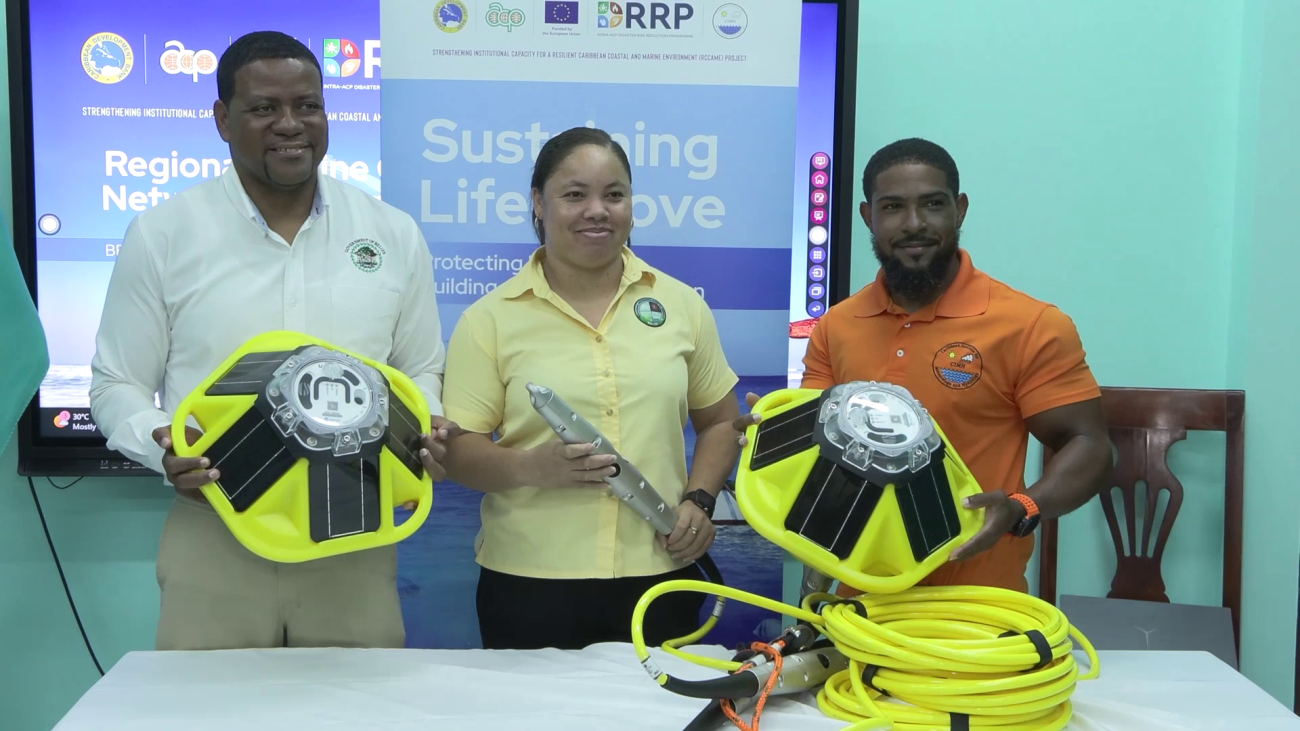
New Marine Monitoring Stations Strengthen Coastal Safety
Belize’s ability to monitor conditions at sea just received a major boost with the addition of three state-of-the-art marine monitoring stations. The equipment, donated by the Caribbean Institute for Meteorology and Hydrology, will provide real-time data on weather, ocean conditions, and marine activity at key locations across the country. Officials say the new technology will strengthen forecasting capabilities, support disaster preparedness efforts, and enhance the monitoring of Belize’s coastal and marine environment. News Five’s Britney Gordon has details more the new equipment and how it will benefit Belize.
 Britney Gordon, Reporting
From hurricanes and rough seas to changing ocean temperatures, keeping watch over Belize’s waters is becoming more important than ever. Now, the National Meteorological Service is strengthening that effort with the donation of three state-of-the-art marine monitoring stations that will provide real-time data from some of the country’s most critical marine areas. Chief Meteorologist, Ronald Gordon, says the equipment will enhance Belize’s capacity to provide more early warnings to the public and build resilience, particularly in coastal communities.

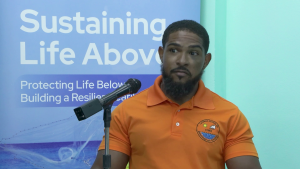
Ronald Gordon
Ronald Gordon, Chief Meteorologist
“The project will assist us to enhance our monitoring capabilities within the marine environment. Many persons know that we have a vast network of weather stations on the mainland, and we do have a few offshore in the Cayes, but these stations are currently only monitor atmospheric variables, pressure, air temperature, and wind and that type of thing. We knew that we have a gap in terms of monitoring oceanic variables, and these stations will assist us to do so.”
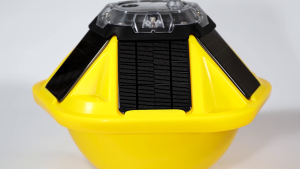 The equipment was donated by the Caribbean Institute for Meteorology and Hydrology. It is valued at sixty-six thousand dollars with funding for the project coming from the European Union through the Caribbean Development Bank. CIMH Mission Lead, Courtney Forde explains how this project strengthens the region’s hurricane prediction capacity.
Courtney Forde
Courtney Forde, Mission Lead, Caribbean Institute for Meteorology & Hydrology
“So this buoy project is just another step in that direction into monitoring the marine space and maybe improving, improving models, improving hurricane prediction and so on. So just a bit about the project. It’s the Strengthening Institutional Capacity, for a Resilient Caribbean Coastal and Marine Environment. That’s the name of the project. Essentially, it has six components. This component is the marine aspect. It also has components including, air quality, climate prediction modeling, climate and health, knowledge exchange, as well as hazard prediction.”
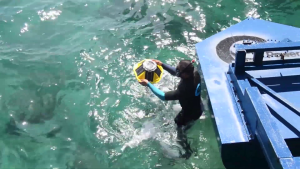 The National Meteoritical Service is considering installing the stations in three key stations: Glover’s Reef, English Caye and the Southern Turneffe Atoll. At the handing over, technicians and stakeholders such as the Belize Port Authority, the Turneffe Atoll Marine Reserve (TASA) and Fisheries Department received training on the use and installation of the equipment.
Shanea Young
Shanea Young, Senior Climatologist
“Many of our stakeholders, including you all here today, have been requesting improvement in our marine services for a long time. I know the Port Authority, for one, relies on our forecast, and I see Mr. Brown from WCS, who sometimes would want to use the, some of the available satellite imagery. But now, Mr. Brown, you will have on-the-ground observations for sea surface temperature and many other variables. And these information and the observations that we will be collecting will increase our capacity on a whole in Belize to observe our marine environment and strengthen our early warning systems, but overall, improve the weather, ocean, and climate information that we provide to you all.”
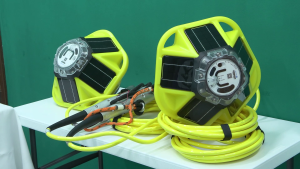
Each station is outfitted with solar-powered, satellite-linked weather buoys, floats, moorings, anchors, and a range of integrated sensors. The advanced equipment will enable meteorologists to continuously monitor key marine and atmospheric conditions, including wave activity, sea surface temperatures, wind patterns, and atmospheric pressure. Britney Gordon for News Five.
Attention readers: This online newscast is a direct transcript of our evening television broadcast. When speakers use Kriol, we have carefully rendered their words using a standard spelling system.
Watch the full newscast here: