


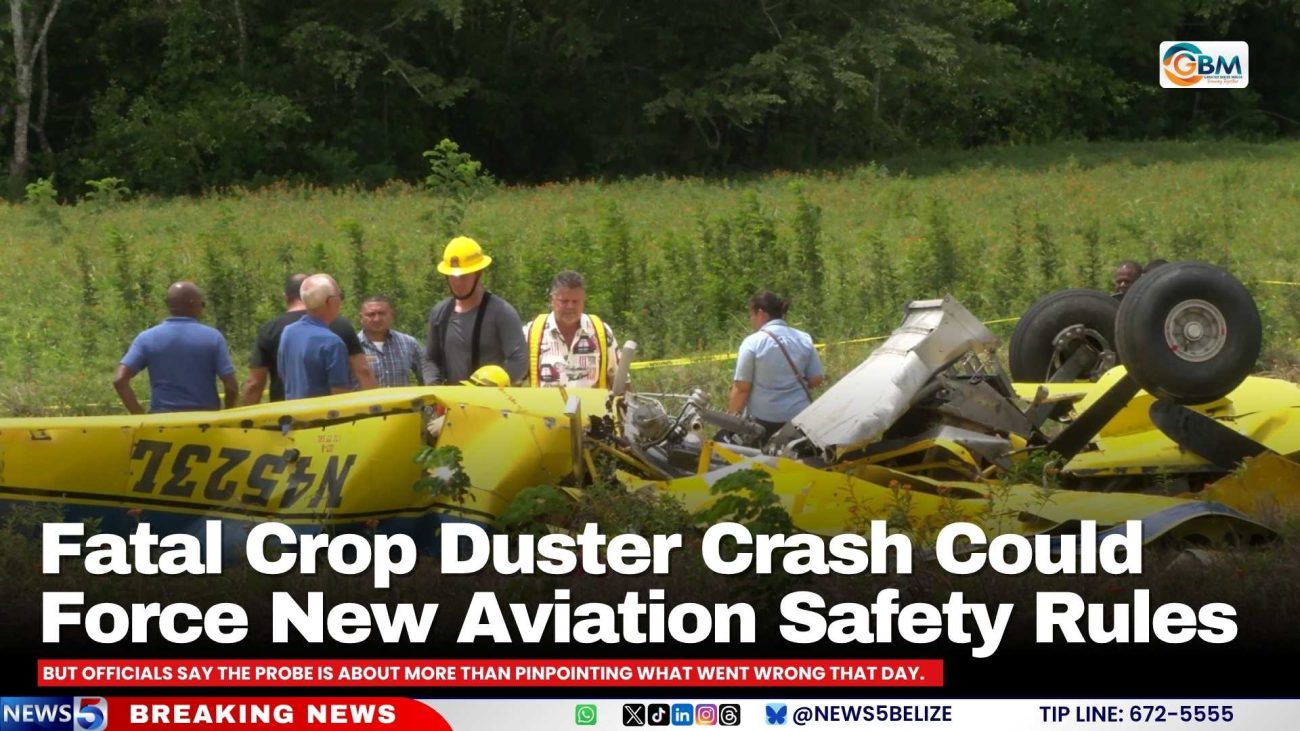
Fatal Crop Duster Crash Could Force New Aviation Safety Rules
The investigation into last week’s deadly crop duster crash in Spanish Lookout is entering a critical stage. Civil aviation investigators are close to wrapping up their work at the crash site, where veteran pilot Henry Plett lost his life during an aerial spraying mission.
But officials say the probe is about more than pinpointing what went wrong that day. Its findings could ultimately reshape aviation safety measures and introduce new rules aimed at preventing similar tragedies in the future.
Director of Civil Aviation Nigel Carter says every fatal crash, however painful, leaves behind lessons that can make Belize’s skies safer.
“In aviation, we continually strive to make the whole activity more safe. And so under our international obligations as well as our local obligations, we are obliged to carry out a full investigation of an incident whereby either an aircraft hull is lost or there is loss of life. There are other factors that would trigger a full investigation as well, but in this instance I’ll speak to the fact that we lost a hull as well as someone’s life. And so we carry out an investigation so as to ensure that we can make those safety recommendations to prevent a reoccurrence of a similar accident. The process is protected by law, and its intent is not to apportion blame to any single individual or entity but rather just to get to the probable causes, probable cause and other contributing factors that would’ve all come together to create – to cause an accident.”
The investigation’s real value, Carter explains, lies in what happens after the report is finished. Asked how the findings could benefit the wider aviation industry in Belize, he laid out the process that follows. “So the Accident Investigation Unit will make certain safety recommendations, and then the Department of Civil Aviation will then analyse them and, where necessary, implement the necessary regulatory changes or procedural changes to ensure that we sort of plug up that hole and prevent that type of accident from happening again.