


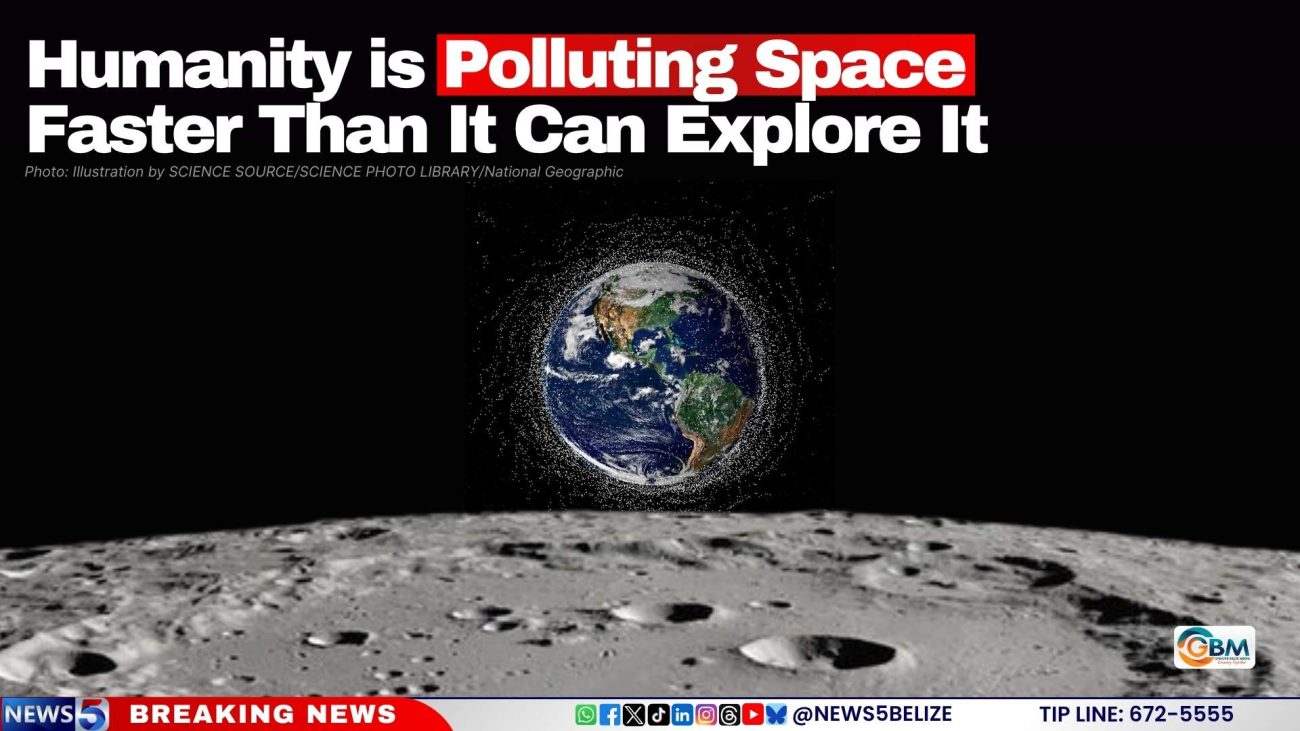
Humanity is Polluting Space Faster Than It Can Explore It
Humanity has left 140 million pieces of debris circling Earth, according to the United Nations. These pieces may be “larger than one millimetre” and perhaps considered “too small to track”, but the UN says, “They remain capable of damaging satellites and spacecraft” and worsen the growing problem of space pollution.
The UN’s warning comes on July 20, a day observed as International Moon Day, and at a time when countries and private companies ramp up lunar exploration. NASA, China, India and Japan are among those pursuing ambitious Moon missions over the coming decade.
“Decades of rapidly expanding space activity have shown that each launch leaves an environmental footprint, and it can take a long time to understand the impact fully. This is why it is so crucial to consider the sustainability of these programmes early on,” said Jason Jabbour, Senior Officer at the UN Environment Programme.
According to the UN, fragments of dead satellites and spent rockets are already re-entering the atmosphere, some of them heavy enough to survive the fall and hit the ground. It added that defunct satellites release metals into Earth’s atmosphere when they burn up, while discarded rocket parts and mission equipment continue to add to the growing cloud of orbital debris.
At this time, scientists continue studying whether the pollution could affect atmospheric chemistry and the ozone layer.
Although international treaties already promote responsible space exploration, the UN says governments must do more to reduce debris and protect both Earth’s environment and the long-term sustainability of space before the next era of lunar exploration takes off.