

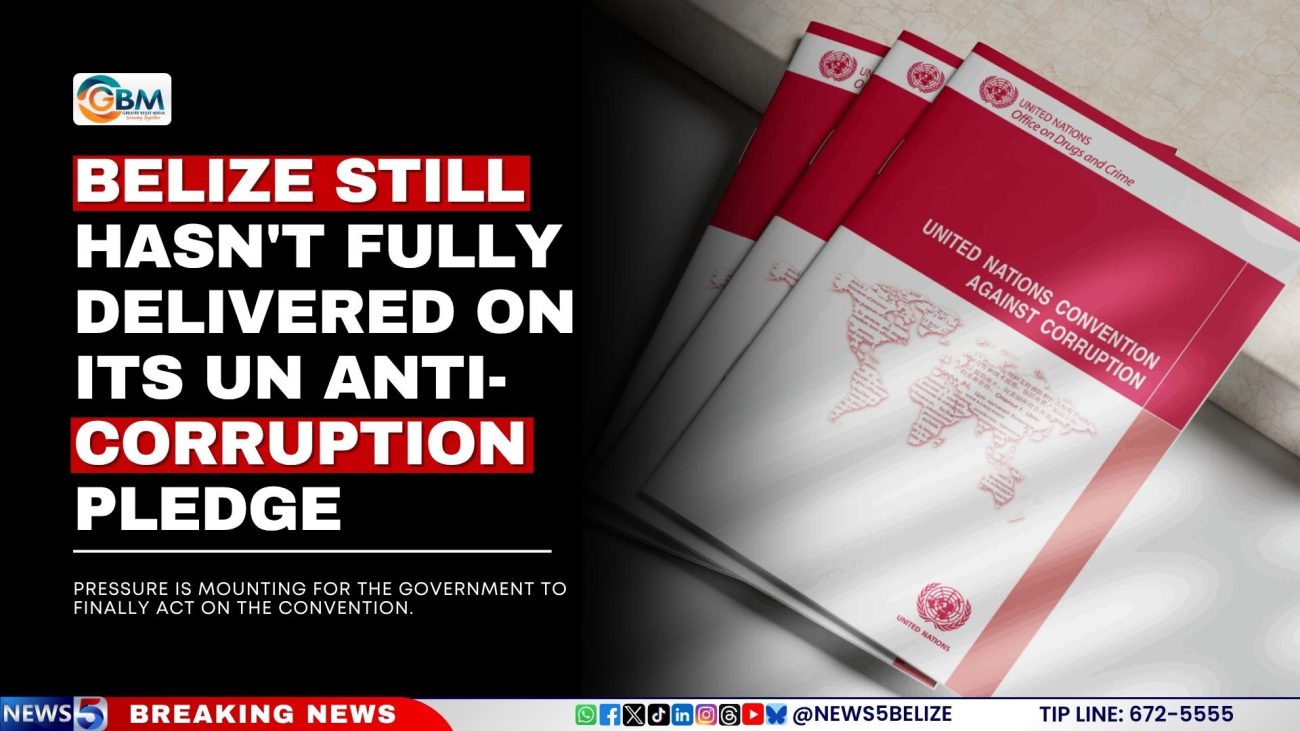
Belize Still Hasn’t Fully Delivered on Its UN Anti-Corruption Pledge
Corruption scandals aren’t new in Belize. What’s been missing is a system built to prevent them, investigate them, and actually hold people accountable. With the Mira Millions controversy and questions swirling around Ministry of Defence procurement still fresh in the public conversation, attention is turning back to a promise Belize made a decade ago: to fully implement the United Nations Convention Against Corruption, known as UNCAC.
The convention offers a global framework for transparency, accountability, and protecting public resources. Belize signed on. Putting it fully into practice, though, has been another story… slowed by legislative gaps, limited technical capacity, and the cost of reform.
Pressure is mounting for the government to finally act on the convention. At a recent UDP protest, councillor aspirant Phillip Willoughby put it bluntly: nothing else will stop corruption in the country. Belize needs UNCAC, and needs it now.
The UN describes the convention as a complete anti-corruption toolkit and the only legally binding global agreement of its kind. UN Secretary-General António Guterres has argued that society can’t function fairly when public officials, from doctors to police to politicians, put self-enrichment ahead of their duties and that corruption drains funding away from schools, hospitals, and infrastructure.
Belize signed on to UNCAC back in 2016. Nearly ten years on, full implementation still isn’t complete. Director of Good Governance Cesar Ross says the biggest obstacles are funding and technical capacity. His unit is the one tasked with pushing the process to the finish line.
Ross points to the workload on legislative drafters and Crown counsels, who are stretched thin trying to build out the required legislation. Bringing in outside consultants would help move things faster, he says, but that comes with a cost the government has to weigh.
Still, Ross says the work hasn’t stalled. He points to draft legislation that would strengthen protections for whistleblowers, people like the source behind the leaked Smart Stream invoices, who come forward with information about wrongdoing. The proposed law would require that complaints be taken seriously and would create a path to escalate any report that gets dismissed as unimportant.
But Ross is clear that passing legislation isn’t the finish line. The real measure of success, he says, will be seeing those laws actually applied, and seeing real results, like corrupt officials facing consequences. He’s previously pointed to the scale of what Belize loses each year to corruption across contracting and procurement alone.
Ross acknowledges Belize could still be years away from fully implementing UNCAC. But he insists the process is moving, with reforms underway aimed at closing the gaps that let corruption take hold.