


Belize Needs Stronger FOIA Law
For more than thirty years, Belizeans have had a legal right to ask government for answers. Getting those answers has been another matter entirely.
Since the Freedom of Information Act took effect in 1994, delays, broad exemptions, and weak enforcement have repeatedly stood between citizens and the records they’re legally entitled to request. Critics say that it’s time for significantly replace the Act with one that would introduce stronger access rights, an independent oversight body, and real penalties for officials who deliberately withhold information.
A System Built on Requests, Not Access
Government records, digital and physical, span official documents, reports, and agency data, but they aren’t something the public can simply walk in and access. Anyone seeking specifics, like details on government spending, has to file a formal request under the FOIA, after which the relevant agency has two weeks to respond.
Attorney General Anthony Sylvester says interest in the law has never been higher. “This is an exciting time,” he said, “because this is the most FOIA requests we have had in history.”
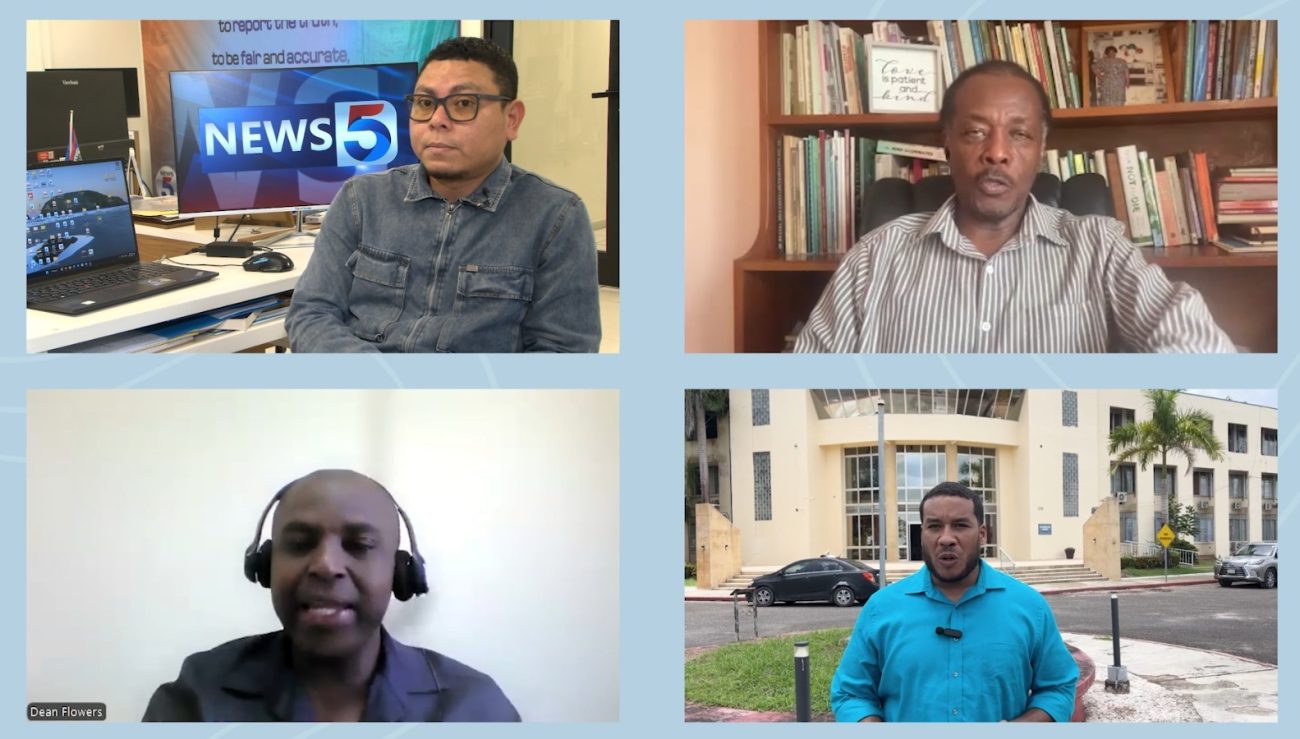
That includes journalists. Greater Belize Media’s Digital Editor Hipolito Novelo, who has spent over a decade asking government tough questions, is among the growing number of Belizeans turning to the Act formally. His view is straightforward. “Everything that has to do with the public purse, every taxpayer’s money, how contracts are awarded, how grants are awarded, that should be public information,” he said, arguing that every ministry should have a portal sharing that information with the public automatically.
When Requests Go Nowhere
In practice, obtaining spending records isn’t simple. Agencies can, and do, deny requests by classifying records as exempt, even in cases where the public interest in disclosure seems obvious.
Novelo experienced this firsthand when the Ministry of Health and Wellness denied his request for details on COVID-19 vaccine spending. “I did not get what I asked for,” he said. “The vast [majority] of it, I did not get from the Ministry of Health and Wellness.”
He isn’t alone. Public Service Union President Dean Flowers hit a similar wall in June, after writing to the Auditor General’s office for financial records connected to the Mira Millions affair and the Ministry of Defense procurement scandal. According to Flowers, the office refused to say “whether she will be going through the Smart Stream system” or identify the finance officers involved in the questionable payment pattern.

Sponsored by RF&G
Social activist Jerry Enriquez ran into the same problem seeking records on legal fees the government has spent defending recent constitutional cases. He says the Attorney General denied the request on the grounds that it “would compromise the case” and pose “serious risk to the Government of Belize.”
News Five’s Paul Lopez has also filed FOIA requests on government spending, including one delivered directly to the Ministry of Public Service in July 2025 regarding office space rental costs.
“One of the Weakest in the Caribbean”
A new reform analysis doesn’t mince words, describing Belize’s current Freedom of Information Act as one of the weakest in the Caribbean. Among the problems it identifies: penalties too weak to deter noncompliance, no independent watchdog overseeing the flow of information to the public, no requirement to publish contracts or spending data, and exemption categories broad enough to cover almost anything an agency wants to keep quiet.
Under the current process, FOIA requests run through the Office of the Attorney General. Sylvester explained how disputes are handled. “When a request is made and a particular ministry or authority indicates that it is an exempt document,” he said, “you would apply to the Ombudsman, ask for a review of that decision,” and either side can then take the matter to the High Court if unsatisfied.
The trouble is that the Ombudsman’s power stops at review. The office can examine complaints but cannot force an agency to release records, and it has no authority to hold anyone criminally accountable for refusing.
What Reform Could Look Like
One suggestion is the creation of an Information Commission, modeled on similar bodies in the Cayman Islands and Mexico, with the power to issue binding decisions rather than mere recommendations. Agencies that refuse to comply could face fines of up to one hundred thousand dollars, or even prison time.
Novelo remains skeptical about how smoothly that will play out in practice. “The minute a minister, a CEO, or any high government official, somebody connected to what you want to know, don’t want you to know something, they will block you at every step of the way,” he said. “Not now, not ever. We are going to court, everything, but you are not getting it, and that is unfortunate.”