


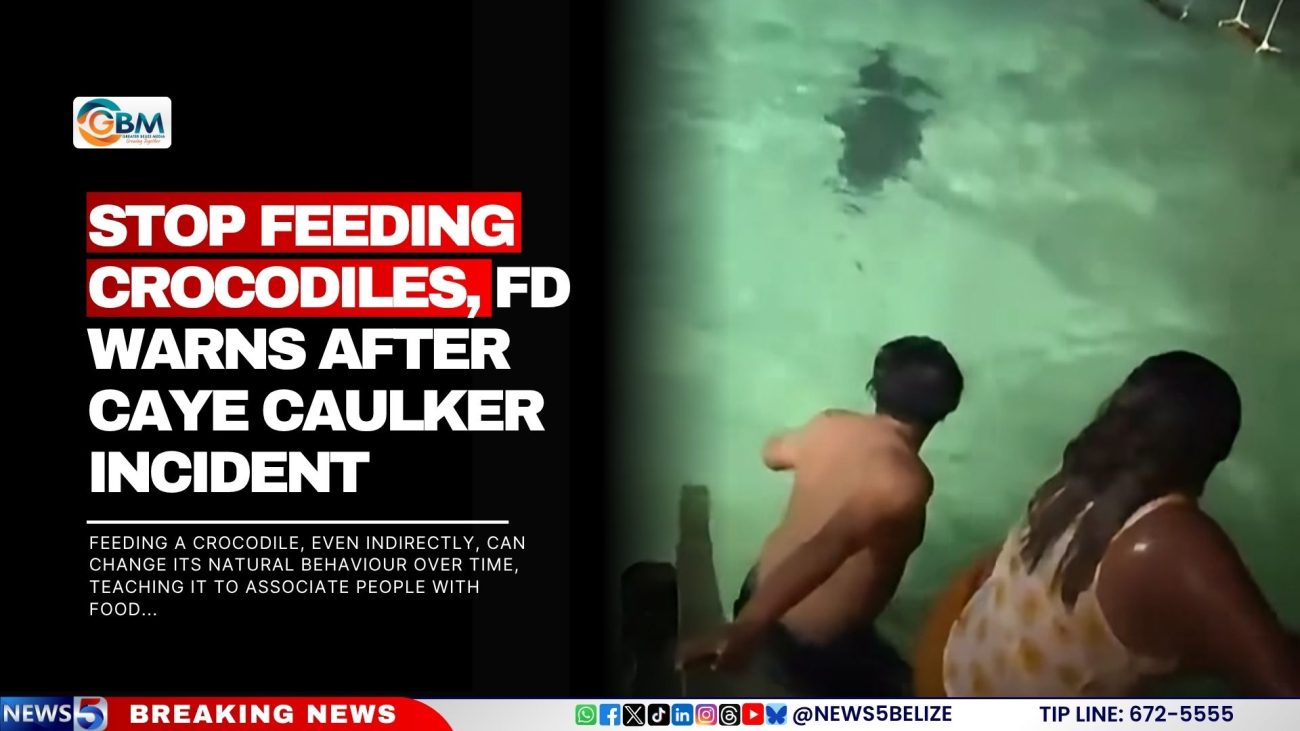
Stop Feeding Crocodiles, FD Warns After Caye Caulker Incident.
The Belize Forest Department is calling on residents and visitors to steer clear of feeding, approaching, or interacting with crocodiles, following a string of recent reports and social media posts documenting close encounters with the animals, including one recent incident in Caye Caulker Village.
While no physical contact or injury was reported in that Caye Caulker case, officials with the Forest Department, working alongside ACES Wildlife Rescue and the Crocodile Research Coalition, say it’s a reminder of just how important responsible behaviour is in areas where crocodiles live.
Crocodiles are native to Belize, naturally found in mangroves, lagoons, wetlands, rivers, and coastal areas across the country. But as development and human activity increasingly creep into those same spaces, officials say encounters between people and crocodiles are becoming more common and more concerning. Of particular worry are reports of crocodiles being intentionally fed or lured toward people, something the Forest Department is stressing should never happen under any circumstances.
Feeding a crocodile, even indirectly, can change its natural behaviour over time, teaching it to associate people with food and raising the odds of a dangerous encounter later on. Officials are urging the public to practise responsible wildlife viewing instead, keeping a safe distance and resisting the urge to feed, attract, or approach the animals in their environment.
The Forest Department’s guidance is straightforward: never feed, touch, or provoke a crocodile, and never attempt to capture, handle, or relocate one. Swimming at night or in mangrove areas where crocodiles are known to be present should be avoided altogether, and children and pets should be kept well back from the water’s edge in those areas. Residents and businesses are also being asked to keep waterways clear of food waste, fish remains, and other rubbish that could draw crocodiles closer to populated areas. If a crocodile’s behaviour does raise concern, the advice is to report it rather than attempt to intervene.