


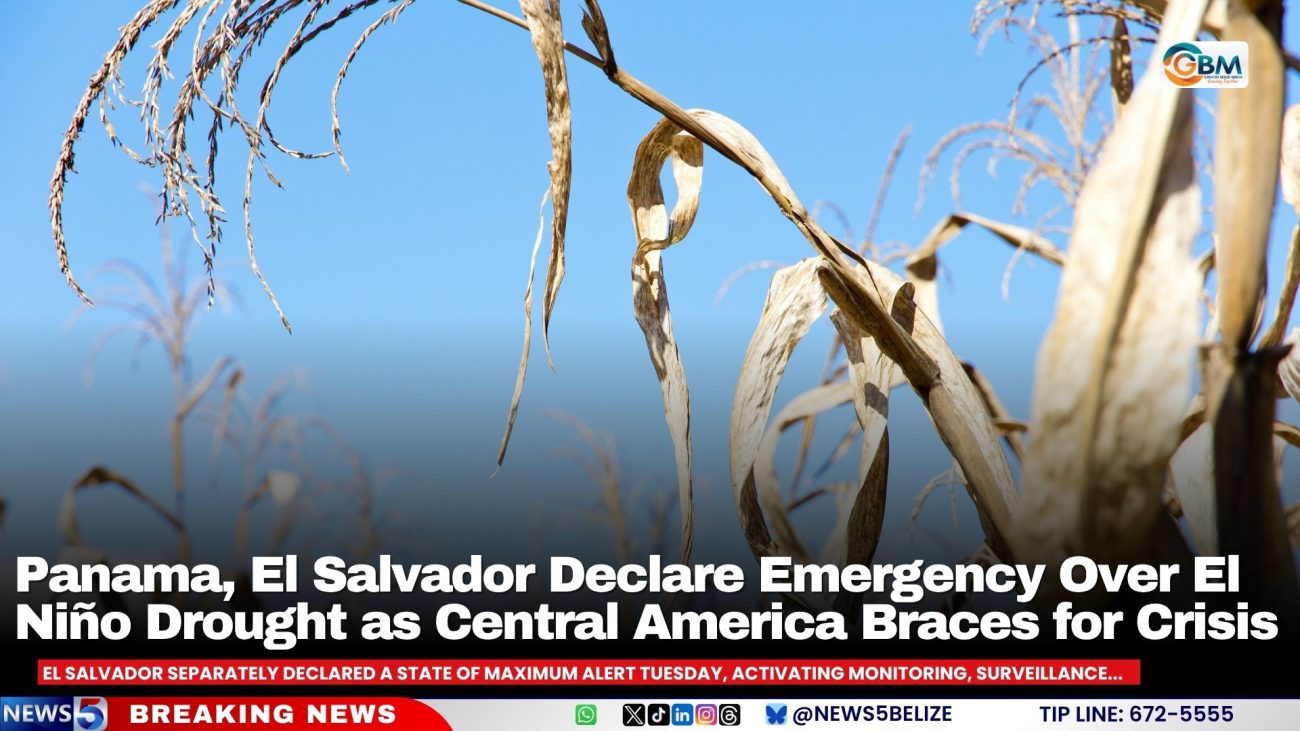
Panama, El Salvador Declare Emergency Over El Niño Drought as Central America Braces for Crisis
Panama became the latest Central American country to declare an emergency over El Niño on Tuesday, following Honduras and El Salvador, as the weather pattern fuels a severe drought that’s already disrupted shipping through the Panama Canal and raised fears of famine across the region.
Panama’s Interior Minister Dinoska Montalvo said the declaration will allow authorities to prepare for what may come with El Niño, which has driven the drought ravaging harvests across the country.

Sponsored by RF&G
El Salvador separately declared a state of maximum alert Tuesday, activating monitoring, surveillance, and aid efforts for affected communities. The country’s Civil Protection department wrote on social media that it was declaring a red alert for meteorological and farming drought across the entire national territory.
El Niño is a weather pattern that raises surface temperatures in the central and eastern equatorial Pacific Ocean, triggering global shifts in wind and rainfall patterns and contributing to erratic weather. It typically occurs every two to seven years, but this year’s event is shaping up to be among the most intense in recent memory, also contributing to what’s predicted to be the hottest year on record globally.
Central America is already deep in a severe drought. Honduras has placed 80 percent of its territory on alert, and the Panama Canal has cut daily shipping traffic due to dwindling water levels. In El Salvador, a lack of the rain typically expected this time of year has destroyed crops, prompting the agriculture ministry to announce food assistance for rural families without irrigation systems. Several affected municipalities sit within the Central American Dry Corridor, an arid region spanning parts of Honduras and Nicaragua that’s particularly vulnerable to extreme weather.
The effects of climate change may still seem distant, but experts say Belize cannot afford to wait, with scientists warning that a strengthening El Niño could bring hotter temperatures, less rainfall, and an increased risk of drought across the region in the months ahead. Climatologist Dr. Cedric Van Meerbeeck of the Caribbean Institute for Meteorology and Hydrology says the effects are expected to hit hardest once the region’s dry season begins, since reduced rainfall now means reservoirs and soil moisture are already starting from a lower baseline heading into that period, with Belize’s northwest already flagged as a drought hotspot through September and forecasters warning that farmers without irrigation or protective measures like mulching could see reduced crop yields extending into the following year.