


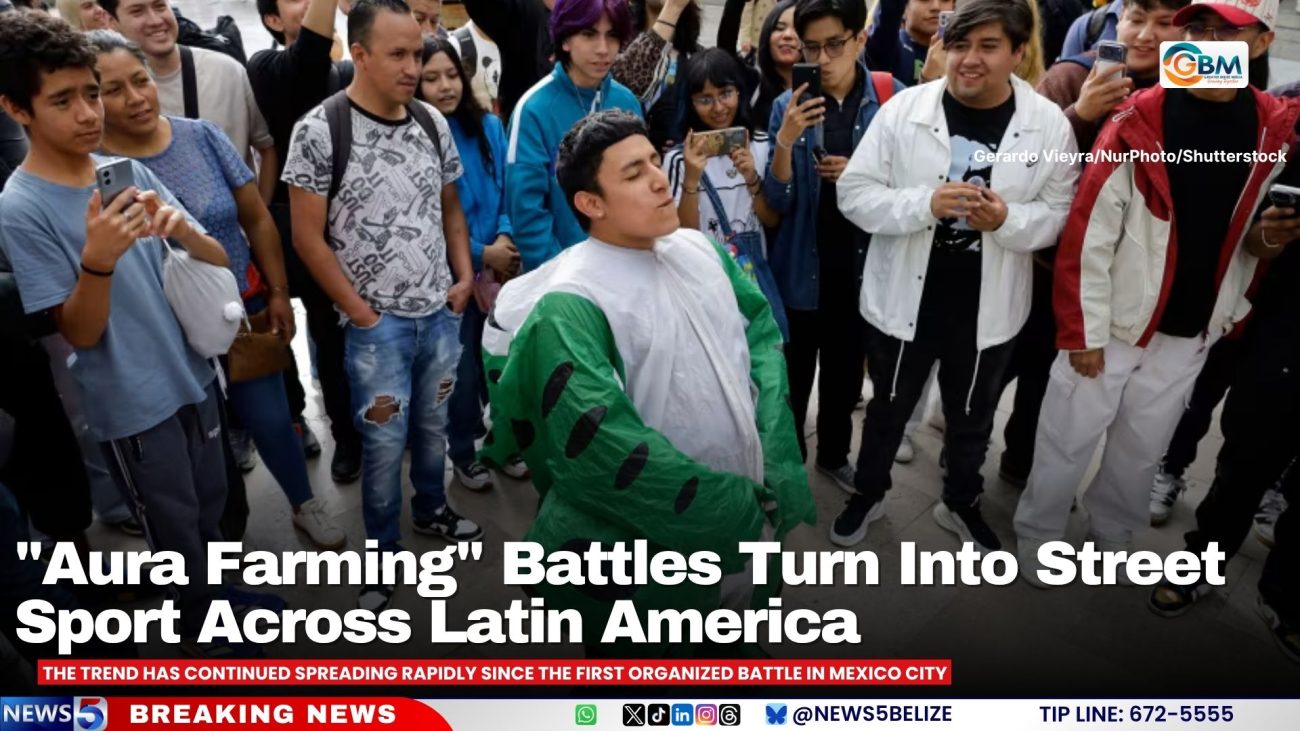
“Aura Farming” Battles Turn Into Street Sport Across Latin America
A phenomenon born on TikTok has spread into public squares across Latin America, where young competitors face off in so-called “aura battles” that reward composure, style, and crowd reaction rather than any traditional athletic or artistic skill, according to CNN.
At a recent event at the University of Costa Rica in San José, spectators gathered around competitors trading dances, poses, and dramatic gestures, filming the exchange on their phones. CNN reports similar battles have taken off across Mexico, Argentina, and Brazil, often organized by local content creators and designed specifically to go viral. The contests have no formal judges or rules, according to CNN; competitors instead compete purely for audience reaction, occasionally earning small cash prizes for the biggest response.
According to CNN, the concept traces back to “aura farming,” internet slang describing the act of appearing effortlessly cool without visibly trying. The term gained traction in 2024 before exploding into wider popularity in 2025 through viral clips of an 11-year-old Indonesian boy, Rayyan Arkan Dikha, calmly dancing at the front of a moving boat during a traditional longboat race. Dikha’s videos amassed millions of views, and CNN reports the term “aura farming” has since spread into edits of anime characters, athletes, and celebrities online.
University of Texas humanities professor Frederick Luis Aldama told CNN the format resonates particularly with Latin American youth given the region’s long cultural history of gathering in public plazas and courtyards. Aldama, who personally witnessed a battle in Mexico City’s Parque México, said he was surprised by what actually won over the crowd.
Not everyone has embraced the trend. CNN reports that in the Brazilian city of Cuiabá, Mayor Abílio Brunini banned one planned championship from taking place in the city’s main public square, predicting participants would eventually regret taking part. Despite the ban, footage showed people competing anyway in front of City Hall in July.
The trend has continued spreading rapidly since the first organized battle in Mexico City on August 20th, with similar events reported within days in Costa Rica, Argentina, and Brazil.