


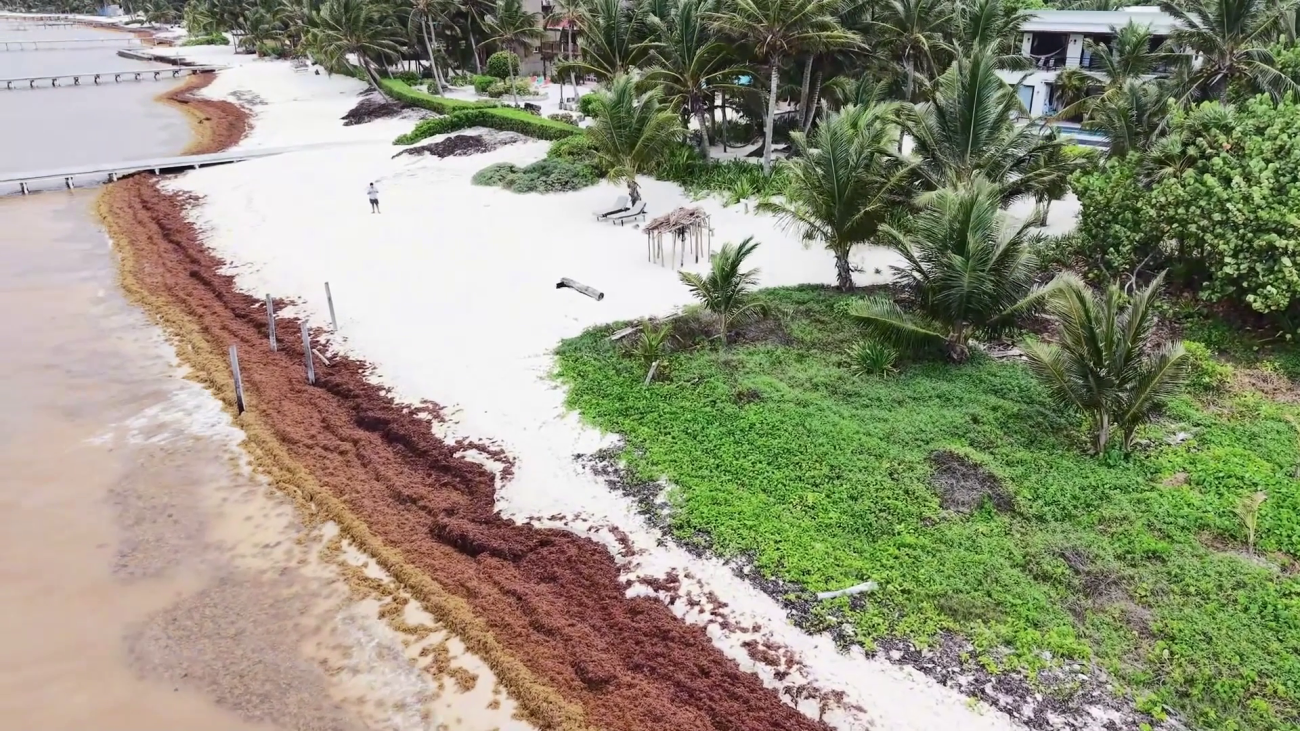
Sargassum Crisis Threatens Belize’s Tourism Industry
Sargassum is no longer just an eyesore on Belize’s beaches. It is becoming a costly threat to the coastal experience that attracts roughly seventy percent of the country’s visitors. In Placencia today, thick mats of seaweed covered sections of the shoreline, once again forcing residents and businesses to find the equipment, manpower and money needed for another major cleanup. But with the invasion growing more severe and expensive, government says temporary fixes are no longer enough. It is now considering a long-term funding plan that could use a portion of the proposed hotel tax increase to finance the fight. Tourism Minister Anthony Mahler says Belize can no longer treat sargassum as a seasonal nuisance when it threatens one of the country’s most valuable tourism assets.

Anthony Mahler
Anthony Mahler, Minister of Tourism
“What we did was to say, all right, if you guys agree to the 3.5% increase and I said that in cabinet, that I don’t think anything should happen until we have another meeting with the private sector where the minister of tourism is involved. Meetings were had without. They had discussions and they knew that it was coming. So I don’t know where that surprise come or make it look like that me the push for this. I’ve always oppose new taxes on the tourism industry, always. And that is a fact, even the ten dollars for air security but you understand why, right? These things cost money. They have to put certain things in place so that another situation like a few years ago doesn’t happen again. But it has to be said that the request in cabinet was for a certain amount of monies to go into Sargassum, (6:15:56) the fight against Sargassum. And if we have to get the 3.5% points increase in the hotel tax, then at least put 1.5% back into the Sargassum fight.”
Minister Mahler says government is currently pursuing grant funding from international financial institutions to support its battle against sargassum. The target is twenty million dollars.
Attention readers: This online newscast is a direct transcript of our evening television broadcast. When speakers use Kriol, we have carefully rendered their words using a standard spelling system.
Watch the full newscast here: