



Who Approved HRCU’s Forty-Million-Dollar BEL Loan?
A forty-million-dollar loan, claims of confidentiality and growing demands for answers are putting Holy Redeemer Credit Union under scrutiny. Opposition Leader Tracy Taegar Panton wants HRCU to disclose who approved the reported unsecured loan to Belize Electricity Limited, how the risks were assessed and what safeguards protect members’ savings. HRCU has fired back, insisting the deal followed established procedures and faced internal, external and regulatory oversight. The credit union also says its relationship with BEL has generated more than twenty-four million dollars in interest since 2003. But the central question remains: can HRCU protect confidential business information while giving its member-owners the transparency they deserve? Here’s News Five’s Isani Cayetano with the following story.
 Isani Cayetano, Reporting
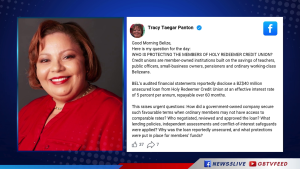
Who is protecting the members of Holy Redeemer Credit Union, and how much information are those members entitled to receive when their money is placed in a major corporate loan? That question is at the center of a growing public dispute over HRCU’s reported forty-million-dollar loan facility to Belize Electricity Limited. Opposition Leader Tracy Taegar Panton, herself a long-standing credit union member, says BEL’s audited financial statements identify the facility as an unsecured loan carrying an effective interest rate of five percent annually and repayable over five years. She is now demanding disclosure of the approval records, risk assessments, repayment conditions and safeguards surrounding the transaction.
 HRCU has fired back. In a press release issued today, the credit union accused Panton of maligning the institution and insisted that every transaction passes through established approval channels, policies and procedures. HRCU says its relationship with BEL stretches back to 2003 and that investments in BEL debentures have earned more than twenty-four million dollars in interest over the years. The credit union also says BEL approached it for additional investment in 2023, but HRCU instead chose to offer a loan facility as part of an effort to grow its lending portfolio.
But HRCU’s response leaves several important questions unanswered. Who reviewed and approved the forty-million-dollar facility? What independent assessment was conducted before members’ funds were committed? If the loan was unsecured, what protections were put in place in the event of default? Was the five-percent rate consistent with the level of risk, the size of the facility and the credit union’s lending policies? And was BEL given terms that an ordinary HRCU member or private business would be unlikely to receive?
 The credit union says confidentiality provisions under the Credit Union Act prevent its auditors, directors and officers from publicly discussing protected information. HRCU also points to oversight by its internal audit, compliance, finance and risk departments, along with external auditors and the Central Bank. But does confidentiality prevent HRCU from giving its member-owners a fuller account of the institution’s exposure, approval process and risk controls? And can members properly assess the safety of their savings if the most important details remain out of public view?
HRCU maintains that members’ money is safe and that the institution’s investments generate millions of dollars in annual income, helping to support dividends, interest rebates and its expanding branch network. Panton, however, argues that working people’s savings must never become a convenient financing facility for the government or a government-owned company. At stake is more than the performance of a single loan. The deeper issue is whether a member-owned institution can balance commercial confidentiality with the transparency and accountability its members deserve. HRCU says the necessary safeguards were followed. The Opposition Leader is calling for an independent review. Now members must decide whether those assurances are enough, or whether protecting public confidence requires HRCU, BEL and the regulators to provide clearer answers. Isani Cayetano for News Five.
Attention readers: This online newscast is a direct transcript of our evening television broadcast. When speakers use Kriol, we have carefully rendered their words using a standard spelling system.
Watch the full newscast here: