



Eugene Thompson’s Eviction is Followed by Devastating House Fire
One day after a court ordered Eugene Thompson out of his Belama home, fire destroyed everything he had spent five years building. Thompson says the blaze left him homeless, unemployed and battling the emotional toll of losing it all. Police now want to question his former partner in connection with the fire, while Thompson argues that authorities could have prevented the situation from escalating. Tonight, he is demanding answers and assistance. News Five’s Britney Gordon has the story.
 Britney Gordon, Reporting
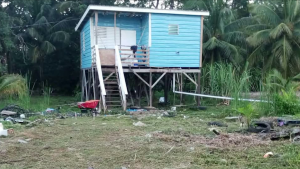
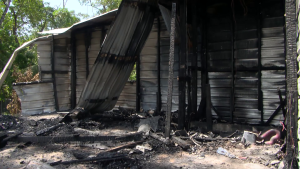
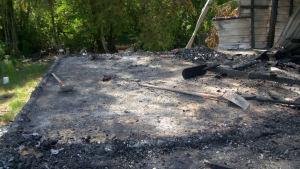
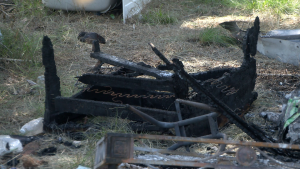
For five years, Eugene Thompson called this Belama property home. He says he built the house with his own hands and invested more than forty-five thousand dollars in materials, furniture and appliances. Today, only ashes and charred wood remain after someone set it on fire Tuesday. Thompson believes the destruction could have been avoided if he had not been evicted just one day earlier.
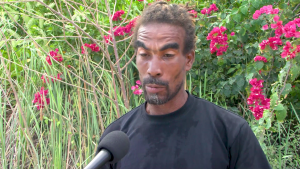
Eugene Thompson
Eugene Thompson, Fire Victim
“In family court, they evict me because my common-law gone da court fi ah summons regarding my house, weh no concern she at all. Ney put my common-law inna my house weh had a relationship with me for six months. And ney put ah inna my house fi no reason. Just evoict me out ah my house fi no reason. Not even come to me none at all fi try figure out the situation ah weh di happen inna life. Just come evict me. Outta my own home when I build. Literally outta my own home I build that.”
 Thompson says Human Services offered him temporary shelter, but he wants a permanent solution. He insists his house would still be standing had he not been evicted and is now asking the government to help him rebuild his home and his life.
 Eugene Thompson
“Personally I got how my house look. I no used to nobody round me. I no used to wa living weh have to check in and check out. I da no wa rock head. I da no wa beggar. I da no wa street person. I da wa normal human being. Civilized. I use dto live with myself. If unu can’t accommodate me with the situation how I de, because unu have it so. Build back my house fi me the way how it mi de, how I mi have it, it no mek no sense.”
On Wednesday, police released a wanted poster for his former partner, Ashema Chang, as she is wanted for questioning in relation to the fire. Thompson believes he may have saved the house if he had been there when the fire started.
 Britney Gordon
“If you weren’t evicted, do you believe that you would still have your house today?”
 Eugene Thompson
“Yes, because I mi di try avoid it. I gone to court. I cry to ney. I plead to ney. Literally shed mi eye water and nobody no try help me inna the situation. I mi wa still have my house”
Prior to the fire, Thomspon made a living by selling food. His neighbor says she often purchased patties, conch fritters and cakes from him. She is now calling on the government to step in and assist him with rebuilding a home.
Voice of: Concerned Neighbor
Voice of: Concerned Neighbor
“He’s an old neighbor of mine but I have always known him to be a hard-working person. I know he have his lee history, da no perfect person but fi me personally I believe the system fail this young man because ney evict he from his own house. I just sincerely sorry fi ah and I sorry fi the loss of his home and I just di beg and di plead with the government now, please, help this man build back a house even if its just a simple one bedroom one bathroom place.”
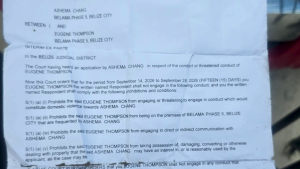
The court’s decision to evict Eugene Thompson from his home, despite only being with his girlfriend for six months, has sparked public debate. Attorney Dickie Bradley says the move falls within the powers granted to Belize’s family courts. Bradley explained that protection orders are designed to safeguard women and children who report abuse or threats and can include requiring the accused person to stay away from the complainant and, in some cases, leave the home so the complainant can remain there.
 On the Phone: Richard “Dickie” Bradley, Attorney-at-Law
“A magistrate can try as best he or she can under the law to protect a person who has gone to the court for protection. That protection usually is that the abuser Is not to be near to the victim, the complainant. The second order that is usually applied for or would be offered by the court to the victim is that if she has nowhere to go, she can remain in the house and the abuser can be ordered to leave immediately. Get a police and go and get the clothes you need and anything else you need and leave the premises and not to go back there for a certain period.”
For now, Thompson has rejected the temporary accommodation and continues to demand help rebuilding his home. Britney Gordon for News Five.
Attention readers: This online newscast is a direct transcript of our evening television broadcast. When speakers use Kriol, we have carefully rendered their words using a standard spelling system.
Watch the full newscast here: