


Shoreline Titles Complicate Environmental Enforcement
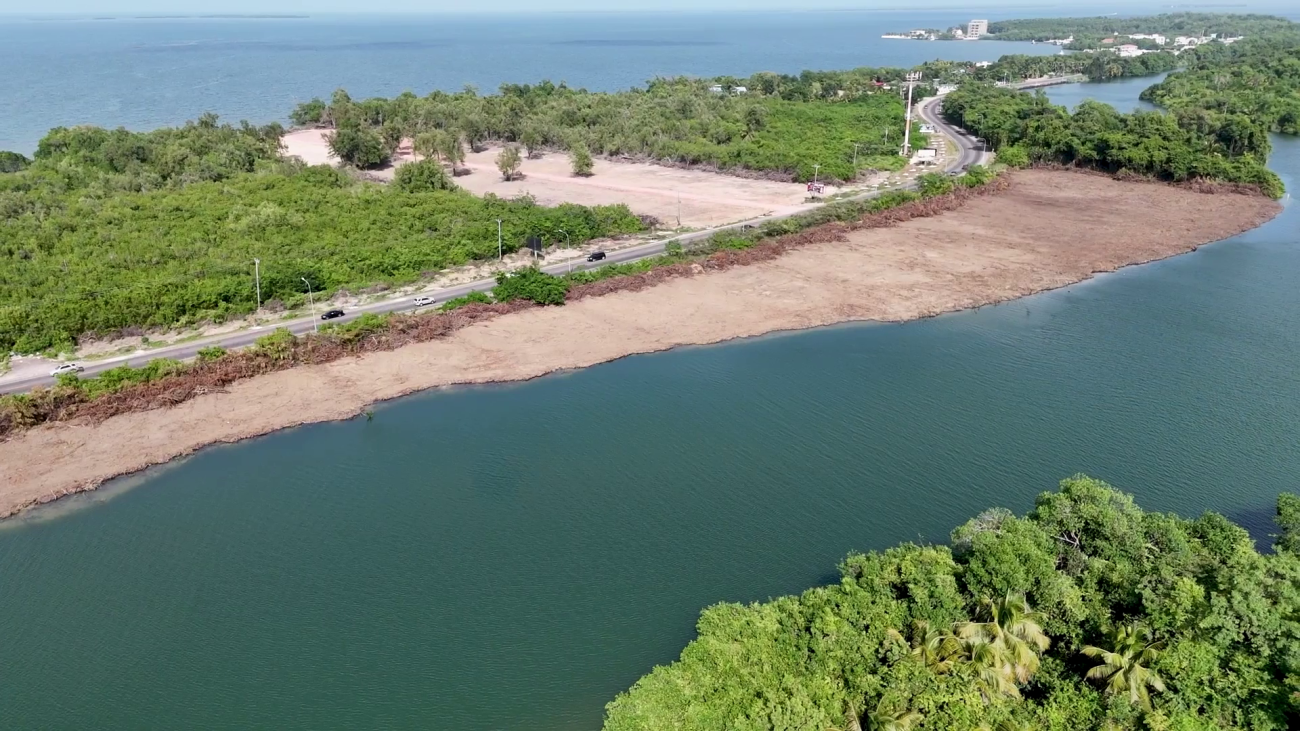
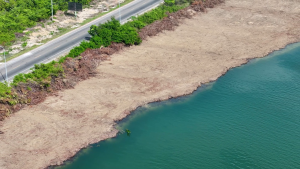
How close is too close when development reaches Belize’s riverbanks? That question has resurfaced after a property owner cleared vegetation to the water’s edge at Mile 6.5 on the Philip Goldson Highway. A multi-agency task force found that the clearing covered roughly three acres and affected few mangroves, but the case exposed a larger issue: how does Belize enforce its sixty-six-foot river reserve when older land titles extend directly to the shoreline? Chief Environmental Officer Anthony Mai explains when developers must comply with the law.
Anthony Mai
Anthony Mai, Chief Environmental Officer
“We develop what is called an environmental compliance plan, which is a contract that is signed between the Department of Environment and the investor, and the contract contains all the conditions under which the investor should construct and operate his or her facility. In this case, the ECP or the environmental compliance plan will state that, again, a sixty-six feet vegetated buffer must be maintained along water body for ecological, functions. There are instances nationally where- Some of these large agricultural development close to sensitive, waterway have been required to establish a, a vegetated buffer of up to two hundred feet, and in some instances one hundred and fifty feet, because they border close to very sensitive, surface water bodies. So that’s the kind of history of it. And so there are a few, I was told by, by, by senior officers at the Lands Department, that there are few people land title in Belize that go all the way to the water edge.”
 Britney Gordon
“But the concern there would be the preservation of mangroves and possible erosion, right? That is something that will be checked for.”
Anthony Mai
“Indeed. That’s the reason why we had asked the Forest Department to come along because the Forest Department has the legal mandate to regulate mangrove clearance or alteration and then the Lands Department has the legal mandate for the sixty-six -feet reserve. Our involvement will be to see if there’s any environmental damage or any environmental issues that needs to be considered.”
According to the Department of the Environment, the parcel dates back to the 1960s, before the requirement for a sixty-six-foot public reserve along waterways was established.
Attention readers: This online newscast is a direct transcript of our evening television broadcast. When speakers use Kriol, we have carefully rendered their words using a standard spelling system.
Watch the full newscast here: