


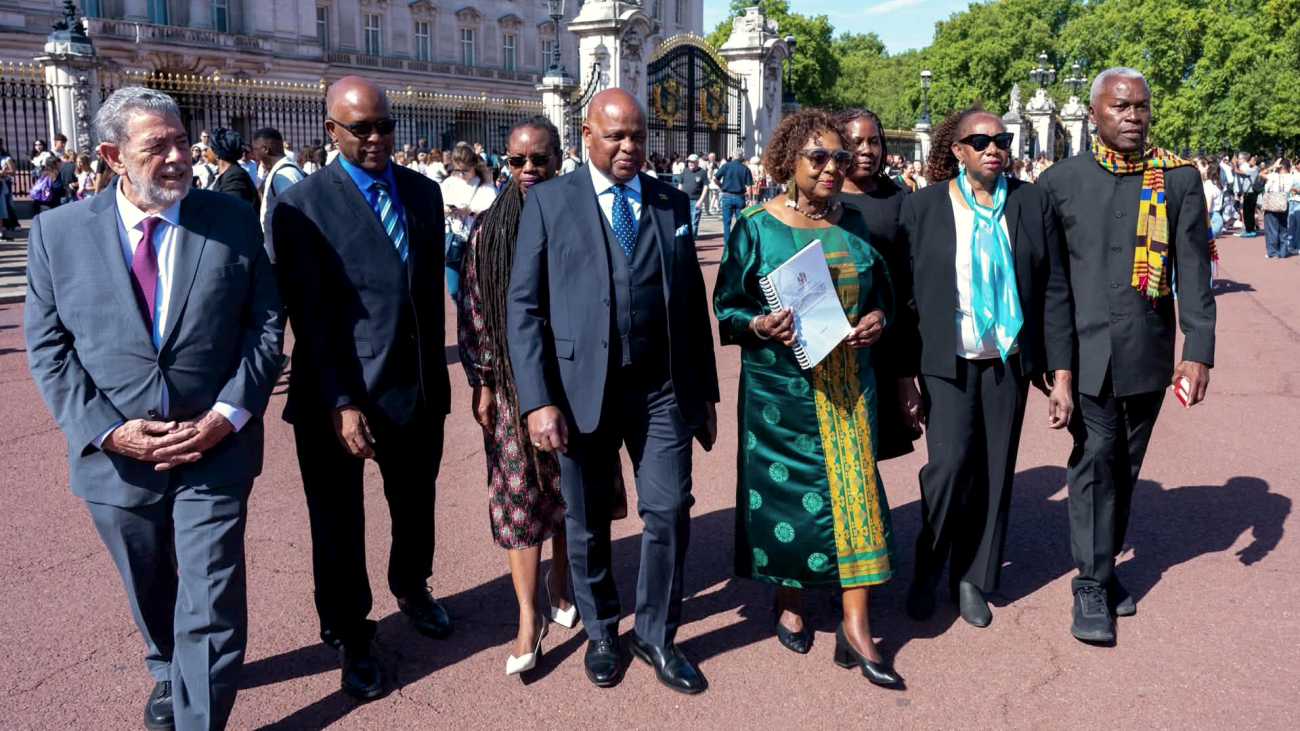
Privy Council to Examine Britain’s Slavery Legacy
Belize joined regional leaders in Barbados last week as Caribbean nations renewed their push for reparations. The conference unveiled CARICOM’s revised Ten-Point Plan and shifted the conversation from proving the case to deciding what meaningful compensation should look like. News Five’s Britney Gordon examines the growing movement and what reparations could mean for future generations across the Caribbean.
 Britney Gordon, Reporting
The fight for reparations is alive and it’s gaining momentum across the Caribbean. On September seventh, Jamaica formally petitioned King Charles III to seek legal guidance on Britain’s responsibility for slavery and its lasting consequences. The petition asks whether the enslavement and forced transportation of Africans to Jamaica was lawful, whether it amounted to a crime against humanity, and whether Britain has a legal obligation to provide reparations. In a significant step, King Charles III referred the petition to the Judicial Committee of the Privy Council for legal review, allowing senior judges to examine questions surrounding Britain’s historical responsibility for slavery and its lasting impacts.
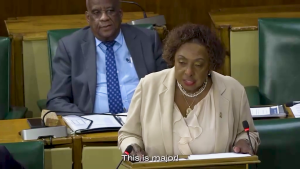
Olivia Grange
Olivia Grange, Minister of Culture, Jamaica
“This is major. As we’d say in our, our ordinary words, a big deal A really big deal. We are awaiting directions from the Judicial Committee of the Privy Council as to the next steps to be taken in the case, and the Attorney General is preparing to deal with the case.”
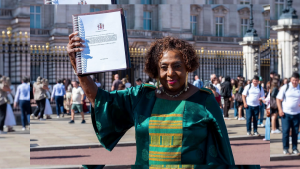 Jamaican officials say the case could set the stage for future talks with Britain and guide other Commonwealth nations seeking reparations. While the court’s opinion would not legally bind the UK, it could carry significant political and moral weight. The announcement follows last week’s CARICOM reparations conference in Barbados, where regional leaders unveiled a broad plan, including possible legal action, to advance the Caribbean’s claim. Participating on behalf of Belize’s Pro Tem Reparations Committee was Nuri Muhammad.
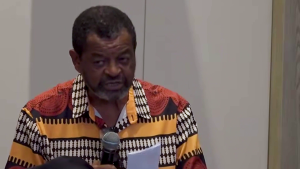
Nuri Muhammad
Nuri Muhammad, Belize Representative
“It is my hope that this new thrust that we are involved in will not necessarily be a repeat of this level. That we begin to go down to a level, we call it grassroot, but ambassador coined it, that is has to be a movement like the Marcus Garvey movement. Why? Because that is where we will get the strength.”
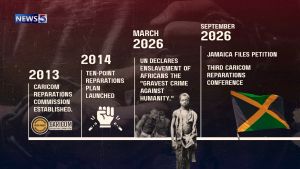 So, what does reparatory justice look like for the Caribbean? CARICOM’s Ten-Point Plan calls for apologies, debt relief and investment in education, healthcare and economic development to address the lasting damage of slavery and colonialism. It aims to tackle the social and economic inequalities rooted in slavery and colonialism.
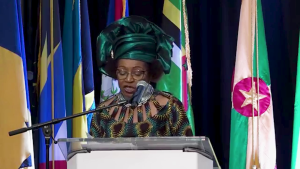
Verene Shepherd
Verene Shepherd, Professor of Social History, University of the West Indies
“The recommendation has been described as a paradigm shift and there has indeed been a paradigm shift in Thomas Kuhn’s formulations because there has been a major change in how people think about the legal and political understanding in how reparatory justice is viewed.”
Caribbean leaders hope to negotiate with Britain, but they are prepared to take international legal action if talks fail. Britney Gordon for News Five.
Attention readers: This online newscast is a direct transcript of our evening television broadcast. When speakers use Kriol, we have carefully rendered their words using a standard spelling system.
Watch the full newscast here: