



Protecting the National Animal That Defines Belize
Belizeans know it as the “mountain cow,” but the tapir represents much more than a familiar face from the forest. As Belize’s national animal, it reflects the country’s rich natural heritage and forms part of the symbols that help define who we are. But why did Belize choose the tapir, and what makes this ancient species so important? In tonight’s Kolcha Tuesday feature, News Five’s Shane Williams traces the tapir’s journey from prehistoric survivor to national treasure and examines the growing threat to its future.
 Shane Williams, Reporting
Before Belize could rally around a flag or stand proudly for its anthem, the country first had to answer a defining question: what should represent this new nation? Former Prime Minister Right Honorable Said Musa recalls that the decision did not rest solely with political leaders. Belizeans were invited to help choose the symbols that would reflect their identity, values and hopes for the future.

Said Musa
Rt. Hon. Said Musa, Former Prime Minister of Belize
“People were invited to send in recommendations. We had an election We had advertised it first of all in the media, Channel Five, Channel Seven Bridge of Belize. At that time, it was only At time it was only Radio Belize and, and the Belize Times I think.”
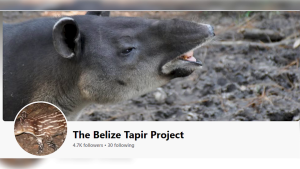 Belizeans settled on an animal that, at first glance, may not seem particularly imposing, the tapir. But according to Celso Poot, founder of the Belize Tapir Project, there is much more to this animal than its unusual appearance.
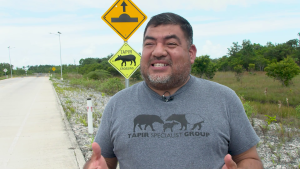
Celso Poot
Celso Poot, Founder, Belize Tapir Project
“For me, they are a representation of who Belize is and who Belizeans are. They’re resilient, they’re strong, they’re adaptable. That is who we are as a people, and we need to ensure that future generation will be able to see tapirs in the wild, and not on a poster. They haven’t evolved much in the last 20 million years, and so they have adapted.”
Adaptability has kept the tapir alive for millions of years. But while it has learned to survive nature’s changes, the pressures created by people may prove much harder to overcome.
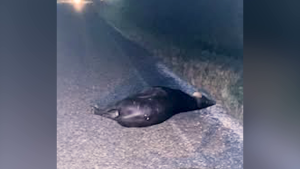 Celso Poot
“In Belize, we see a high incidence of road collision as well but that is the result of deforestation, right? The way how it work is you got this big forest, then it get cut up, so it get fragmented and then roads go in and then animals, they have to cross, and that is where road collision become a problem.”
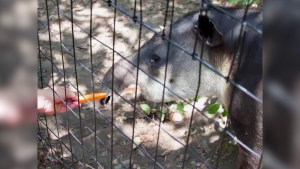 Poot launched the Belize Tapir Project in 2008, after seeing an increase in tapir deaths from vehicle collisions along the Boom Road. Twelve years later, in 2020, just weeks after the John Smith Road opened, five tapirs were killed.
Celso Poot
“We were able to lobby the Ministry of Infrastructure Development and Housing, the chief engineer, the CEO, the minister, and thankfully, we had the data to show and they were able to put these signs in as mitigation to help with slowing down traffic and reduce tapir mortality on the road. And since then, we only had two tapirs mortality by cars on this part of the road.”
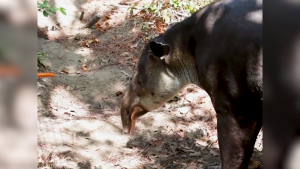 That kind of work to preserve life is especially important because the tapir does not reproduce much, becoming sexually mature at just over two years with thirteen months pregnancies and extended nursing. A tapir may produce about four calves during its eighteen-year life expectancy. So, just how many tapirs are in Belize?
Celso Poot
“That’s the million dollar question, right? Unlike animals like the jaguar where they got spots and you can identify them and, and, and they have unique patterns, tapirs have no distinguishing marks, so it’s hard for us to say how many tapirs are out there.”
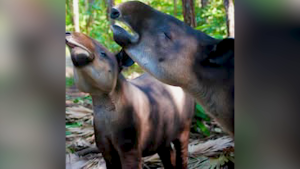 Still, researchers have a sense of population density and where the most effort needs to be made to protect our national animals. And have even created an app for the public to help in reporting collisions or wildlife at risk.
Celso Poot
“It’s a progressive web app, roadkill.bz. You just put that in a phone, like if you di search and they come up and you have the ability to take a photo. It is georeferenced, and you submit it to our database and then we do the work on the back end.”
 Efforts are underway to protect tapirs on our roads, but changing how people view them may be the tougher battle. Belize’s national football team’s embraced of the Jaguar moniker during the 2013 Gold Cup run caused people around the world to think of Belize as the Jaguars. So is it time to make a switch to the Jaguar? Belize’s eldest statesman says don’t even think about it.
Rt. Hon. Said Musa
“I think the jaguar is the national animal of other countries. That’s the reason. And the Tapir is our animal!”
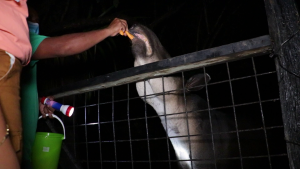 And Celso sets the record straight on which animal, despite reputation, is the true king of Belize’s jungle.
Celso Poot
“Even though the jaguar is I would say one of the most charismatic animal in Belize, it still can’t mess with the tapir. The tapir’s stronger. The jaguar could only eat one tapir when they’re a baby. Once they become a adult, the biggest predator for tapir are humans. So the jaguar cannot stand up against the tapir. It’s strong.”
For an animal that has survived for some twenty million years, the tapir has already proven that it knows how to adapt but its survival in Belize may now depend on whether we do enough to balance development and preserving natural habitats. For Kolcha Tuesday, Shane Williams reporting for News Five.
Attention readers: This online newscast is a direct transcript of our evening television broadcast. When speakers use Kriol, we have carefully rendered their words using a standard spelling system.
Watch the full newscast here: