


BFLA Challenges Barriers to Abortion Access in Belize
Abortion has once again emerged as a contentious national issue in Belize, reigniting debate over how the country should work to better address women’s reproductive health needs. At the heart of the discussion are competing arguments over access to safe abortion services, pregnancies resulting from rape and incest, family planning, and maternal health, while opponents maintain that existing laws provide adequate protections and should remain unchanged. Tonight, News Five’s Britney Gordon takes a closer look at the discussion, and the challenges women face in accessing reproductive healthcare. Here’s that story.
 Britney Gordon, Reporting
Behind Belize’s renewed abortion debate are difficult realities that cannot be ignored: unsafe procedures, adolescent pregnancies and barriers to reproductive healthcare. Now, the Belize Family Life Association is calling for greater access to reproductive health services, including safe and legal abortions, as the country weighs those concerns against the protection of unborn life.
Joan Burke
Joan Burke, Executive Director, BFLA
“Data have shown in the late 1990s, and I’m certain probably the same because sometimes the data is not readily available, that abortion, whether induced or spontaneous, continue to be among the leading cause of hospitalization in our medical facilities here in Belize. We also know that there are women who die as a result of incomplete or unsafe abortions. And so our work is around the access to information, access to services that will assist a woman in not having to having to access an abortion.”
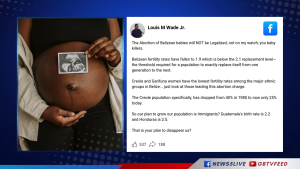 As advocates push for greater access to safe abortion services, Church Senator Louis Wade is reinforcing the Church’s opposition. In a social media post, Wade raised concerns about declining populations and stood firmly against abortion. Belize’s Criminal Code generally makes abortion a criminal offence punishable by life imprisonment, but it provides exceptions when a registered medical practitioner determines that the procedure is necessary to protect the woman’s life or health, safeguard her existing children or family, or address a substantial risk of severe fetal impairment.
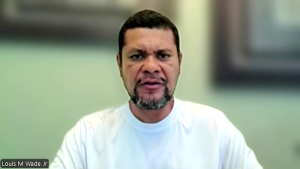
Louis Wade Sr.
Louis Wade Sr., Church Senator
“ I believe that the current laws that we have are adequate. They make a consideration for the medical issues that are associated with difficult pregnancies, and they also safeguard healthy babies. That’s what we need in our country right now. Belizeans are to be safe in the womb as much as they’re supposed to be safe walking the streets. And, uh, we know that there are parts of Belize that it’s now dangerous to walk, and we do not want the womb to be one such place for Belizeans.”
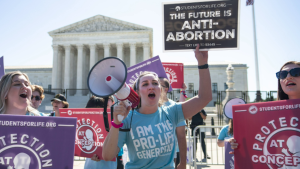 In 1973, the landmark Roe v. Wade ruling gave women across the United States a constitutional right to abortion. In 2022, almost fifty years later, the U.S. Supreme Court overturned the decision, ending the nationwide right to abortion and leaving the issue to individual states. In Belize, the BFLA wants fewer barriers to legal abortion services when pregnancy threatens a woman’s physical or mental health. Productive Organization for Women in Action, POWA, supports the call, with co-founder Michele Irving emphasizing women’s autonomy.
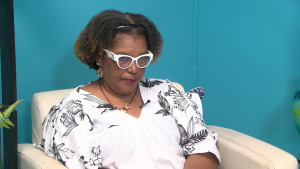
Michele Irving
Michele Irving, Co-Founder, POWA
“ When we believe in women, when we believe in their stories, when we believe in what they’re going through, we believe in their capacity to make a decision that is right for them, you know? And so, some of the support is to seek counseling, for them to seek counseling, and to know exactly where the perimeters are as it relates to their capacity to terminate a pregnancy based on, based on the perimeters that are in our laws in Belize. So we give people the correct information that then they could make a decision.”
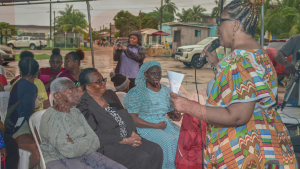 Abortion may be legal under limited circumstances in Belize, but accessing the service remains difficult. As a result, some women and girls resort to unsafe alternatives. Despite standing on opposite sides of the debate, pro-choice and pro-life groups agree on the need for counselling, family planning and stronger social support. Lisbeth Ayuso, founder of Seed of Life, has supported women through difficult pregnancies for more than two decades. Her organization maintains that life begins at conception.
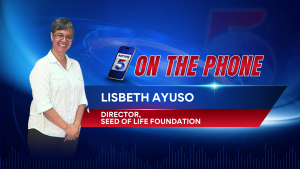 Lisbeth Ayuso, Founder, Seed of Life
“For those who cannot afford, for example, Pampers or something to that effect, we do help them out to some extent, clothing, whatever. But they also receive things like counseling. Counseling is very important. A lot of these women come from situations that cause trauma in their lives, and so you find that they are unable to survive in life the way normal folk would or those that have support can. So we help them out in that situation, right? We, in the past, we also used to help women who are in situations where they need to give up their babies, in other words, for adoption. When you asked about having an option, abortion is not the option that we encourage. As a matter of fact, because we are a pro-life organization, we encourage the women to have their children.”
BFLA is looking across the Caribbean to strengthen Belize’s abortion-rights debate. In 2026, the Eastern Caribbean Supreme Court struck down Dominica’s abortion ban, expanding access in cases involving rape, incest, severe fetal impairment and serious risks to a woman’s life or health. Belize has proposed no similar legal changes, but pro-choice advocates say stigma remains a major barrier, while pro-life groups continue to defend the lives of unborn children. Britney Gordon for News Five.
Attention readers: This online newscast is a direct transcript of our evening television broadcast. When speakers use Kriol, we have carefully rendered their words using a standard spelling system.
Watch the full newscast here: