


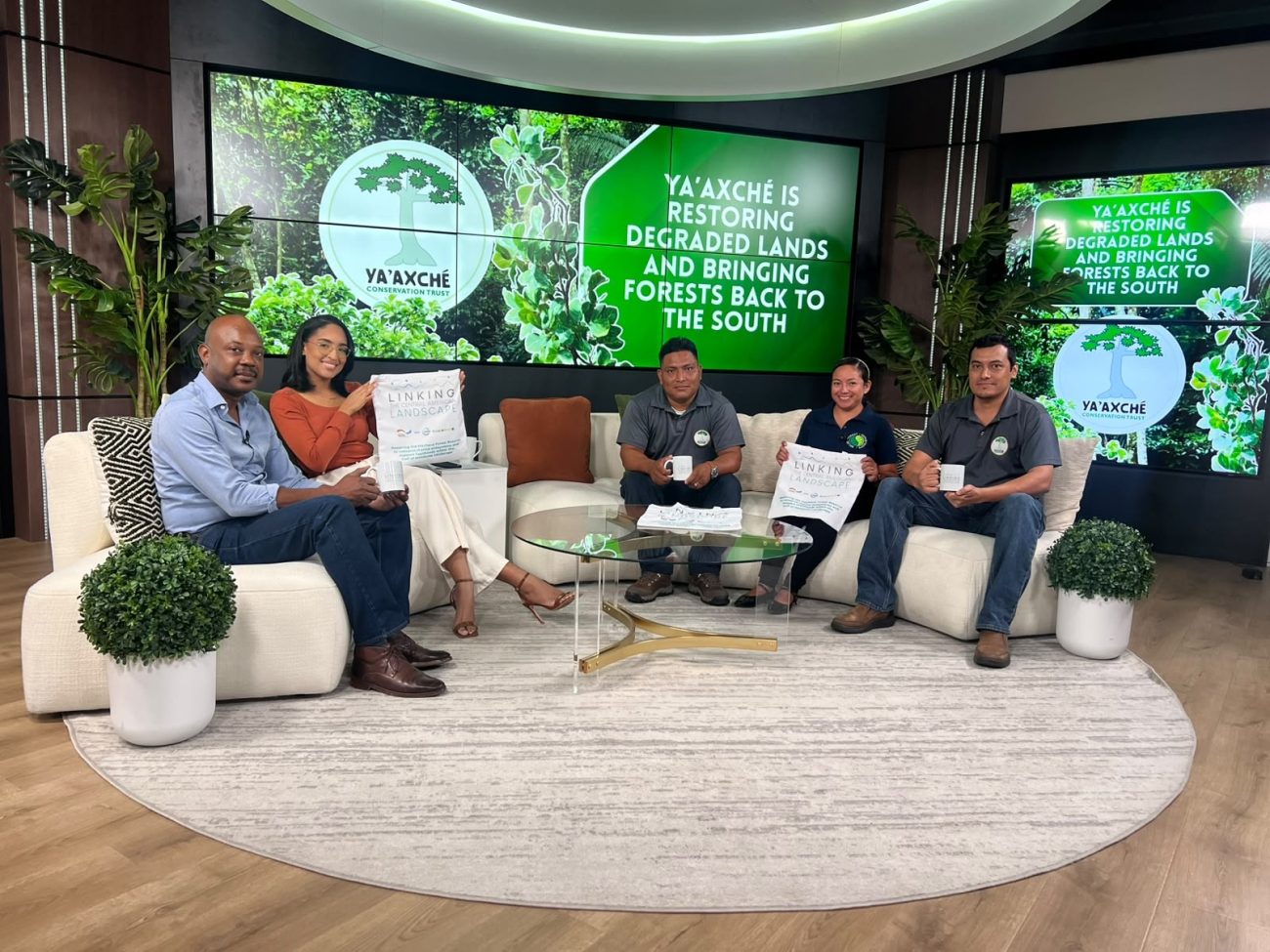
Ya’axché Is Restoring Degraded Lands and Bringing Forests Back to the South
Today’s episode of Open Your Eyes highlighted ongoing efforts to restore degraded lands and strengthen reforestation efforts in southern Belize, with Ya’axché Conservation Trust and the Forest Department discussing their work in the Machaca Forest Reserve area of Toledo.
Restoring the Machaca Forest Reserve
The project is part of the broader regional initiative “Connecting the Mesoamerican Landscape” and is supported by the International Union for Conservation of Nature (IUCN). The goal is to restore up to 200 acres of the Machaca Forest Reserve, an area that has experienced pressures including fires, hurricanes and land-use changes over the years.
The Forest Department explained that Machaca was established as a forest reserve in 1963, in part to protect the watershed that provides water to the Toledo District. Initial assessments showed that while pine trees had historically been present in the area, there was little natural regeneration, leading the project team to reconsider which species would be most appropriate for restoration.
Beyond Simply Planting Trees
The discussion emphasized that landscape restoration is not simply about planting trees everywhere. Instead, the approach looks at how trees, crops, livestock, soil and water can work together.
Ya’axché is working with farmers around the Machaca Reserve, including six farmers in Imbiri Grove, to implement silvopastoral systems. This form of agroforestry integrates trees into livestock pastures rather than clearing land completely for grass.
The approach can help reduce soil erosion, support biodiversity, improve soil health and provide additional benefits for farmers through timber, fruit, soil-fertility and livestock-feed trees.
Working With Farmers
Changing traditional farming practices can take time. Ya’axché explained that farmers are being introduced to these systems through training, demonstration farms and community engagement.
Farmers are encouraged to start gradually, such as by implementing the system on one acre and expanding as they see the benefits. The project also provides necessary materials and support, including resources for rotational grazing and the establishment of enclosures.
A Long-Term Commitment
Although the current project funding and main activities are scheduled to conclude soon, the restoration work is expected to continue for years. Newly planted trees will require regular monitoring, and trees that do not survive will need to be replaced.
The Forest Department also highlighted Belize’s commitment under the Bonn Challenge to restore 130,000 hectares of degraded land by 2030. Restoration efforts from organizations, communities, NGOs and private-sector partners are being documented and aggregated to help track progress toward that goal.
Tracking Belize’s Reforestation Efforts
The conversation also highlighted the Greening Belize app, which is being used to track trees planted as part of the Million Tree Campaign. According to the Forest Department, approximately 1,862 plants were recorded through the app during September alone.
The public can also follow the work of Ya’axché and the Forest Department through their social media platforms and websites. A 24/7 anonymous WhatsApp hotline, 610-6152, is also available for questions and reports of illegal activity.
The message from the discussion was clear: restoring Belize’s forests is a long-term process that requires cooperation between conservation organizations, government agencies, farmers and communities. While newly planted trees may take decades to mature, the work being done today is aimed at creating healthier landscapes and stronger ecosystems for the future.
Watch Today’s Open Your Eyes Episode Here