


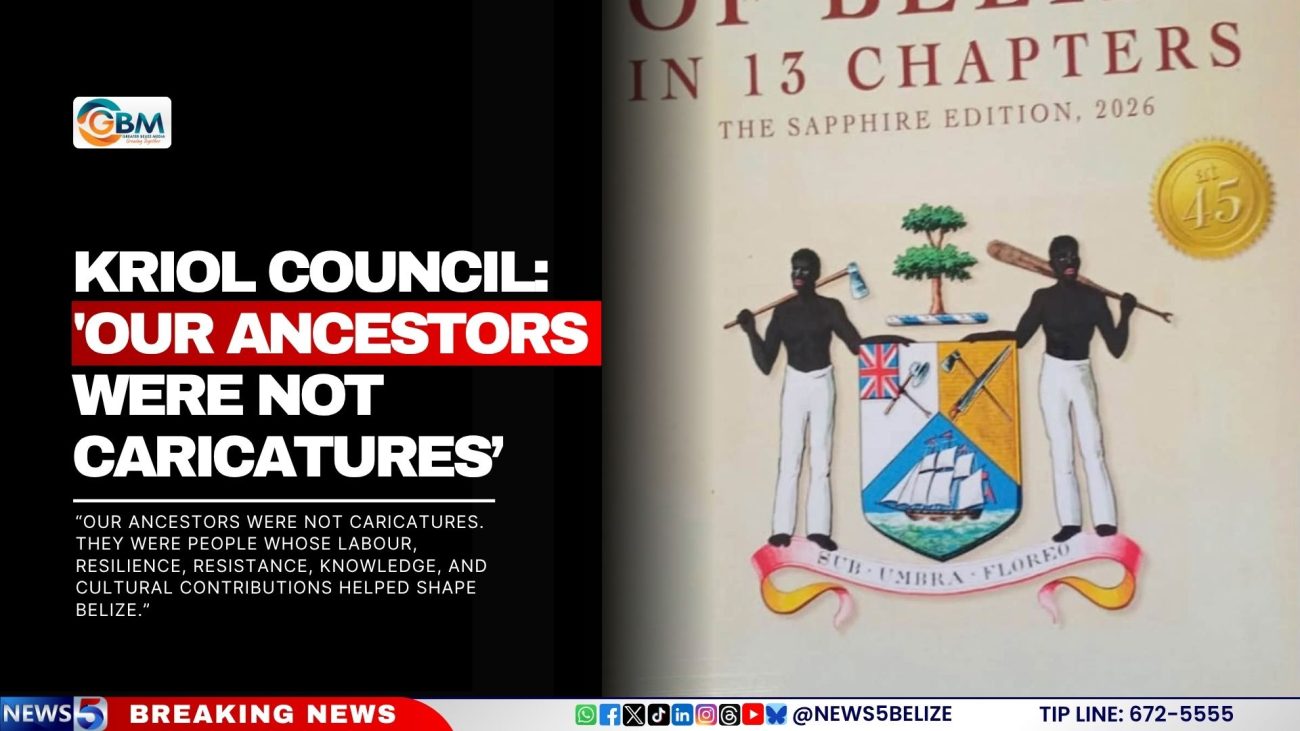
Kriol Council: ‘Our Ancestors Were Not Caricatures’
The National Kriol Council (NKC) is objecting to what it calls “exaggerated racial imagery” on the cover of the recently published edition of Assad Shoman’s A History of Belize in Thirteen Chapters and is calling on the author and publisher to explain it.
The Council said the depiction of exaggerated Black figures “evokes degrading racial caricatures historically used to ridicule, dehumanise, and undermine the dignity of people of African descent.”
It added it recognises the historical and foundational significance of the Coat of Arms and its place in the evolution of Belize’s national identity. It said it “unequivocally condemns the disrespectful portrayal of our ancestors” and rejects any representation that diminishes their humanity, distorts their experiences or perpetuates racial stereotypes.
“Our ancestors were not caricatures. They were people whose labour, resilience, resistance, knowledge, and cultural contributions helped shape Belize.”
The NKC said it stands against what it called the deliberate erasure of Kriol history and any attempt to diminish, redefine or exclude its people from the story of Belize. It said erasure can go beyond images and publications to include omitting Kriol contributions, misrepresenting cultural identity, and failing to properly acknowledge the people and communities responsible for preserving traditions.
The council said no publication, institution or individual should be beyond scrutiny when questions of cultural representation and historical integrity arise.
“Respect for scholarship does not require silence in the face of concerns about the dignity and legacy of our ancestors.”
The NKC called on the author and publisher to address the concerns, to give a clear explanation for the selection and presentation of the cover image, and to seriously consider whether its current treatment reflects the dignity of the people depicted.
News 5 reached out to Shoman for comment.