


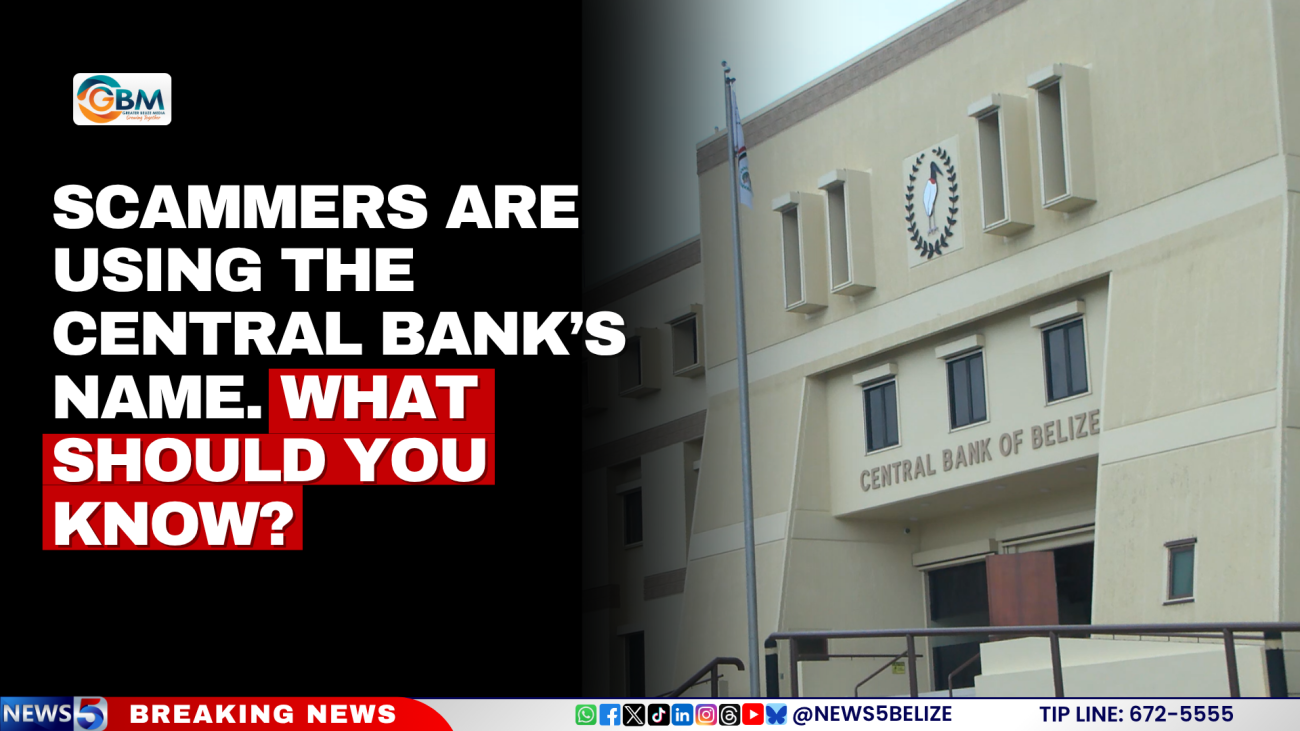
Scammers Are Using the Central Bank’s Name. What Should You Know?
The Central Bank of Belize is warning the public about fraudsters impersonating its officials through Google Meet after receiving multiple reports of suspicious calls.
Marcos Marin, Manager of the IT Department at the Central Bank of Belize, said the callers are using the institution’s name to gain the public’s trust and obtain personal or financial information.
Marin explained that the scheme relies on social engineering, a tactic in which fraudsters manipulate people into trusting them and voluntarily disclosing sensitive information.
“In this case, they are targeting the public, not the Central Bank of Belize,” Marin said. The fraudsters use the institution’s name to gain people’s trust, making them more likely to disclose personal information, including passwords and PINs.
Marin stressed that the Central Bank will never request sensitive financial information through unsolicited calls. “We will never call any member of the public requesting any financial information, personal, PINs, passwords, etc.”
One Belizean told News 5 he received a call displaying the Central Bank of Belize’s name and branding but hesitated before answering.
“I mi di wonder if I should answer it or not, because I mean, why Central Bank di call me, right?” he recalled. “The call stayed on for like 20 seconds, and it just cut off after that. They never did answer me or anything.”
He added that a Gmail address appeared on his phone after the call ended, which he found unusual. He said he only realised the call could be part of a scam after seeing the Central Bank’s press release warning the public about fraudulent calls.
For anyone who may have shared sensitive information, Marin advised acting quickly to protect their accounts.
“Immediately change your password or your PIN if you have the ability. Two is contact your financial institution immediately for them to act, and the third one is to monitor your transactions to see if any fraudulent transactions show up,” he said.
The Central Bank is urging the public to remain vigilant, end suspicious calls or online meetings immediately, and never share confidential financial information with anyone.