


Airport or Essentials? San Pedro’s Future Hangs in Balance
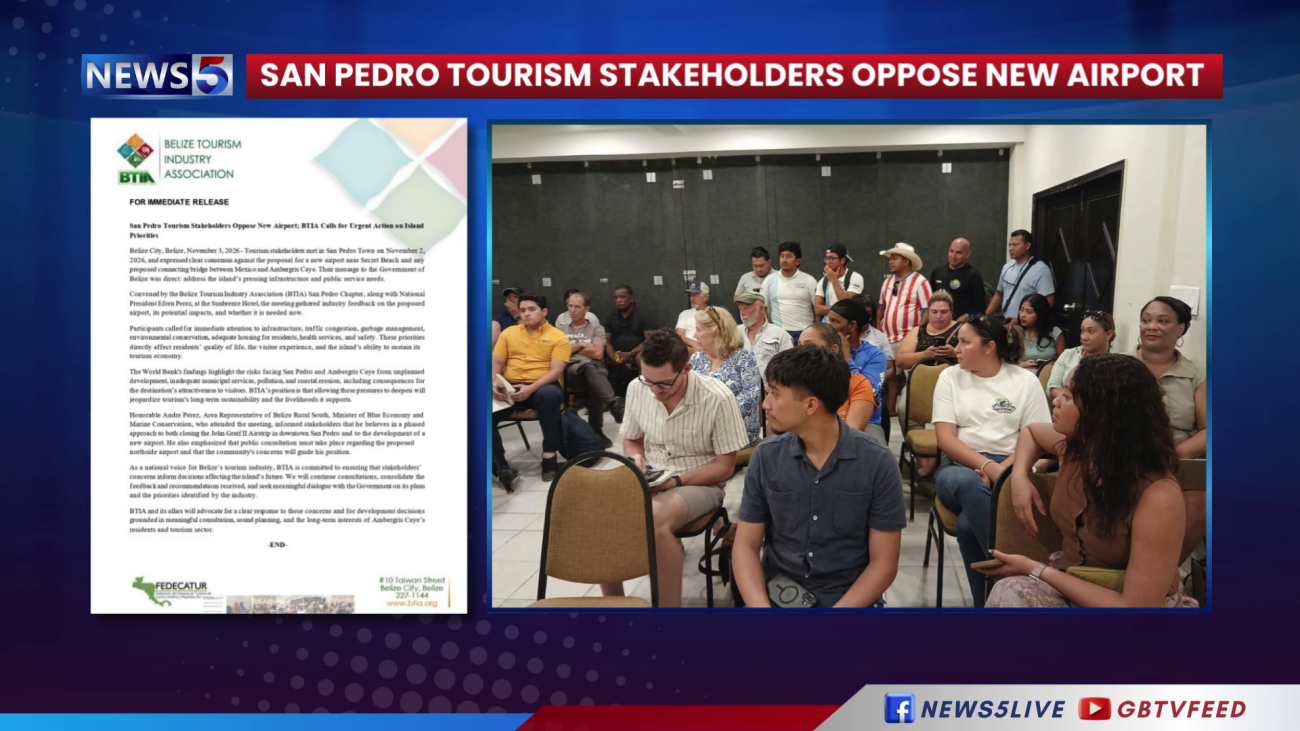
San Pedro is growing, but what should come first: a new airport designed for future demand, or reliable services for the people already living and working on the island? That question is driving a growing debate over the proposed airport near Secret Beach. The Government of Belize argues that the existing John Greif II Airport is approaching its operational capacity and may not be able to safely and efficiently support San Pedro’s growth over the coming decades. But tourism stakeholders say the government may be looking too far ahead while urgent problems remain unresolved today. At a meeting organized by the Belize Tourism Industry Association’s San Pedro Chapter, tourism operators reportedly opposed the proposed airport and any bridge connecting Mexico and Ambergris Caye. Instead, participants called for immediate action on traffic congestion, garbage management, housing, health services, safety and environmental protection. Tourism stakeholders say San Pedro needs more than better access. It must remain liveable. Government argues that a modern airport would improve safety, handle more passengers, strengthen emergency response and create jobs and investment. But key questions remain: What will it cost? Who will pay? What happens to the environment near Secret Beach? And will the project divert money from roads, garbage collection and healthcare? Government promises consultation before closing the existing airport. But public input must shape the decision, not come after it. Andre Perez supports phasing out San Pedro’s existing airstrip and building a new airport, but says public consultation must guide the decision. That promise is now under scrutiny. Government calls the airport an investment in future growth. Tourism stakeholders warn that growth without proper planning could harm the island it is meant to support. A new airport will not collect garbage, ease traffic, provide housing or improve healthcare. But waiting until the current airstrip reaches capacity also carries risks. The issue is not development versus preservation. It is about priorities, timing and accountability. Before moving ahead, government must disclose the cost, financing, passenger projections, environmental impact and transportation plan. San Pedro’s future should rest on evidence and public input, not competing press releases.
Attention readers: This online newscast is a direct transcript of our evening television broadcast. When speakers use Kriol, we have carefully rendered their words using a standard spelling system.
Watch the full newscast here: