


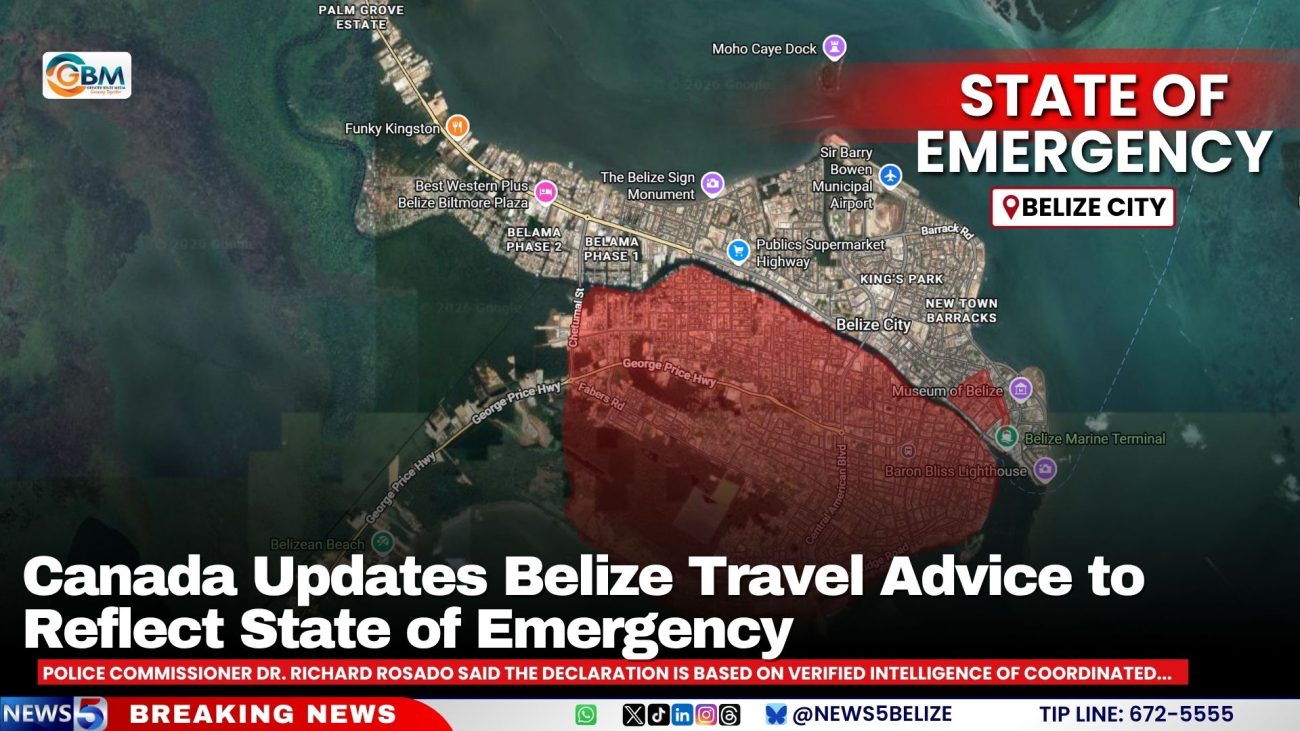
Canada Updates Belize Travel Advice to Reflect State of Emergency
The Government of Canada has updated its travel advice for Belize to include the state of emergency, and continues to tell Canadians to exercise a high degree of caution because of violent crime.
The advisory, last updated Nov. 3, says Canadians should exercise a high degree of caution “throughout the country” and avoid non-essential travel to Southside Belize City, south of the Haulover Creek River, because of gang and drug-related violence, including murders and shootings.
Canada’s advice says a 30-day state of emergency was declared on Oct. 31 in specific areas of Belize City, Belize District and Cayo District after a sharp rise in violent crime. The areas it lists are parts of Northside and Southside Belize City, areas of Ladyville, Cotton Tree and Unitedville in Cayo, and the Coastal Highway between La Democracia and Hope Creek.
The advisory says security forces can restrict movement, carry out searches and seizures, and detain persons of interest while the state of emergency is in effect. Canadians in those areas should expect more police and military presence, carry valid identification, and expect transportation delays.
On crime more broadly, the advisory says Belize has “one of the highest per-capita murder rates in the world” and that violent crime is a major concern outside Southside Belize City, including in Belmopan. It lists murders, armed robberies, burglaries and assaults, including sexual assaults. It says violent incidents against foreign residents sometimes occur in tourist areas such as Caye Caulker, Hopkins, Placencia, San Pedro, San Ignacio, Corozal and Seine Bight.
The advice says police capacity to respond to violent incidents is limited and many crimes remain unsolved. It says tourists are not usually targeted but could be in the wrong place at the wrong time.
Canada also notes higher criminal activity near the border with Guatemala, including at Melchor de Mencos, and says El Niño conditions are expected to strengthen through 2027, which could bring droughts, floods and severe storms. It also reminds travellers that hurricane season runs through the end of November.
Governor-General Froyla Tzalam signed the declaration on Saturday, stating that a public emergency had arisen that could endanger public safety. It covers Southside Belize City, a section of Northside Belize City, Ladyville, Cotton Tree and Unitedville.
It followed one of the country’s bloodiest weekends in recent memory, with seven murders reported between Friday and Sunday morning, amid shootings police have linked to gang rivalries.
“Over the past month we have experienced an upsurge in the number of shootings and murders in these areas. The citizens of our country deserve to know what is being done to reduce the level of criminality we have experienced and thereby increase citizen security.”
Police Commissioner Dr. Richard Rosado said the declaration is based on verified intelligence of coordinated, retaliatory gang violence. He said police have prepared files on approximately 60 people who could fall under the emergency, but most had not been detained at the time.
Some relatives of detainees have said they believe innocent people are being held, and at least two families have said they plan to take legal action.
The government’s use of emergency detention powers is also under scrutiny after the Court of Appeal declared a 2020 state of emergency unconstitutional. That decision is expected to go before the Caribbean Court of Justice. Chebat said the government must “exhaust all tools” it has to fight crime while the violence continues.