


Sargassum Threatens Belize’s Coastal Tourism Economy
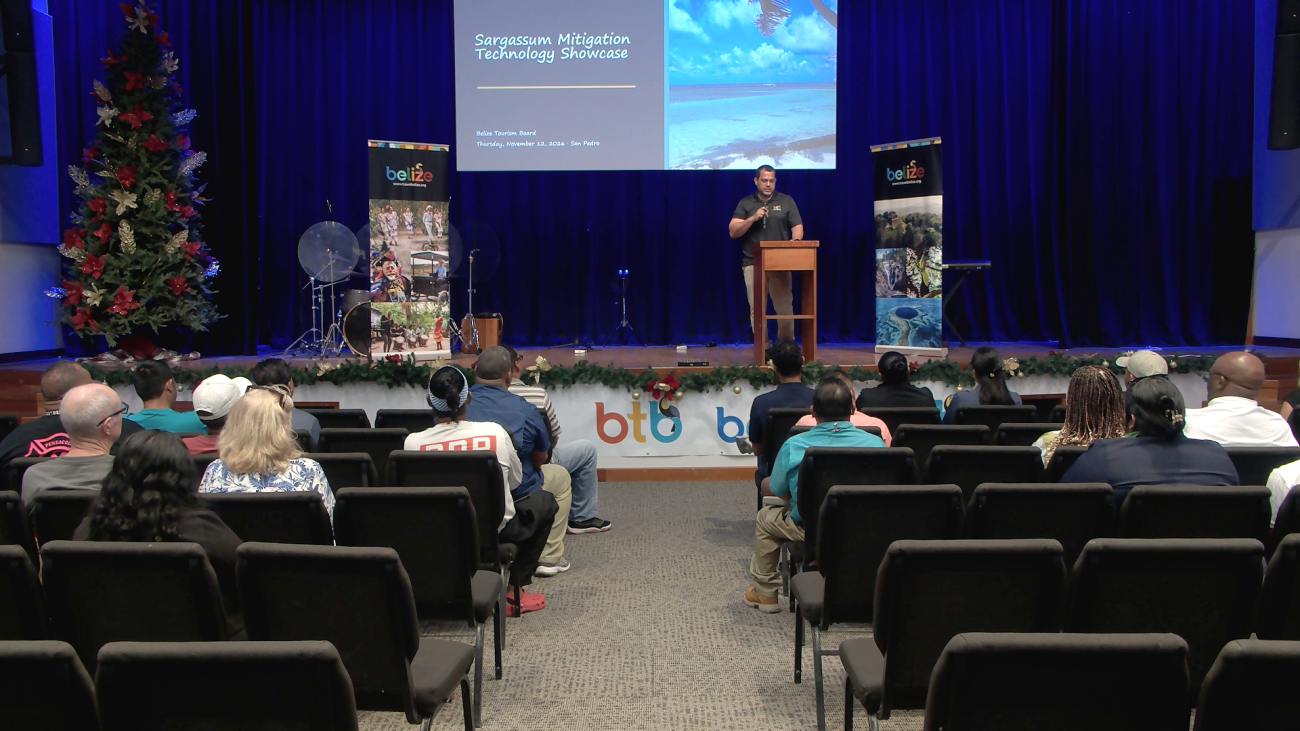
Sargassum has become more than an eyesore along Belize’s coastline. It is an economic threat to communities whose livelihoods depend on clean beaches, clear waters and memorable coastal experiences. After a particularly devastating season, the Belize Tourism Board is looking at technology as part of the solution. Today stakeholders got a closer look at a system designed to intercept and manage the seaweed before it reaches the shore. But with sargassum expected to remain a recurring problem, the question is whether Belize can stay ahead of the invasion. Shane Williams reports.
 Shane Williams, Reporting
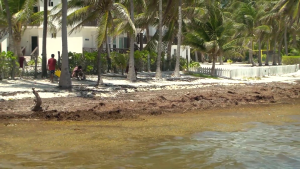
Belize’s picture-perfect beaches are under siege, and the growing sargassum invasion is threatening to turn a tourism attraction into a costly problem. From San Pedro to Placencia, mountains of seaweed are washing ashore, disrupting marine activities, frustrating tourism operators and damaging the coastal experience visitors come here to enjoy. This year’s invasion has been the worst yet, and for communities that depend on tourism, the fallout goes far beyond foul-smelling beaches. It is a growing threat to livelihoods, businesses and Belize’s tourism industry.
Brice Dial
Brice Dial, Vice Chair, Placencia Village
“Sargassum was really, really bad for our tourism season. You know, obviously guests don’t want to come and see the sargassum and then after the sargassum sits there a while, then it’s the smell of the sargassum. So I think that there were a lot of cancellations or a lot of people that were inquiring and then didn’t end up booking because business owners have to be honest about the state of the beach and the sargassum.”
 The Belize Tourism Board is now exploring technology that could change how the country responds. Andrew Usher, Director of Industry Development and Guest Experience, brought stakeholders together for a showcase of a system Belize is considering implementing.

Andrew Usher
Andrew Usher, Director of Industry Development & Guest Experience, BTB
“It’s not a magic wand solution. It’s not a, you know, it’s not, oh, we have the solution for an entire country. As you know, we have about six coastal destinations that we support up and down our entire coastline. What works in Ambergris Caye doesn’t necessarily work in Placencia. What works in San Pedro town doesn’t work in northern Ambergris Caye. Now the system itself is designed to be replicated. It’s designed to be modified slightly to adjust to the specifics of the area that we will mitigate.”
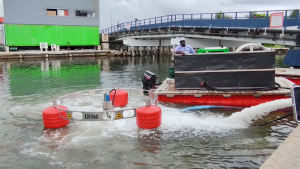 The system aims to intercept and contain sargassum before it reaches shore. Stakeholders are now assessing whether it can withstand Belize’s coastal conditions and help during major influxes. Private resorts can also help by installing DESMI Ro-Clean sargassum barriers, known as booms.
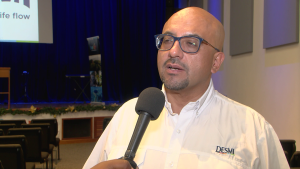
Orlando Chavez
Orlando Chavez, Director, DESMI Ro-Clean
“We have been working on this project for twelve years and we developed a lot of different versions always trying to get the best performance possible, the best efficiency possible. I’m happy to say we are close to ninety-five percent efficiency. That means 95% of sargassum can be deflected, five percent of sargassum can still reach the shore.”
Orlando Chavez says they have been studying sargassum mitigation for over a decade and waiting for it to reach onshore to collect is the worst method.
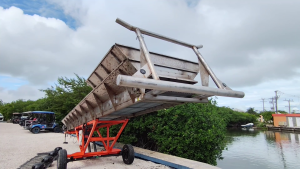 Orlando Chavez
“Collection is a very bad issue. You try to collect sargassum, you try just to contain sargassum, no animal is going to do it because you have a pocket, and then sargassum will be accumulated in the pocket, and then suddenly the sargassum is going to be under any kind of boom. So the best idea is to try to have an angle to divert sargassum with the current. If you have the sargassum being diverted, you are able to bring sargassum with the currents far away from the shore.”
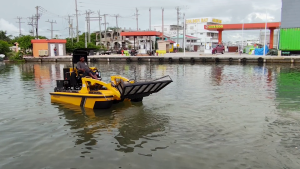 For coastal communities, the stakes are particularly high. Its beaches and surrounding waters are not simply attractions; they are the foundation of an entire tourism-based community. When sargassum takes over the coastline, businesses, tour operators and residents all feel the impact.
Brice Dial
“A lot of the complaints that we’re getting from businesses along the coast and just residents is that the sargassum also causes appliances to burn out. So for instance, I am the owner at Barefoot Bar and we lost like a ton of our POS units. We’ve lost so many TVs and other businesses have reported the same. And then also for people that already have respiratory issues or even people that didn’t before, they’ve developed issues from the sargassum. So it, you know, it’s also a health factor as well. So it’s pretty much a beast, you know. It’s not good for anything.”
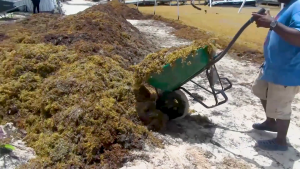 Technology may help fight sargassum, but there is no permanent fix. Sargassum Task Force Chair Felicia Cruz says the seaweed is here to stay, making long-term planning, coordination and investment essential.

Felica Cruz
Cruz, Chair, Sargassum Task Force
“We recognize that there will be a more constant present and intensity of sargassum encroaching our region. And so as a task force, we are really charged with that responsibility to coordinate a structured and sustainable solution and approach to dealing with it and that’s exactly what we’re trying to achieve with the work that we’re doing with DESMI.”
Belize’s fight against sargassum is a fight to protect tourism, coastal communities and livelihoods. Government is seeking twenty million US dollars from the World Bank to fund national mitigation efforts, but the private sector must also invest in protecting its coastal communities. Shane Williams for News Five.
Attention readers: This online newscast is a direct transcript of our evening television broadcast. When speakers use Kriol, we have carefully rendered their words using a standard spelling system.
Watch the full newscast here: