



Belizeans Face a “Higher Standard” Than Foreigners in Judicial Appointments
With almost four decades of experience in law, tonight Senior Counsel Eamon Courtenay is weighing in on the state of affairs within Belize’s Judiciary. As we reported on Wednesday, retired Justice Antoinette Moore issued a blunt statement warning that almost all of Belize’s sitting judges, and many of its magistrates, are now non-Belizean. She concluded that who presides over the courts is a matter of national development and a measure of the maturity of an independent country. The Association of Defence Attorneys later published its own statement in support of Justice Moore’s position. So, when we caught up with Courtenay today, we asked the seasoned attorney for his opinion.
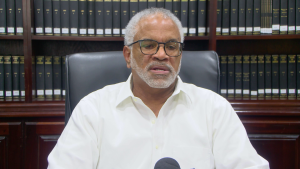
Eamon Courtenay
Eamon Courtenay, SC, Attorney-at-law
“I think it is the whole recruitment process; the appointment process needs to be looked at. My opinion is that the biggest criteria is not nationality. The biggest criteria is competence and integrity, yes. That is not to say we should not have an affirmative action program to promote Belizeans where they meet the criteria. I would be all for that. What I have said and what I believe is that the system needs to be looked at because we are applying, the judicial and legal service commission is applying a higher stand to Belizeans than they are applying to a foreigner. What do I mean by that. If I apply tomorrow to be appointed, everybody on that Judicial and Legal Service Commission will know me. Half will hate me and the other half will love me. When you get an application from someone from Australia. It is a piece of paper. It looks beautiful. They have two or three letters of recommendation saying how great the person is. You probably have a video conference with them for half and hour asking them questions and they answer it. In truth and in fact, you don’t know that person’s competence. But the Belizean we know and see in the courts, in the ministry, wherever, we know them and people have formed specific opinions about them saying, “bway she cant do it”, or “ he could do it”, and so on and so forth. So we have to have a system in my view that ensures when you are reviewing the candidates, they are equally assessed and I do support where possible, if you have Belizean and a foreigner are roughly the same, give it to the Belizean.”
Attention readers: This online newscast is a direct transcript of our evening television broadcast. When speakers use Kriol, we have carefully rendered their words using a standard spelling system.
Watch the full newscast here: