


Legal Firestorm Over Police Transfer Raises Accountability Questions
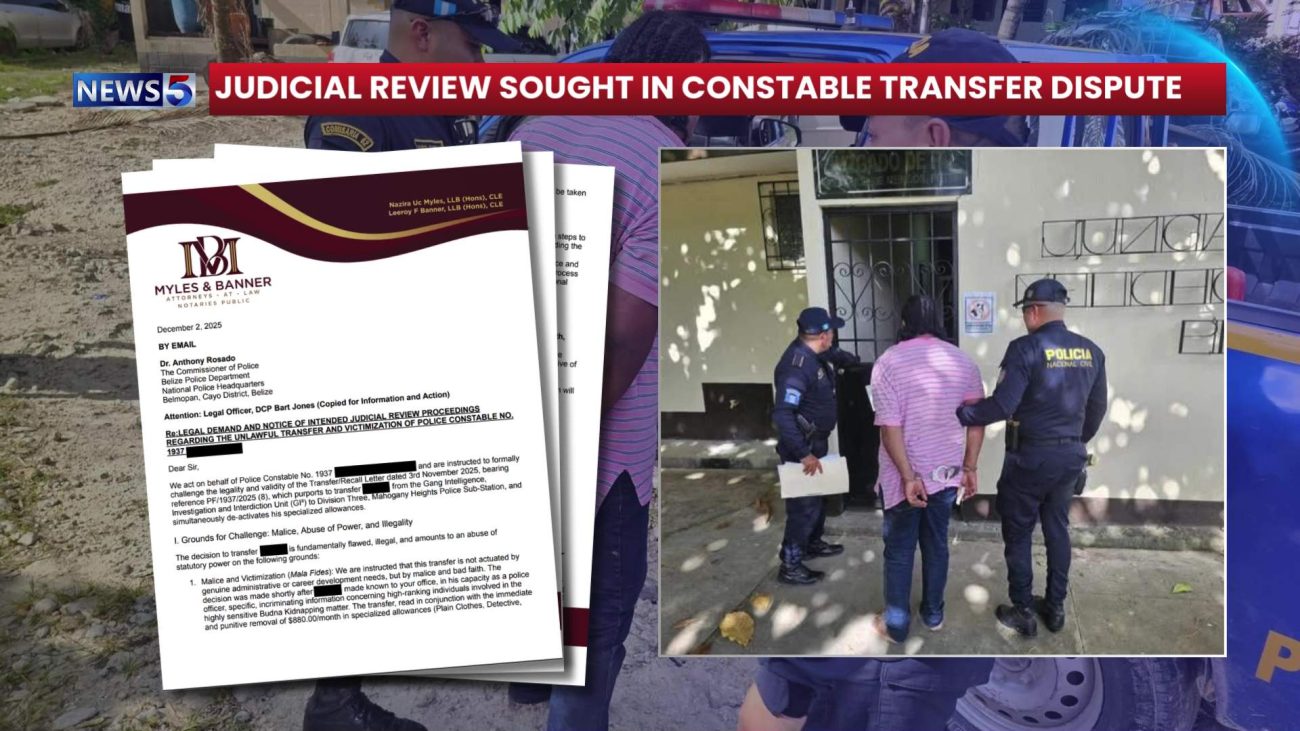
When does a routine transfer stop being routine and starts raising questions about power, fairness, and accountability? That’s the debate now unfolding inside the Belize Police Department. A legal demand letter sent to Commissioner of Police Dr. Anthony Rosado accuses the department of unlawfully transferring a Police Constable from a specialized gang intelligence unit to a remote substation in Mahogany Heights, stripping him of key allowances and, allegedly, derailing his career. The letter from the law office of Myles & Banner claims that the move wasn’t about operational needs, but retaliation after the officer disclosed sensitive information linked to the high-profile kidnapping case of Joseph Budna. If true, what does this say about transparency in law enforcement? Can transfers be used as tools of punishment? And how do such decisions impact public trust in the system? These are the questions now headed for the courts, as the constable’s attorneys threaten judicial review and injunction proceedings unless the decision is reversed by Friday. His lawyers allege the transfer was motivated by bad faith, designed to isolate and intimidate him for doing his job. They argue this punitive move obstructs justice and undermines the integrity of the department. Transfers typically occur during defined periods, July and August, with proper notice. The officer’s transfer, dated November third and effective November seventeenth, falls outside these norms. More importantly, police policy explicitly prohibits using transfers as disciplinary measures. The letter cites Belizean case law affirming that administrative actions must be fair and reasonable. He reportedly had an agreement for promotion to Inspector based on his performance. His attorneys claim the transfer was intended to derail that career progression, causing irreparable harm. The Commissioner of Police has authority to transfer officers below the rank of Inspector. But that power must be exercised in good faith and in line with public law principles. The letter argues the decision was beyond legal authority and unreasonable, citing precedents like Troy Bainton v. Commissioner of Police (2023) and Arzu vs. Commissioner of Police (2019), where courts intervened in cases of alleged abuse of power.