


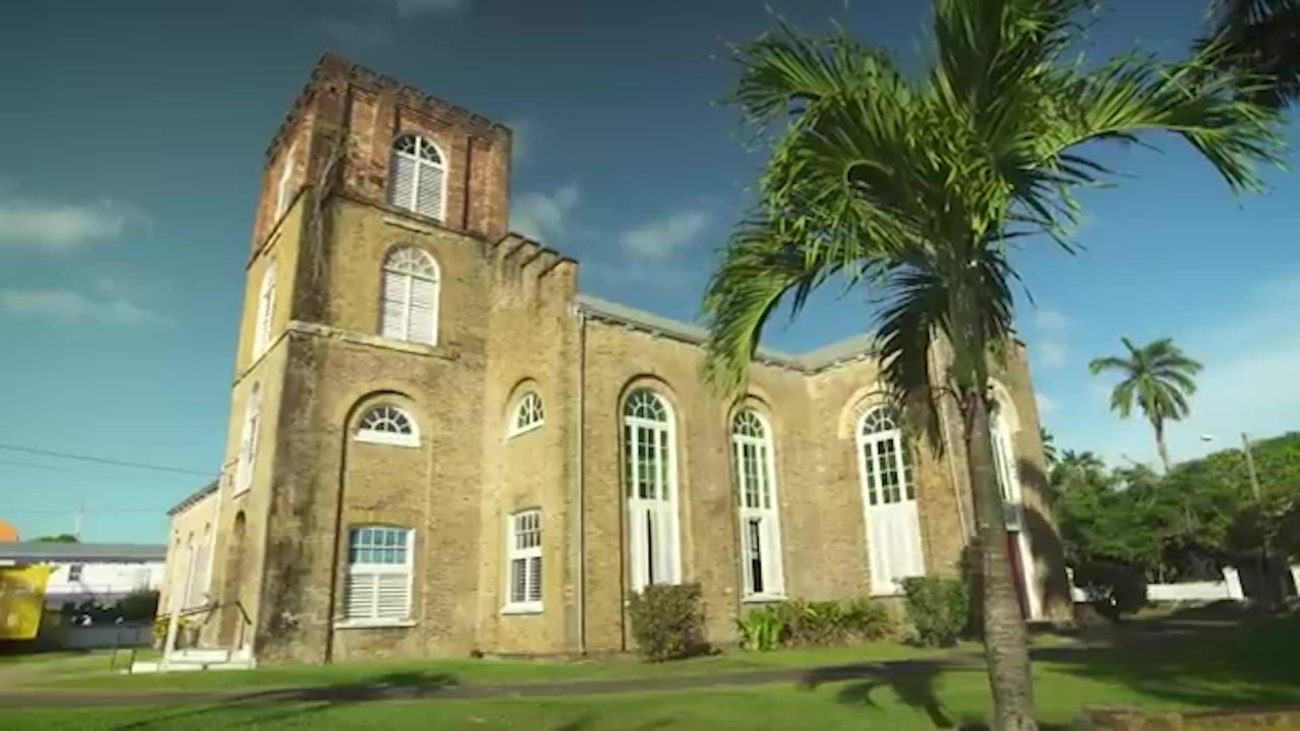
St. John’s Cathedral: 213 Years of Faith and History
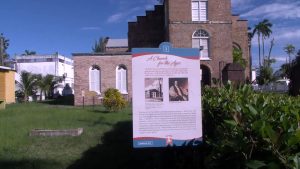
In the heart of Belize City stands St. John’s Cathedral, a landmark that has stood through two centuries of history. Constructed from ballast bricks shipped from England, the cathedral was the first Anglican house of worship in what was then British Honduras. Today, it serves as the mother church of the Anglican Diocese of Belize and offers visitors a glimpse into the country’s colonial heritage and spiritual resilience. In Tonight’s edition of Belize on Reel, we dive into the history of St. John’s Cathedral and explore how it has remained a pillar of Belize’s religious history for so long, News Five’s Britney Gordon reports.
 Britney Gordon, Reporting
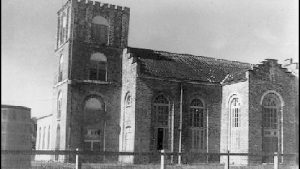
For more than two hundred years, St. John’s Cathedral has been more than just a building, it’s a piece of Belizean history and a symbol of faith. Built back in 1812 with ballast bricks shipped all the way across the Atlantic, it holds the title of the oldest Anglican church in Central America. Step inside today and you’ll still see those beautiful mahogany pews and stained-glass windows that have stood the test of time. Patrick Faber, who’s been part of this congregation for four decades, shares how the community has kept this historic treasure alive.
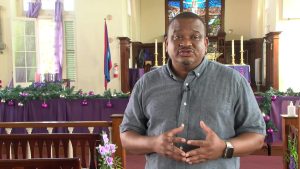
Patrick Faber
Patrick Faber, Church Member, St. John’s Cathedral
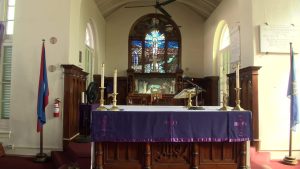
“The main structure remains, but there have been many changes. For instance, people think that the pews are very old and I guess they are very old, but not as far back as when the church started. In fact, the only original pew is this one in the front that is assigned to the governor General now and used to be assigned to the governors. All the other pews were destroyed in hurricanes.”
The cathedral was built by slaves, and baptismal records show that many of them were members of the church even before emancipation. Faber points out they couldn’t worship as freely as Belizeans do today.
 Patrick Faber
“We are told for instance, that. Slaves were members of this church, but that those slaves were not allowed to come inside. There is an inner fence on the outside. If you look, there’s an outer fence, but there’s an inner fence as well. And that inner fence was the line that the slaves could not cross. So they had to stand outside of that fence when worshiping was happening.”
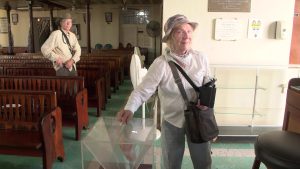 Visitors are encouraged to leave a small donation to help cover the ongoing renovations and maintenance needed to preserve the church. Following Hurricane Hattie, the mahogany roof was replaced and only one chandelier remains hanging from the high ceiling. Jacinta Garbutt, a member of the church, gives tours to visitors. She tells us how active the church remains to this day.
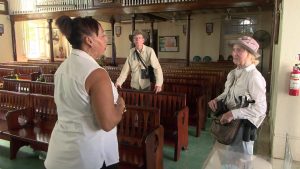
Voice of: Jacinta Garbutt
Voice of: Jacinta Garbutt, Church Member, St. John’s Cathedral
“Our cathedral is very active. It’s not a museum. We have a service on Tuesday at nine in our small chapel on Wednesday. We also have one at tweve. And then the school also Anglican Cathedral College is a part of this church, so they include religion in their curriculum. So they come over on Wednesday for an hour and Sunday’s when we have service. The big service on the altar path at six thirty and eight thirty in the morning. We also do weddings, funerals.”
Today, two visitors from a sister cathedral in California stopped by St. John’s after a friend recommended it. Cynthia Royce shares what it was like to experience such a historic landmark firsthand.
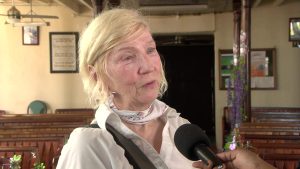
Cynthia Royce
Cynthia Royce, Visitor
“ I have to say their favorite part was just Jacintia’s tour. And aside from that, the lovely structure the way you’ve preserved it with so many gifts from you, your well wishers around the world and the. Lovely appointments, pews, which we don’t have anymore in our cathedral. And so we’re very happy to see that.”
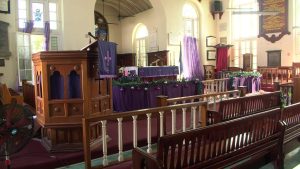 The church was once the stage for royal coronations as four Mosquito kings were crowned in the mid 1800’s, making it the only cathedral outside of the United Kingdom where a coronation of kings occurred.
 Patrick Faber
“These coronations came as a result of the Mosquito Coast Indians wanting to mimic the coronations that happened in the UK. And so they wanted to be coronated in a cathedral. And of course, St. John’s Cathedral, has been here all of these years. And so they looked to this place to have the coronations, the platform outside of the north door is a testimony to that.”
Although the church has undergone many changes over the years, the bell still tolls twice a day, and worshipers still gather to pray. As long as Belizeans continue to fight for the preservation of the building, it will remain a cornerstone of Belize’s cultural and spiritual identity. Britney Gordon for News Five.