


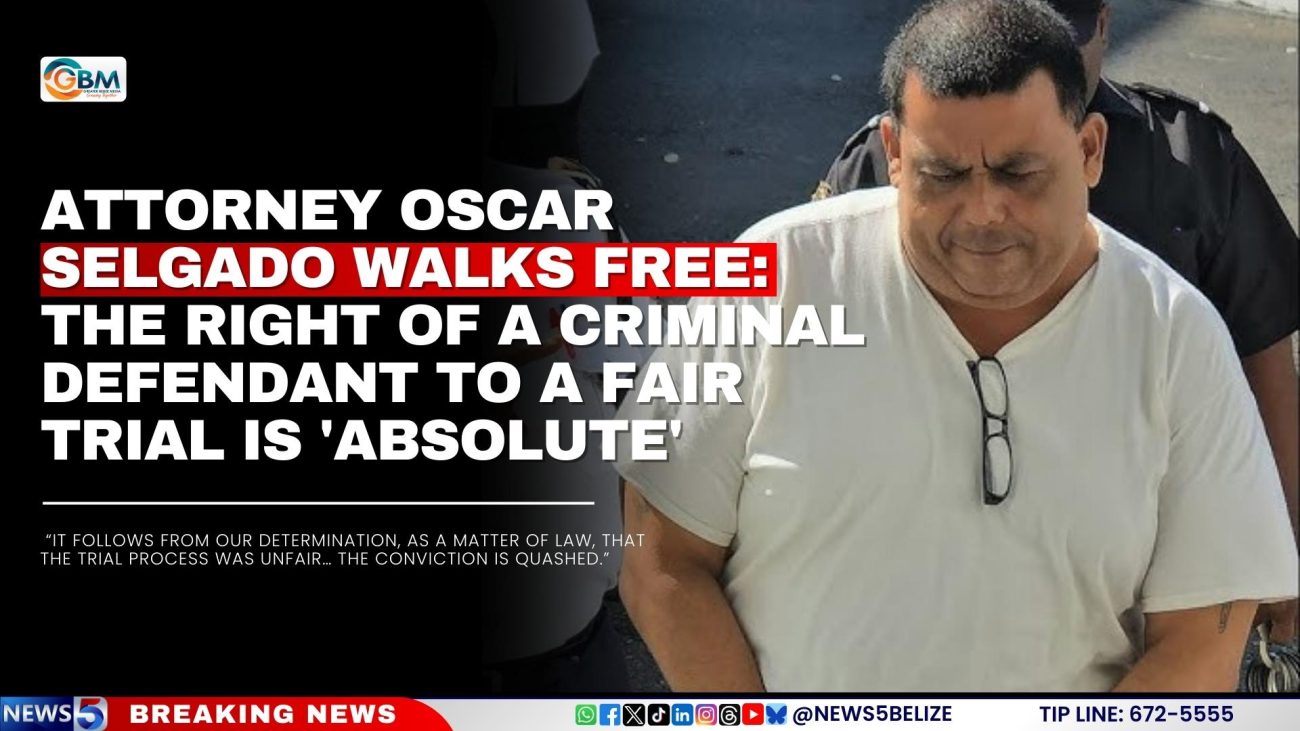
Attorney Oscar Selgado Walks Free: The Right of a Criminal Defendant to a Fair Trial is ‘Absolute’
Attorney Oscar Selgado, once convicted for plotting a murder, has walked free after the Court of Appeal overturned his conviction, ruling the trial unfair.
On March 8, 2024, Selgado was found guilty of abetment of murder for allegedly soliciting Giovanni Ramirez to kill Marilyn Barnes, a woman in her 60s. Prosecutors argued that Selgado wanted Barnes dead to prevent her from testifying against him in a disciplinary hearing that could have led to his disbarment.
Justice Nigel Pilgrim sentenced Selgado to ten years in prison on June 14, 2024, citing evidence that Selgado offered Ramirez free legal services, gave him money, and even showed him a photo of Barnes and her home. The conviction, however, rested largely on Ramirez’s hearsay statement and secondary evidence of recordings that Inspector Wilfredo Ferrufino testified he had listened to, rather than Ramirez appearing in court himself.
Selgado appealed both his conviction and sentence, claiming his trial was unfair. His lawyer, Arthur Saldivar, argued that “the entire trial was conducted under a cloud of unfairness” and closed submissions by saying, “I believe justice required more.”
Today, the Court of Appeal agreed, ruling that the trial judge had failed to ensure a fair trial. The judges found that Ramirez’s hearsay statement should not have been admitted, that other evidence of little probative value was wrongly allowed, and that Selgado was disadvantaged by being unable to confront his accuser.
In their written decision, the judges concluded, “It follows from our determination, as a matter of law, that the trial process was unfair… the conviction is quashed.” They declined to order a retrial, noting Ramirez’s unavailability to testify, and directed a verdict of acquittal.
Ramirez, the whistleblower at the centre of the Selgado case, was gunned down on January 9, 2025, when two men on a motorcycle ambushed him as he drove his red SUV along Amandala Drive in Belize City. Although he had been the key witness in Selgado’s conviction, Ramirez never testified in court out of fear, and recordings of his alleged conversations were reported missing. In the months before his death, Ramirez had faced charges related to gang membership.
While the allegations against Selgado were serious, the court cited the legal principle that “there comes a point when, however obviously guilty an accused person may appear to be, the appeal court reviewing his conviction cannot escape the conclusion that he simply has not been fairly tried.”