


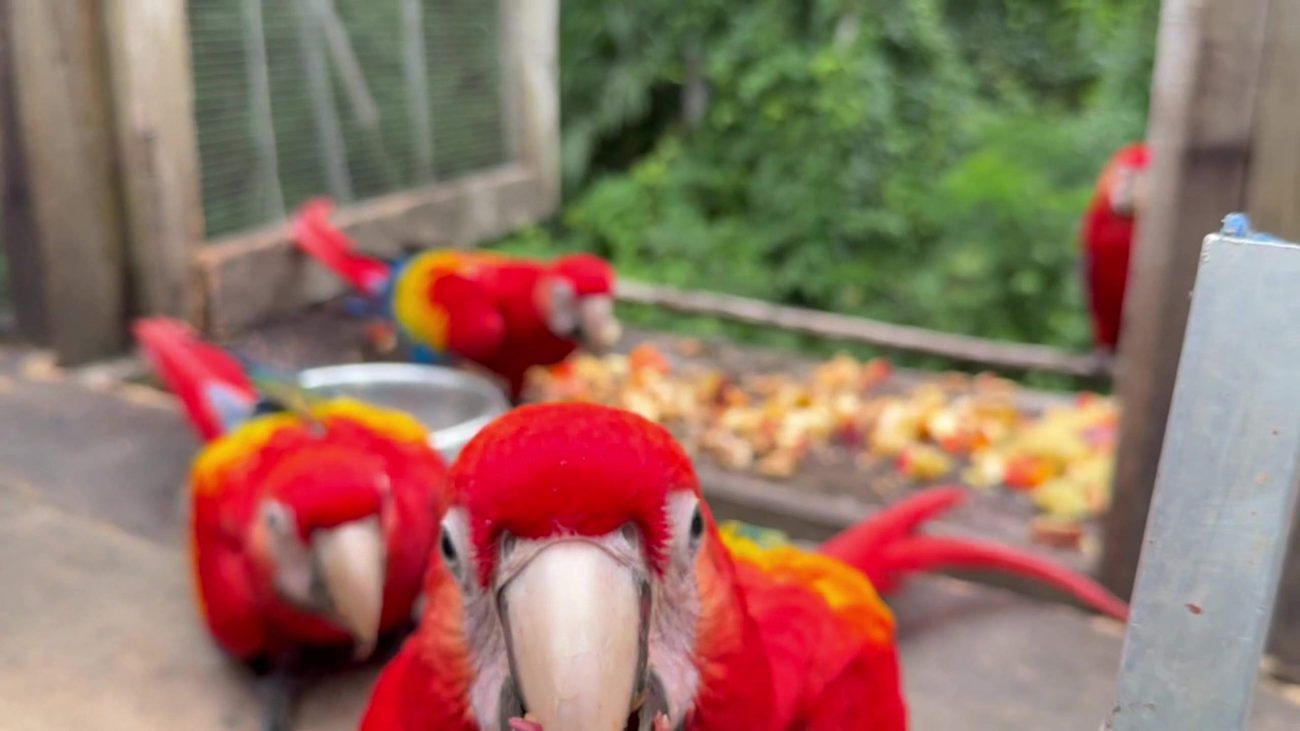
Saving Belize’s Scarlet Macaws: Into the Wild (Pt. 2)
Belize’s endangered Scarlet Macaw population is showing encouraging signs this nesting season, according to the latest report from Friends for Conservation and Development (FCD). The organization has been leading Scarlet Macaw monitoring and nest protection efforts in the Chiquibul since 2011. This year, the organization continued to track breeding activity and estimate the national population at just three hundred to three hundred and fifty birds. However, Scarlet Macaws continue to be targets of Guatemalan poachers who would extract the chicks from nests. News Five journeyed into the Chiquibul to get an inside look at how scarlet macaws are stolen from nests, smuggled into Guatemala, and trafficked as far as Asia. Here is that story:
 Hipolito Novelo, Reporting
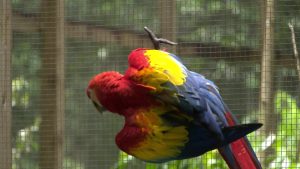
The scarlet macaws that nest in Belize’s dense rainforests are among the most sought-after birds in the world. Their fiery red, blue, yellow, and green feathers are matched only by their loud calls and social nature. In captivity, they can live for more than seventy years, and on the black market, a single bird can sell for as much as fifteen thousand U.S. dollars. That value makes them a target.

Wilmer Guerra
Wilmer Guerra, Researcher, F.C.D.
“If you guys videoed today you would see how noisy there were. So, when we are coming up and they hear you if they are inside a nest they would poke their head out and they are very right red so it is easy for you to spot them. Then they start to vocalize. So even if you are far away you would be able to hear them. For a poacher, that is something that is really good for them. For us it is also good because we can easily identify a nest. But for a poacher, also very good for them if he comes in to try and take the chicks.”
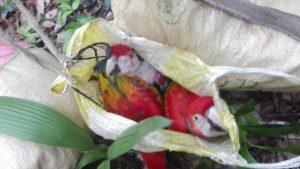 Many years ago, poachers shot adult macaws out of the sky and collected the wounded birds. Today, they scale fifty- to seventy-foot quamwood trees, removing chicks before they can ever fly.

Rafael Manzanero
Rafael Manzanero, Executive Director, FCD
“They would walk for up to two, three days. We know they use these areas because in their description when we have detained and arrested them we have noticed in the interviews that they talk about Pine Ridge. So we know that they used to reach way up here. From their description it used to take them two days to be able to reach the target points. Once they reach there, they would climb the trees, extract the chicks and return back to Guatemala. Guatemalans over the years have indicated to us they have seen and recorded that it could be up to twenty-five parrots in average a year that could be moved from Belize to Guatemala. It is mostly used a pets. It is am emblematic species. It is a rare bird so the value increases.”
 Half a century ago, scarlet macaw populations across Belize, Guatemala, and Mexico were collapsing. But new data from Friends for Conservation and Development (FCD) shows the decline has slowed. As of mid-June 2025, FCD recorded twenty-three active scarlet macaw nests. Of the seventy eggs laid this season, forty-two have hatched, giving a promising 60 percent hatching success rate. Six eggs were lost to predation, sixteen failed to hatch, and six remain under incubation. Each stolen chick feeds a global illegal wildlife trade worth up to twenty-three billion U.S. dollars annually.
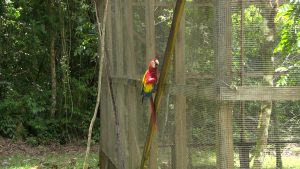 Much of the Scarlet Macaw monitoring is done in the Chiquibul Forest Reserve, which is co-managed by Bulridge Company Limited. FCD co-manages the Chiquibul National Park. After a period of uncertainty, FCD had its license to continue monitoring the birds for two years. This is after Bulridge provided the Forest Department a ‘no-objection’ letter, as it has constantly done in the past. Threats persist beyond Belize’s borders. In Guatemala, traffickers continue to supply buyers seeking macaws as status pets.

Jose Maria Castillo
Jose Maria Castillo, Project Mananger, Associan Balam
“We have also identified small groups of collectors, intermediaries and other involved who were accumulating anywhere from two to as many as fifteen or seventeen Scarlet Macaws for trade. The price of a macaw on the market has reached as fifteen thousand Quetzales. It has become a livelihood for groups of people in the area who have dedicated themselves to it and it is quote difficult to control because they constantly change, and modify their techniques and tactics to carry out the trafficking.”
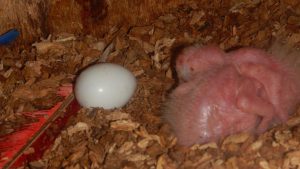 Despite strict wildlife laws, enforcement remains uneven across the region. Conservationists warn that without constant protection, poachers return quickly.

Kurt Duches
Kurt Duches, Director, WCS Guatemala
“Now they can also take eggs out of he nest because some buyers will buy the eggs and incubate them artificially but what usually happens is that they take them birds and feed them and water and just to take them to a certain size where the chicks have good feathers and then they put it on sale. We think those birds are being sold locally. In the past, every one in the community knew who was the poacher. That was his job. But, now we have people from Asia coming to the communities asking people to get them parrots eggs, fifty US dollars for a parrot egg or a hundred US dollars for a macaw eggs. So it has become easier.”

Orlando Habet
Orlando Habet, Minister of Sustainable Development
“Through the Forest Department, we collaborate with them and FCD has some programs with them. From our side we are supportive because we are supporting FCD. Also because of their experience in handling wildlife and getting them to a state where they are getting ready to be release and we are also learning from them.”
Reporting for News 5, Hipolito Novelo.