



A Growing Debate Over GOB’s Sanctuary Two Vision
Across Belize, more than a hundred protected areas safeguard the country’s incredible biodiversity, from our reserves and monuments to our national parks. Within that network, wildlife sanctuaries carry a special weight. They’re created to protect specific species and the ecosystems they rely on, and so far, only seven have ever been officially declared. Recently, government plans to establish a new ‘Sanctuary Two’ in Red Bank Village ran into pushback from residents, even as conservationists continue to champion the idea. And with the process still in its early stages, there’s growing curiosity about what exactly these sanctuaries are and how they differ from the traditional model. In tonight’s Five Point Breakdown, News Five’s Britney Gordon looks at how a Sanctuary Two is created, and what it could mean for both communities and conservation efforts. Here’s the story.
 Britney Gordon, Reporting
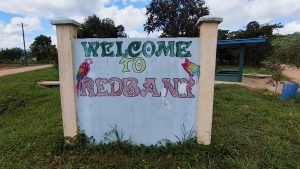
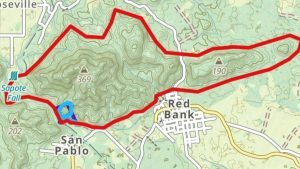
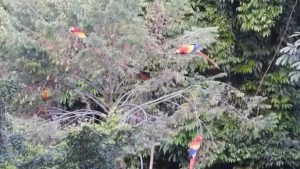
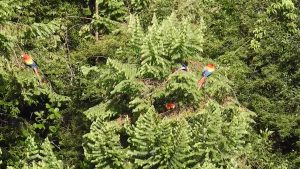
Red Bank villagers have shut the door on a proposed “Sanctuary Two” meant to protect scarlet macaw feeding grounds in the Maya Mountains. The moment word got out, residents raised alarms, worried the new designation would threaten their farms, their access to the land, and ultimately their livelihoods. By the time the consultation rolled around, they’d already made up their minds. But how restrictive was the plan, really? A Sanctuary Two is a new type of protected area in Belize. Unlike Sanctuary One, which tightly restricts access, Sanctuary Two allows communities to continue using the land sustainably. It’s designed to protect sensitive habitats without shutting out the people who depend on them. That’s the basic idea. And as Saul Cruz from the National Biodiversity Office explains, the designation is meant to balance conservation with community needs.
How is Sanctuary Two Designated?

Saul Cruz
Saul Cruz, Director, National Biodiversity Office, Ministry of Sustainable Dev.
“So once we understand what that relationship is we need to sit down with the communities and then define. What that customary use, what that traditional use is, and what are some of the guiding principles around that customary or traditional use. Once we understand that level of relationship, it then feeds into the development of that sustainable use plan that is necessary.”
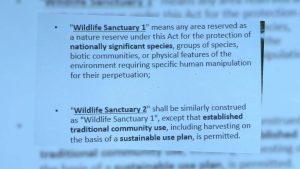 Belize doesn’t have any Sanctuary Twos yet, but that’s about to change. The government is working with the Sarteneja Alliance for Conservation and Development to upgrade the Corozal Bay Wildlife Sanctuary so fishers can keep using traditional beach‑trap methods while the area stays protected. Similar discussions are underway with fishing communities in Crooked Tree. That means Sanctuary Twos could soon appear across Belize, striking a balance between conservation and community access. And for residents, the benefits could be big. Red Bank tour guide Nazario Cal says a Sanctuary Two could turn the area into a steady tourist attraction and bring new income into the village.
What are the Benefits of Sanctuary Two?
Nazario Cal
Nazario Cal, Tour Guide, Red Bank
“If the community itself come together and we agree to this project, it’ll be beneficial for the entire community. Hence, the reason why I see it is because there are young ladies coming from the village walk a mile and display their products here. Trying to sell their arts and craft and stuff like that. But no, if we have, if we hold a community center, it would be much easier. And the entrance fee is a one step forward for the community and for the benefit of all.”
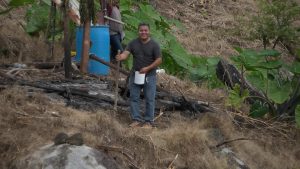 The major difference between Sanctuary One and Sanctuary Two is that community members are allowed to extract materials and conduct business within the area. In Red Bank, villagers regularly visit the mountains to sustainably gather building materials for their homes. But how does the government plan to protect that right from being abused?
Ensuring that Sanctuary Two is Not Exploited
 Saul Cruz
“We could look at the population of the species that they are dependent on. And we could then develop that sustainable resource use plan. That gives us an opportunity to establish quotas or limits extraction periods if it’s necessary in terms of having harvesting seasons or any other approach that may be applicable or feasible.”
 The backlash from Red Bank village centered around concerns over land and the ability to collect materials. Before the consultations, Victoriano Sho questioned how a sanctuary would function in an area where residents rely on the land for essential resources.
Do Belizeans Understand what a Sanctuary Two is?
Victoriano Sho
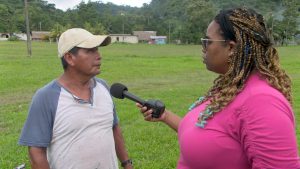
Victoriano Sho, Red Bank Resident
“It’s not the first time we are seeing people coming to Red Bank to see the Scarlet Macaw, the tourists have already been coming quite a while we doesn’t have any problem with that. We’re not concerned about that. We are concerned about that too, but because what Mr. Germo said, people get their house stick there. We all get them when we need it.”
 Government officials have made it clear that they have not scrapped all plans for establishing a sanctuary in Red Bank and will instead seek further consultation with the community. According to Habet, the government can proceed to establish a sanctuary despite the community’s objection. However, they are choosing another route.
Who Declares a Sanctuary Two in Belize?
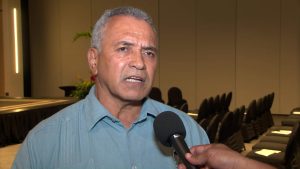
Orlando Habet
Orlando Habet, Minister of Sustainable Development
“We can. The legislation allows us to do it, but I think that as a government and as the ministry, we want to have the buy-in from the community. So what we will do is we will go back the, we discussed it briefly in cabinet yesterday and minister Ferguson, we will go back to speak to the members of community. We will get the National Biodiversity Office to also go in, speak to those who are. In favor, speak to those who are against and try to convince them to see that this is something positive for our country, for them.”
As government prepares to declare the first sanctuary two in Sarteneja and Crooked Tree, the need for proper consultations within communities becomes pressing. In doing so, both the government and the community gain a clearer understanding of local needs and the environment they hope to protect. Britney Gordon for News Five.