



Police Race to Calm Belize City After Scrubby’s Murder
Belize City remains on edge after the broad‑daylight killing of Edward “Scrubby” Saldano Jr., a familiar figure on the streets. Saldano was riding his bicycle on Thursday, near Amara Avenue and Dean Street, when a gunman approached and opened fire, ending his life in the middle of the day. His death comes just weeks after he survived a previous attempt on his life and only a month after police detained him in connection with a robbery investigation. But while investigators work through the details, it’s the ripple effect across Belize City that’s drawing urgent attention. Residents say the boldness of the attack and fears of retaliation have left neighborhoods tense and anxious. Today, Commissioner of Police Dr. Richard Rosado outlined how the department plans to stabilize the streets and restore a sense of safety.

Richard Rosado
Dr. Richard Rosado, Commissioner of Police
“I will be meeting, in fact, yesterday I was discussing with my commanders, my operational commanders, my operational unit. We are adjusting some of our operational strategy within the ground to ensure that we continue further violence.”
Reporter
“And can we expect retaliation or are you guys expecting it?”
Dr. Richard Rosado
“We’re putting everything in place to ensure that we do not have any further retaliation.”
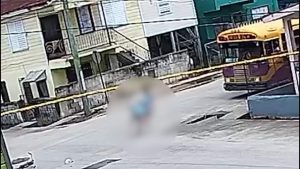 Mental Health Experts Urge Caution After Violent Video Goes Viral
Belize City is still reeling from the broad‑daylight execution of Edward “Scrubby” Saldano Jr., a killing that spread even more fear once graphic video of the attack began circulating widely on social media. As the footage ricocheted across WhatsApp, many viewers, some out of curiosity, others by complete surprise, found themselves confronted with disturbing violence they never meant to see. Mental‑health experts warn that constant exposure to graphic content can take a real emotional toll. Earlier today, we spoke with Mental Health and Emotional Intelligence Practitioner Martine King about the impact these videos can have and why sharing them comes with serious consequences.
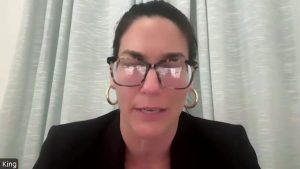
Martine King
Martine King, Mental Health & Emotional Intelligence Practitioner
“I know the word triggering is overused and it’s also it’s too overused in many cases, but at the same time. It’s very real that seeing something like that creates within us, increased heartbeats, it changes the rate of our breath. There’s a sense in our brain, oh my gosh, there is danger that might happen to me if I’m walking out there. Or maybe because I’m not involved in certain things, I might just be walking past, or my kid might be walking past or driving past. So we then interpret that our brain, which is constantly looking out to keep us safe, goes, oh my gosh, I am not safe. And so even if I don’t have an oh my gosh reaction, you can bet that your mind unconsciously is interpreting, wait a minute, I am not safe. The streets aren’t safe, my community is not safe. That adds a layer for all of us. Of anxiety and on safety. And one of our basic human needs is to feel safe in the environment and the community and our homes in which we live. So I, it was shocking to me, to be honest. And then I know, of course it was shared excessively repeatedly. And that’s what you were saying to me earlier that it even said shared too many times. One of the other things that happens is some people go, ah, man, what that a big deal? Why worry about that? That’s desensitization. And that happens when things happen often enough to also go, oh nothing, no big deal. But violence and seeing something as violence as that need not become the norm, it need not be that we have very little reaction to it, especially for younger people. That’s not normal and it don’t, it doesn’t, how do I say this? We become less empathic. It’s like we care less. We react less, we don’t reach out to help others as much. We even, especially the younger people, might then be more prone to the same type of behavior because, this is just what it is. This is the norm, this is what happens. And think about it. We make jokes about it all the time. Only in Belize, you see the videos online. Things that only happen in Belize, but that’s not normal and we don’t want it to become normal or to have young people or anybody think that it’s normal because no, and when a video like that is shared, a story like that is shared, it enforces the idea that, oh just so it go, we’re helpless, we’re powerless. Hell, I might even have to do it one of these days.”
Attention readers: This online newscast is a direct transcript of our evening television broadcast. When speakers use Kriol, we have carefully rendered their words using a standard spelling system.
Watch the full newscast here: