


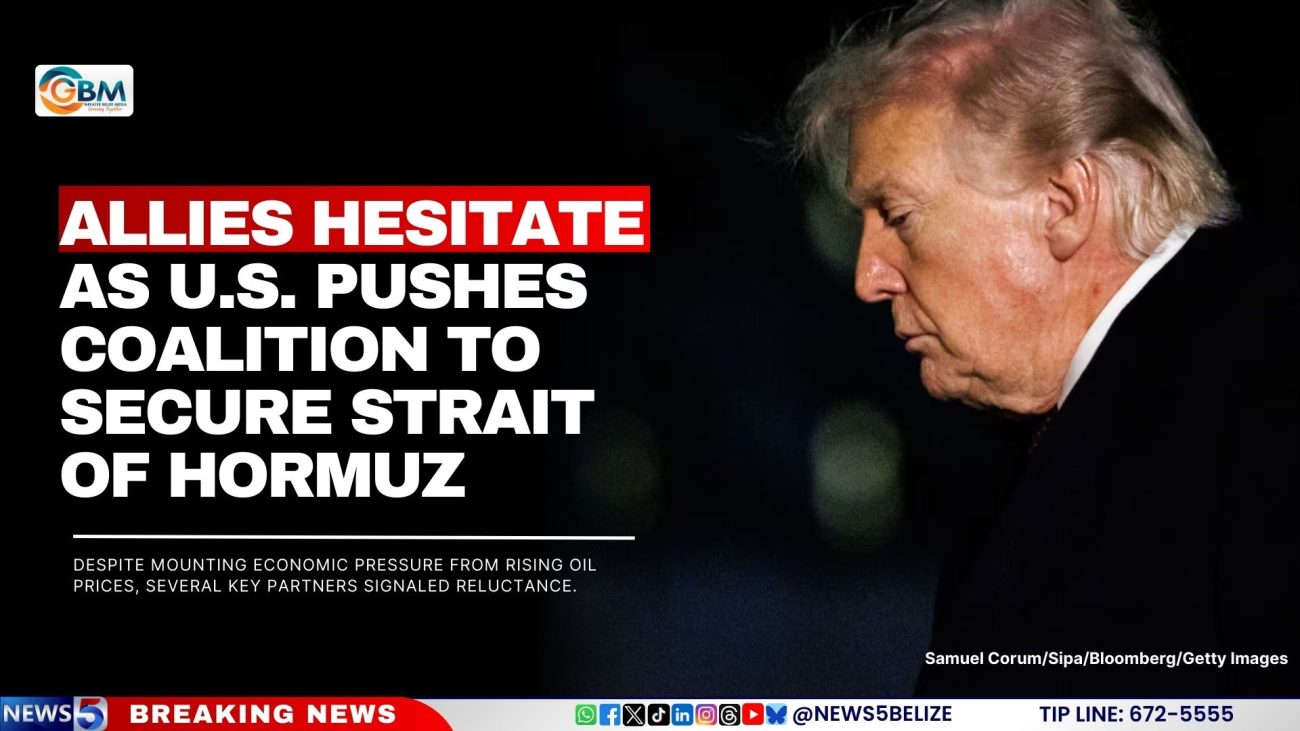
Allies Hesitate as U.S. Pushes Coalition to Secure Strait of Hormuz
Efforts by U.S. President Donald Trump to rally international support for securing the Strait of Hormuz have so far drawn cautious responses, with no country publicly committing warships to the strategic waterway.
U.S. officials spent the weekend urging allies to join a coalition aimed at reopening the strait, where roughly 20 percent of the world’s oil supply normally transits. The passage, bordered by Iran, Oman and the United Arab Emirates, has been operating under what Tehran describes as “special conditions.”
Despite mounting economic pressure from rising oil prices, several key partners signaled reluctance.
A German government spokesperson said the conflict “has nothing to do with NATO,” while EU foreign policy chief Kaja Kallas stated that although keeping the strait open is in Europe’s interest, it falls outside NATO’s operational scope.
UK Prime Minister Keir Starmer said Britain is working with allies on a “viable collective plan” to restore freedom of navigation but stopped short of pledging military assets. Japan’s Prime Minister Sanae Takaichi told parliament that Tokyo is not planning to dispatch warships, while Australia also ruled out sending vessels.
With no formal commitments yet secured, Washington’s bid to form a multinational force to protect the Strait of Hormuz remains uncertain, even as global markets react to the growing instability.

News 5 Live Survey