


No Clear Plan for Belize’s Conflict Jaguars
Belize’s jaguar troubles aren’t new, but the real worry now is who’s actually responding. The latest capture of Anri in Lemonal exposed a growing gap: the Belize Zoo, which used to handle conflict jaguars, has paused its program, and nothing official has replaced it. That leaves villages caught in the middle. Farmers fear losing more livestock, conservationists warn more jaguars will be killed, and residents say they don’t know who to call when a big cat shows up on their property. Tonight, we look at how this breakdown in wildlife response is putting both communities and jaguars at risk.
 Paul Lopez, Reporting
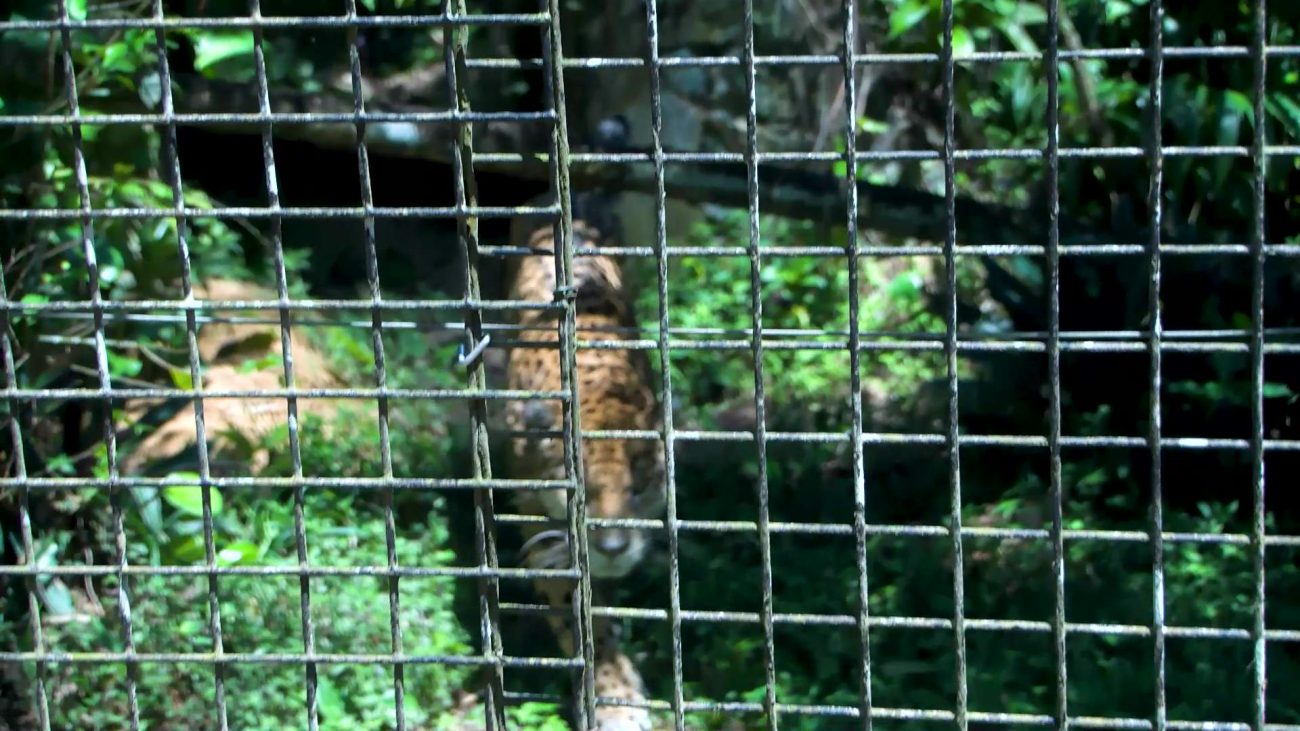
Conflict jaguars are back in the spotlight, and Anri is the latest example. The big cat was recaptured in Lemonal after once again targeting livestock. Wildlife officers know him well, he was first caught in 2025 and relocated to the Northeast Biological Corridor. His return shows just how stubborn and complicated Belize’s jaguar problem remains.

John Pinelo
John Pinelo, Acting Chief Forest Officer, Forest Department
“We don’t release animals that we deem will become problem animals again. Now this is not an exact science and we cannot think what the animal will do. It is not an exact science and that is why we keep adjusting and trying to make changes every time we have a situation. But in this case the Jaguar went back and start attacking livestock.”
For rural families, conflict jaguars aren’t an abstract issue, they threaten livestock and wander dangerously close to homes while hunting pets. That’s why the Belize Zoo launched its Human–Jaguar Conflict program more than twenty years ago. The zoo’s managing director says that before the program started, Belizeans were killing as many as fifty jaguars a year.
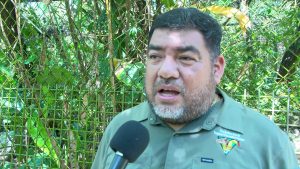
Celso Poot
Dr. Celso Poot, Managing Director, Belize Zoo
“The founder of the zoo at that time, approached the forest department, and offered what we called a band aid conservation situation to this conflict and we were able to remove safely about thirty jaguars and gave them a second chance of life over the years.”
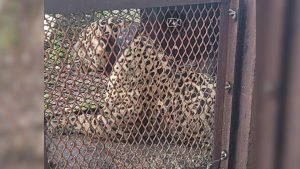
 For years, the Belize Zoo stepped in when conflict jaguars threatened communities, humanely trapping the cats and moving them to a special facility where they could be safely rehabilitated. And one of the best examples of that work is Edgar Hill. Edgar is an eighteen‑year‑old jaguar relocated from southern Belize back in 2013 after he repeatedly preyed on pets near family homes. He later lost an eye to glaucoma, but today he’s thriving as an ambassador at the Belize Zoo, helping Belizeans understand the very real challenges facing both people and wildlife.
Dr. Celso Poot
“Since then we have worked with Edgar Hill to bring out to the public and he is now an ambassador for species in the wild. Shorttail is another conflict cat from the same community where Edgar Hill came from and he was trapped by the community and we believe that in the process he lost his tail and hence the name shorttail.”
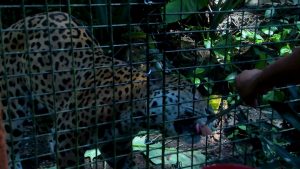
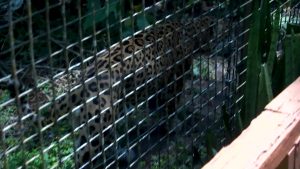 And then there is Ben, another eighteen-year-old jaguar that the capable staff at the Belize Zoo has been able to completely rehabilitate. When Ben first entered the facility getting up close was nearly impossible. It has taken a lot of expertise and work to get Ben to a point where staff members can feed him at close distances and provide medication.
Dr. Celso Poot
“His canine was shot, he had bullet pellets all over his underbody and he also has a limp. He either got hit by a car or has early arthritis. So, Ben lives his final years here at the zoo in comfort and we provide as much healthcare for him as we can.”
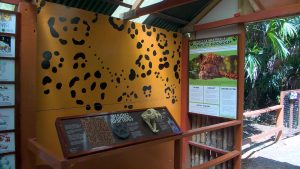
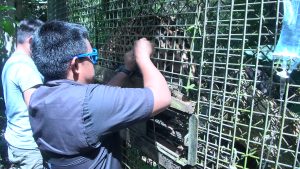 Standing just inches from these jaguars, you can feel the quiet power they carry. muscle, instinct, and intensity wrapped in silence. And these are only a handful of the many conflict jaguars the Belize Zoo has rescued and given a second chance at life. And the zoo’s investment speaks for itself, from professionally trained staff, the heavily secured behavior modification facilities, and an equipped animal clinic, the Belize Zoo has the necessary resources at its disposal. But today, the experts in jaguar conflict are facing a somewhat minor, yet altering, human conflict.
Dr. Celso Poot
“Unfortunately we no longer do that. Our work with conflict cats was put on hold and we are now waiting for an official MOU from the Forest Department for us to continue our work with these cats. It is very important; the zoo has invested heavily in working in these communities. We have invested heavily on the ground here to provide the best possible care for these cats.”
 So, we asked Acting Chief Forest Officer, John Pinelo what is behind the directive.
John Pinelo
“We use the zoo for assistance. We sometimes use their clinic and we sometimes ask for their vet tec that they have there. The Belize Zoo, in fact I had a conversation with the director of the Belize Zoo. And I told him that his expertise and help is always needed but it needs to be done in a holistic manner with the other agencies we are working with.”
The Forest Department currently has a formal memorandum of understanding with Corozal Sustainable Future Initiatives to capture Jaguars. But no MOU currently exists with the Belize Zoo’s two-decade conflict jaguar program. Reporting for News Five I’m Paul Lopez.
Attention readers: This online newscast is a direct transcript of our evening television broadcast. When speakers use Kriol, we have carefully rendered their words using a standard spelling system.
Watch the full newscast here: