


Infrastructure Development Loses to GOB’s Ballooning Payroll
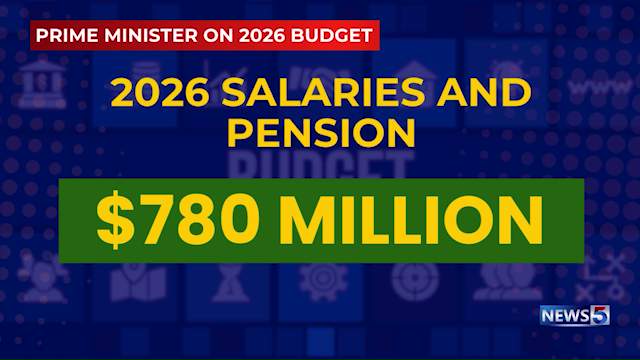
There’s a growing worry tonight that Belize’s budget is being eaten from the inside out. More and more of government’s money is going straight into wages, salaries, and pensions, leaving less for classrooms, clinics, and the kind of infrastructure that actually moves the country forward. Economist Dr. Phillip Castillo says this heavy tilt toward recurrent spending is squeezing out the investments Belize needs to grow.

Phillip Castillo
Dr. Phillip Castillo, Economist
“You obviously want your capital spending to be more, because Capital spending means you are spending on schools, hospitals, roads and buildings and that provides the infrastructure for future development. The challenge have been that the government of Belize spends substantially more on recurrent and by recurrent you means wages and salaries and pensions etc, which often takes up the lion’s share of Government budget. You want the shift to occur. You certainly want more capital spending to occur, but you want that spending to occur in meaningful ways and ways that will make an impact in subsequent years.”
Paul Lopez
“How sustainable in your view is that recurrent expenditure in wages and pension? It represents sixty percent of the budget or forty-five cents on every dollar collected.”
Dr. Phillip Castillo
“Well obviously it is unsustainable. I am certain that past governments have said the same thing but then they arrive in office and they find it to be unsustainable. It is unsustainable. We need the political will and all parties to come together to meaningfully reduce the current level of recurrent expenditure, specifically where wages and salaries are concerned and pension.”
Future Finances in Focus: Economist Says Reform is Urgent
Meanwhile, Dr. Phillip Castillo argues that real reform can’t wait, and it starts with moving toward contributory pensions. He says government, unions, and public officers need to sit at the same table if Belize wants a system that can actually hold up in the long run. And all of this comes as public officers prepare for another pay bump: a four‑percent salary increase this year, on top of the four‑and‑a‑half percent they received in 2025. So, what does this mean for the country’s financial future?
Phillip Castillo
Dr. Phillip Castillo, Economist
“Where pensions are concerned, a step in the right direction would be a need for contributory pensions. And that is where government and stakeholders, including the unions, need to come together to see a sustainable way forward.”
Paul Lopez
“At the same time, public officers are set to receive another four percent on top of last year’s four point five percent. Is it then your view that we are not headed in the right direction?”
Dr. Phillip Castillo
“Well public officers deserve every cent increase they get. I was a public officer, and I fully support the increases, especially in the context in which they were given. Governments and the unions will have to find ways to increase the pie. The pie can be increased. I am aware that there was a committee looking at revenue enhancement and cost savings. To the extent that committee has gone dormant, you want to revive that committee, you want to look at ways. A small developing economy such as Belize want to involve its public officers to identify how revenues can increase, savings can be effective and all benefit.”
Attention readers: This online newscast is a direct transcript of our evening television broadcast. When speakers use Kriol, we have carefully rendered their words using a standard spelling system.
Watch the full newscast here: