


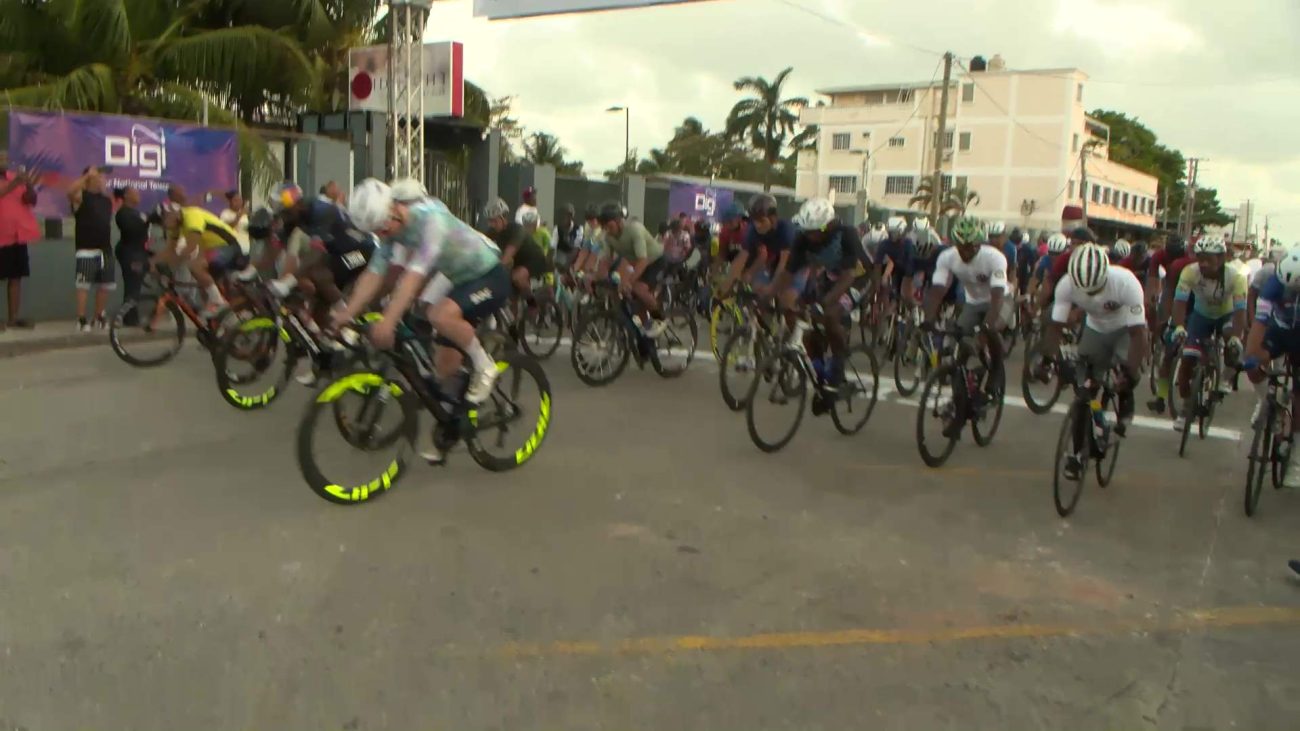
96th Cross Country Classic Under Anti‑Doping Watch
Belize’s most iconic cycling race is once again making headlines, but this time, it’s not just about who crossed the finish line first. With records falling in back to back weeks at the Holy Saturday Cross Country Cycling Classic, attention is turning to what happens behind the scenes to keep those victories honest. The National Anti Doping Organization is stepping up checks to make sure every win is earned the right way and the integrity of the sport stays intact. News Five’s Shane Williams takes us inside the effort to keep Belize’s premier race clean and fair.
 Shane Williams, Reporting
The pace of Belize’s cycling scene has never been faster. Records falling in back-to-back weeks have raised excitement but also questions. Behind the scenes, the National Anti-Doping Organization is working to ensure that every win is earned fairly. Bermudan Gabriella Arnold left her opponents miles behind in a dominating tape-to-tape win in the Women’s Cross country.

Gabriela Arnold
Gabriela Arnold, Women’s Cross Country Champion
“That was not an easy race for me today. That was very hard. The last twenty miles was very hard in this straight headwind all by myself today. But yeah, I came here in October for Caribbean championships and I came second in that race. So this is now actually my second time racing here in Belize and, had to come back. I will be back for sure..”
Then, on Saturday, the race exploded. Eight riders tore apart the course record in the Ninety‑Sixth Cross Country Classic, but it was the United Kingdom’s Jim Brown who had the final say, surging past seven rivals in a thrilling sprint to the finish line.

Jim Brown
Jim Brown, Men’s Cross Country Champion
“Absolutely cooked. Absolutely cooked. Yes. Just the hot weather just gets to me, man, but apart from that, I’m good.”
Shane Williams
“What was the headwind heading back?”
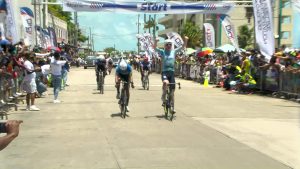 Jim Brown
“Honestly, I didn’t really mind it. I think the wind in the face cools you down a little bit and yeah, made the race harder cause if you’d made a, if you’d made a bit of – made a bit of a gap than people were less willing to chase. So yeah, it was, I didn’t mind it.”
And with those records in the books at this year’s Cross Country Cycling Classic, NADO implemented a structured testing program, targeting top finishers and selecting riders at random to undergo doping control tests.
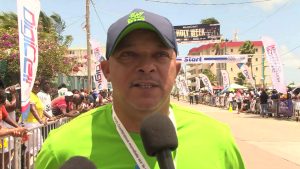
Charlie Slusher
Charlie Slusher, Director, NADO
“Normally we’ll have a, I don’t wanna say a minimum. We have five testing and the way testing work at this level you could do it by placement. In other words, we could say first, second, third, fourth, fifth, blah, blah, blah. Or we could say by target. Somebody that have done exceptional during the race but do not finish, then that would be a target for a particular reason. And again, it could be a random so those are the way that we, we do the testing and that’s already been set.”
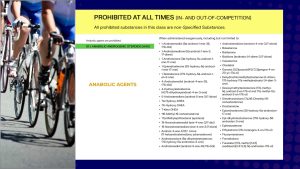 For NADO, doping isn’t just a rule violation, it’s cheating, plain and simple, and it erodes trust across the sport, from the athletes grinding for honest wins to the sponsors and fans who believe in clean competition.
Charlie Slusher
“It is about fairness. Everybody have an equal chance of winning. And because doping and using performance in judges is really cheating, and it’s sad for all sponsors to put up all these money for someone to come and cheat and take it away.”
 Beyond fairness, there’s a deeper mission, protecting athletes from the hidden dangers of performance-enhancing drugs. NADO also plays a critical educational role, helping athletes navigate a growing list of banned substances to safeguard their eligibility for international competition.
Charlie Slusher
“One of the most important thing, what I want to stress is that. It’s about protecting the athlete also from the dangers of these drugs, because a lot of time the athlete might use these drugs and they use it in extra doses that is normally recommended. So you know, indirectly, even if the athlete don’t want to protect themselves, we are protecting them from the dangers because a lot of them might have complication down the road when they stop riding, biking, kidneys, heart, all kind of issues. Integrity of the race. And that’s another real important thing. Any organization that would have an event this size should be considered or should be very focused on that race being have that integrity. And that would invite other people to want to be part of this
 Testing doesn’t end at the finish line. Samples are sent to a World Anti-Doping Organization-accredited lab in the United States, with results taking up to two weeks. Until then, prize money is withheld to ensure full transparency.
Charlie Slusher
“Normally the way it works is that the all at league wait until the doping, until the test comes back from the lab. And that normally take within fourteen working days. So we tried to get back, ship out the samples as quick as possible to WADA accredited. Lab in the USA, it’s not done in Belize and it’s done on a real scrutiny. In other words, if that results come, it goes to the world and it open to everybody so nobody can cheat or nobody can hide it..”
In a sport where seconds matter and reputations are built on performance, NADO’s presence serves as both watchdog and safeguard ensuring that Belize’s biggest race remains not just fast, but fair. Shane Williams for News Five.
Attention readers: This online newscast is a direct transcript of our evening television broadcast. When speakers use Kriol, we have carefully rendered their words using a standard spelling system.
Watch the full newscast here: