


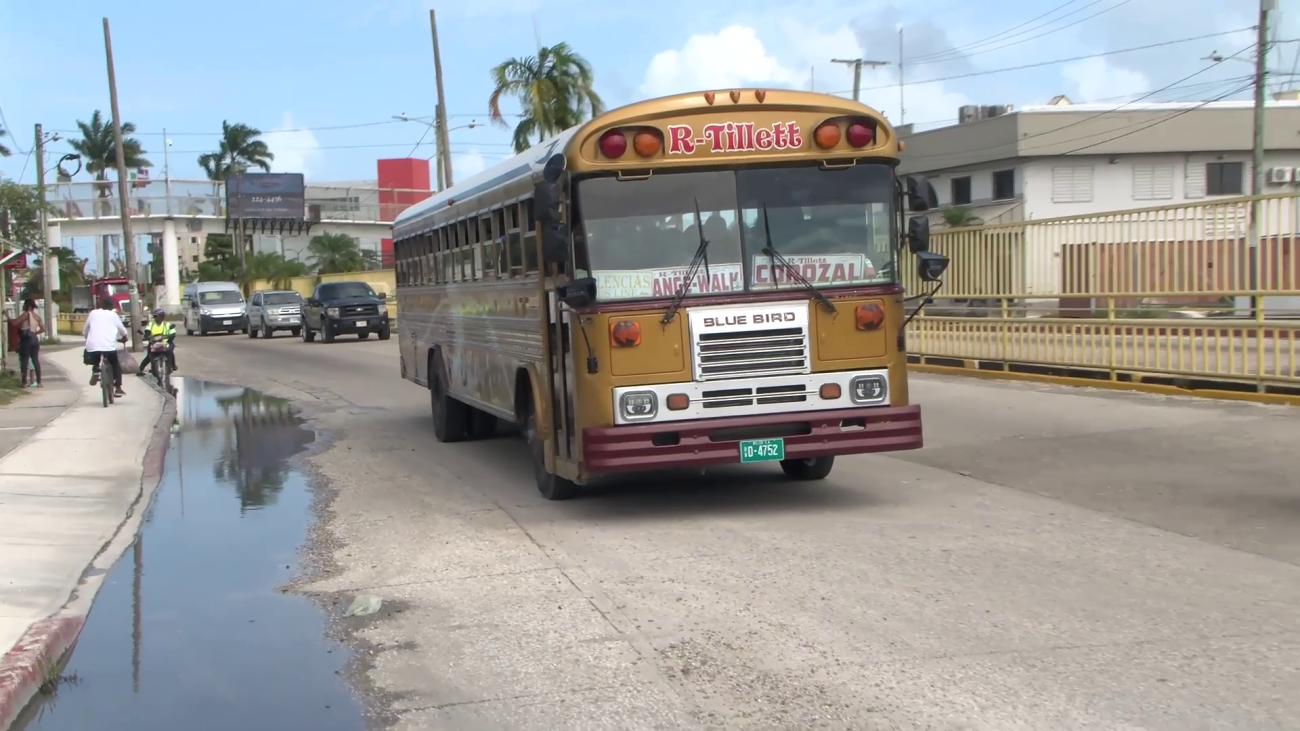
Every Mile Costs More as Bus Operators Say ‘Enough is Enough’
With bus operators threatening to pull their routes as early as Monday, News Five dug into the numbers driving this looming shutdown. Earlier this month, we told you that the Belize Bus Association says soaring fuel costs are pushing many operators into daily losses. Now, the pressure is mounting. On Wednesday, the association dropped a bombshell, warning that buses will stop running on Monday unless government steps in. If that happens, thousands of commuters could be left stranded. So tonight, we break down the numbers to see exactly where the money is going and why operators say the math just doesn’t add up. Paul Lopez has that story.
 Paul Lopez, Reporting
For bus operators across the country, every mile on the road gets more expensive and patience is running out. The Belize Bus Association says it’s now impossible to keep absorbing the cost of diesel, after prices jumped nearly twenty percent at the end of March; roughly two dollars and fifty cents more per gallon. Operators took their concerns to government, proposing fuel tax relief, subsidies, or even a fare adjustment. So far, all three have been turned down, with officials urging them to “wait and see,” despite continued swings in global fuel prices. But growers, drivers, and owners say waiting comes at a cost; and for them, every day on the road now means deeper losses.
Phillip Jones
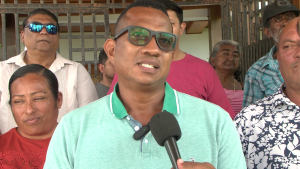
Phillip Jones, President, Belize Bus Association
“The reality is as you know, we are running on fumes presently and we cannot sustain it, the operators cannot sustain it, they have pressing on us to do this for a very long time but I have been saying lets work with the ministry and use diplomacy. So far, that has not worked. So we have reached to this stage now.”
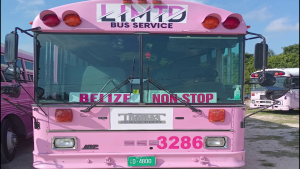 We spoke with two independent operators who say fuel now consumes the largest share of their daily revenue. Running a single route is already expensive. LIMTD Bus Service owner Michael Frazer operates one bus from Orange Walk to Belize City and another to Chetumal. He says just the Orange Walk–Belize City round trip costs him three hundred and fifty dollars in diesel alone, before paying drivers or covering parts and licensing fees.
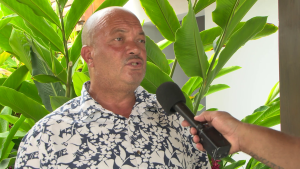
Michael Frazer
Michael Frazer, Owner, LIMTD Bus Service
“In peak season the bus is at capacity, and they are teachers, students, farmers, workers, shoppers, all sorts of people. I can recall recently I can put in three hundred dollars for fuel and to get that same amount I need to put in three hundred and fifty dollars. We would be around maybe five hundred and fifty thereabout. What helps us is not only am I the owner, but I am also the driver. It is a family oriented business, my son drive, collect, my wife assist me. To make a little more I would do it by myself.”
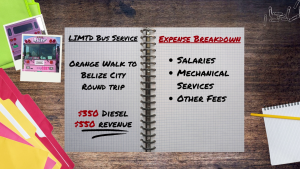 Frazer explains that his company is a family run operation. When the business makes five hundred and fifty dollars on the Belize City to Orange Walk run, three hundred and fifty goes back to fueling the bus. They then use the additional two hundred dollars for salaries, mechanical services, and other fees.
Michael Frazer
“We need to pay conductor, paid the driver. I have done it once where per day breakdown in tires, insurance, license, different wear and tear. It is pretty little bit of nothing. I have been doing it for eighteen years and one might ask, how am I surviving so long. We do our own mechanic, clean our own buses.”
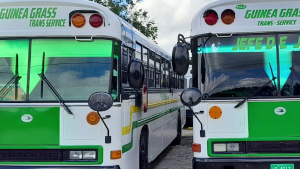 According to Frazer, most independent operators rely on secondhand parts from the Mennonite community to cut costs. Another operator tells a similar story. D & J Guinea Grass Trans Service owner Jaquelline Bonell runs buses from Guinea Grass to Belize City, to Escuela Secundaria Técnica, and to Orange Walk Town. Hundreds of villagers depend on the service, and she broke down the hard numbers behind her Guinea Grass–Belize City run.
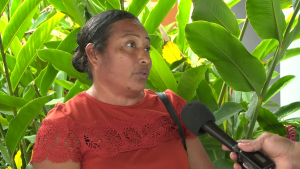
Jaquelline Bonell
Jaquelline Bonell, Owner, D&J Guinea Grass Trans Service
“The fuel cost for that is three hundred and twenty-five dollars. We will make like five, four. In the morning we make it in the evening we will not make it. It is rough on us. I do salary, social security, income tax, parts, I don’t use water in my bus. I use coolants. That is for the bus. And not only that, cleaning supplies as well and everything is going up.”
Bonell also operates a family run business.
 Jaquelline Bonell
“Within the family we work and pull string. For example, my son worked last week and he did not get pay. I do the work for free. Monday to Friday that I work I do not get a salary. I do not pay no one to do my secretary work. I do it myself, with my son.”
Frazer and Bonell admit they’re losing money, but they’ve stayed in the business because thousands of commuters depend on them. Now, they’ve reached their limit, and Monday could prove just how close the system is to collapse.
 Jaquelline Bonell
“All we are asking from the government is a slight raise. We know we cannot get everything we are asking for, but we are just asking for some help.”
Michael Frazer
“Baby cry, come they must. We are not backing down. We are not trying to create any havoc. We have been asking several times to no avail. I personally believe that Mr. Zabaneh does not want to help us. But I have one message for him, we aint backing down.”
Without relief before Monday, thousands of commuters could end up stranded, as independent bus operators say they can no longer afford to run at a loss. Paul Lopez for News Five.
Attention readers: This online newscast is a direct transcript of our evening television broadcast. When speakers use Kriol, we have carefully rendered their words using a standard spelling system.
Watch the full newscast here: