


Climate Summit Takes Aim at Fossil Fuel Future
The world’s first-ever Fossil Fuel Phase-Out Summit concluded in Santa Marta, Colombia.
The summit brought together nearly 60 countries in an unprecedented effort to confront the future of oil, gas, and coal outside the formal United Nations climate process.
The summit, described by organizers as an “experiment in climate diplomacy,” produced no binding agreement. However, it delivered several notable developments, including a joint Indigenous declaration and the launch of a global scientific transition panel. Delegates also announced that Tuvalu and Ireland will host the next iteration in 2027.
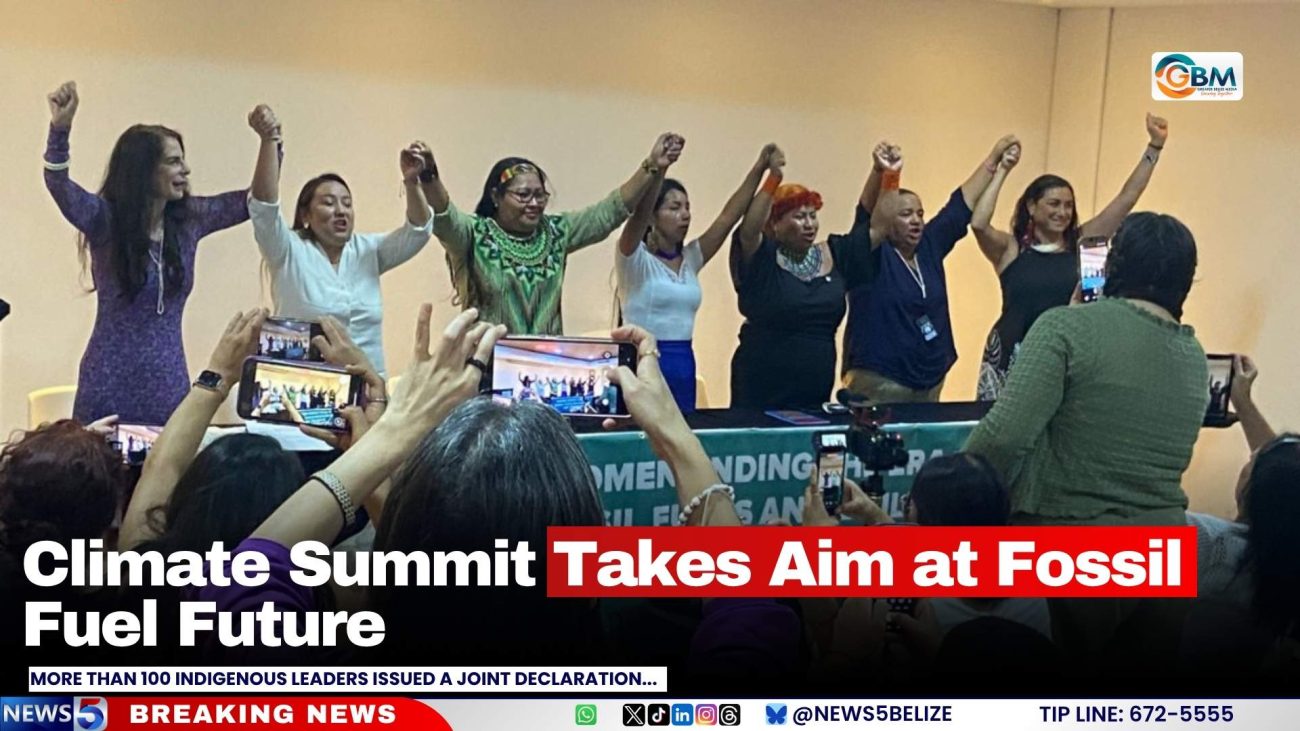
More than 100 Indigenous leaders issued a joint declaration calling for stronger protections of Indigenous lands as part of any global transition away from fossil fuels.
Patricia Suárez of the Organization of Indigenous Peoples of the Colombian Amazon (OPIAC) said the summit had elevated urgency but left key questions unanswered. “The Santa Marta Conference has put the urgency of moving away from fossil fuels on the table, but still leaves unanswered how that will happen,” she said. “For Indigenous Peoples, the answer is clear: without the protection of our territories, and as long as energy models that plunder them persist, nothing will change.” She warned that excluding Indigenous territories from extraction must be central to any credible climate pathway.
Researchers also played a prominent role, with the establishment of a global transition scientific panel of more than 250 experts. It will be led by climate scientists Johan Rockström and Carlos Nobre. Martí Orta-Martínez of the University of Barcelona said the science leaves little room for delay. “To stay within the 1.5°C limit, nearly all existing oil and gas extraction contracts must be canceled today.”
Ana Carolina González of the Natural Resource Governance Institute said the summit opened important discussions about energy transition in producing countries but revealed a major gap. She noted the absence of national oil companies, which she described as central to many developing economies. “These are not peripheral players: they produce more than half of the world’s oil and gas, a share set to reach 62% by 2050, and are the economic backbone of countries like Colombia, Mexico and Nigeria. The next step must bring them in as essential partners in any credible transition roadmap.”
Fatima Eisam Eldeen of the University of Barcelona said the summit marked a shift in tone from past climate talks. “for the first time, it wasn’t only sounding the alarm on what is going wrong or how little time is left, it was shining a light on what is possible, it spoke the language of hope. Now the real work begins: taking this out of conference rooms and into people’s lives.”
The summit also drew attention from major energy and economic voices.
International Energy Agency head Fatih Birol warned in comments cited during the event that global energy markets are undergoing irreversible disruption, accelerating the shift away from fossil fuels. Colombian Environment Minister Irene Vélez Torres echoed the urgency, arguing fossil fuels cannot provide long-term energy security.
Private sector discussions included companies such as BYD and Fortescue, which highlighted emerging “real zero” strategies aimed at eliminating emissions rather than offsetting them.