


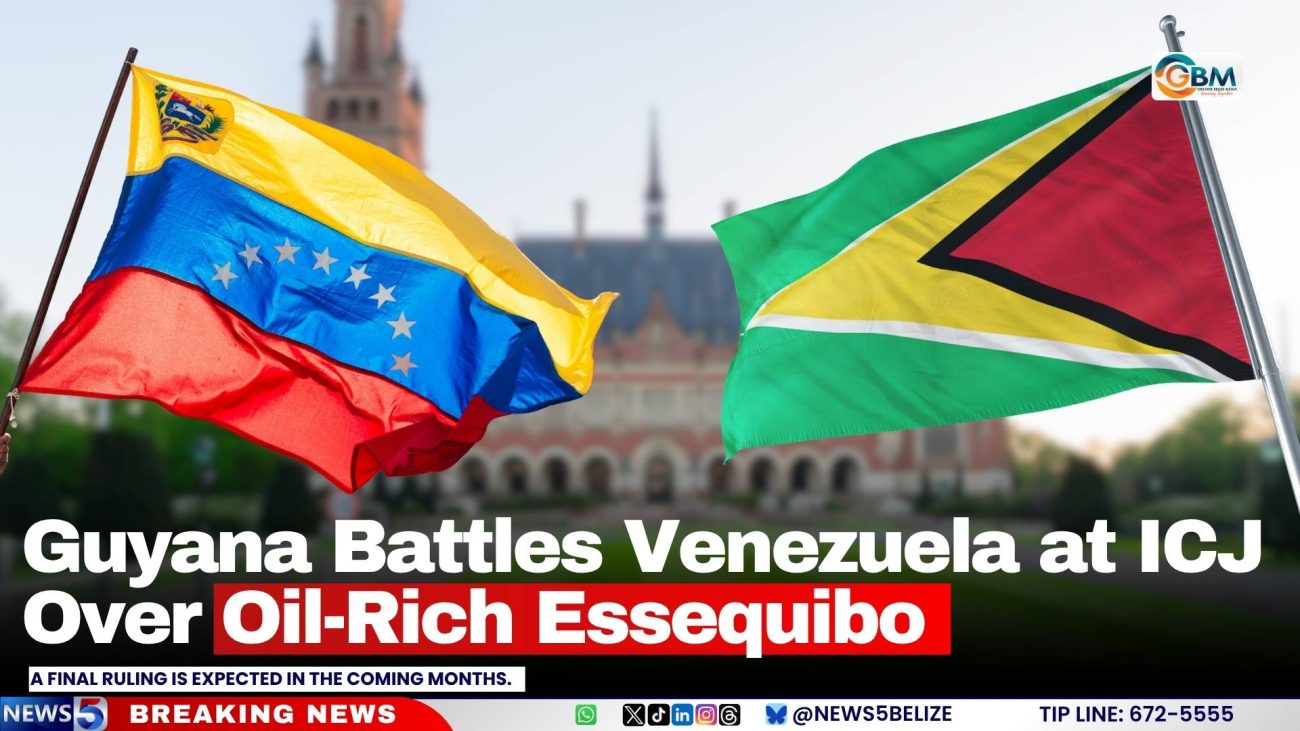
Guyana Battles Venezuela at World Court Over Oil-Rich Essequibo
Guyana has told the International Court of Justice (ICJ) that more than 70% of its territory is at risk in its long-running border dispute with Venezuela over the Essequibo region.
Speaking at the opening of hearings in The Hague, Foreign Affairs Minister Hugh Todd said the case is “straightforward but consequential” and described the issue as critical to Guyana’s sovereignty and future.
The case, filed in 2018, asks the UN’s top court to confirm that an 1899 ruling, which set the border between the two countries, is legally valid. Guyana argues that the decision has been recognized for over a century and should remain binding. The disputed Essequibo region makes up about two-thirds of Guyana and is rich in natural resources, including oil, gold and timber.
Todd told judges that Venezuela only challenged the 1899 ruling decades later, despite previously accepting it, and said the claim is “too late” under international law. He also accused Venezuela of escalating tensions in recent years through military activity near the border and attempts to assert control over the territory.
Venezuela, however, maintains that the 1899 agreement is invalid and argues that a 1966 treaty requires both countries to resolve the dispute through direct negotiations, not the court.
The ICJ has already ruled that it has jurisdiction to hear the case. Hearings are expected to run through May 11, with Venezuela set to present its arguments midweek. A final ruling is expected in the coming months. While ICJ decisions are legally binding, the court has no direct power to enforce them.
Belize and Guatemala have a dispute before the ICJ, with proceedings actively moving forward in 2026. The most recent development came on March 19, 2026, when the ICJ ruled that Guatemala can intervene, though only as a non-party, in a related case involving Belize and Honduras over the Sapodilla Cayes, recognizing Guatemala has a “legal interest” in the outcome. The Court has since set deadlines for Guatemala to submit its position, while the main Belize–Guatemala territorial, maritime, and insular dispute continues toward a final judgment expected in the coming years.