


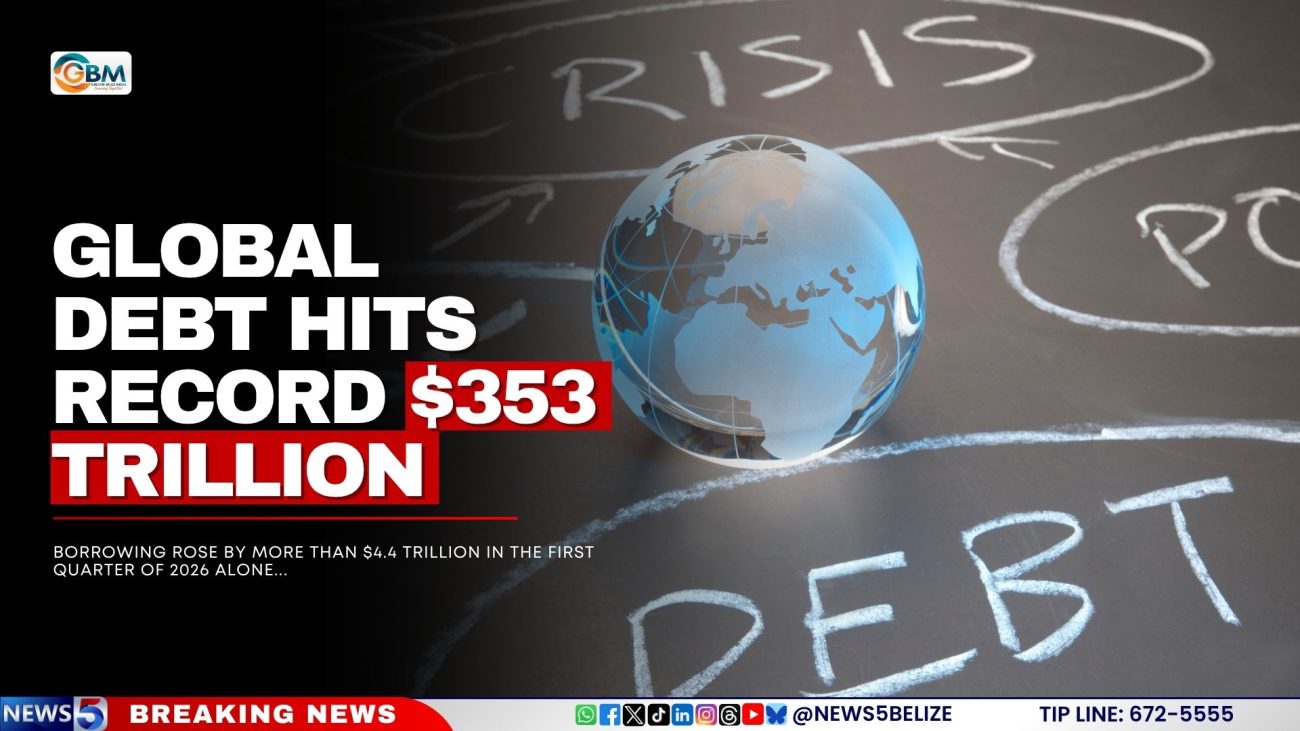
Global Debt Hits Record $353 Trillion
Global debt has surged to a record nearly $353 trillion, according to a new report from the Institute of International Finance (IIF), with early signs that investors are gradually moving away from U.S. government debt.
The IIF’s latest Global Debt Monitor shows borrowing rose by more than $4.4 trillion in the first quarter of 2026 alone, the fastest quarterly increase since mid-2025. The United States was a key driver, mainly due to higher government borrowing, while China also saw a sharp rise in corporate debt.

Sponsored by RF&G
At the same time, investors have shown stronger demand for Japanese and European government bonds, while interest in U.S. Treasuries has remained largely stable. The IIF says this suggests a gradual diversification away from U.S. debt, though it adds there is no immediate risk to the $30 trillion Treasury market.
The global debt-to-GDP ratio remained steady at about 305%, but trends are diverging: debt levels are falling in many advanced economies while continuing to rise in emerging markets, which now hold a record $36.8 trillion in debt.
Long-term concerns remain, particularly for the United States, where debt is expected to keep rising under current policies. The report warns that structural pressures, including aging populations, higher defence and energy security spending, and investment in AI and cybersecurity, are likely to push global debt even higher in the years ahead.
The IIF also noted geopolitical tensions, including conflicts in the Middle East, could add further pressure on global borrowing needs.
The world doesn’t owe the $353 trillion to one single entity. Most of it is money borrowed within the financial system from banks, pension funds, insurance companies, investment funds, other governments, and private investors. In simple terms, global debt is largely “we owe each other” within countries and across markets, with one party’s debt usually being another party’s investment.