


Election Season Heats Up, But Who’s Funding the Campaigns?
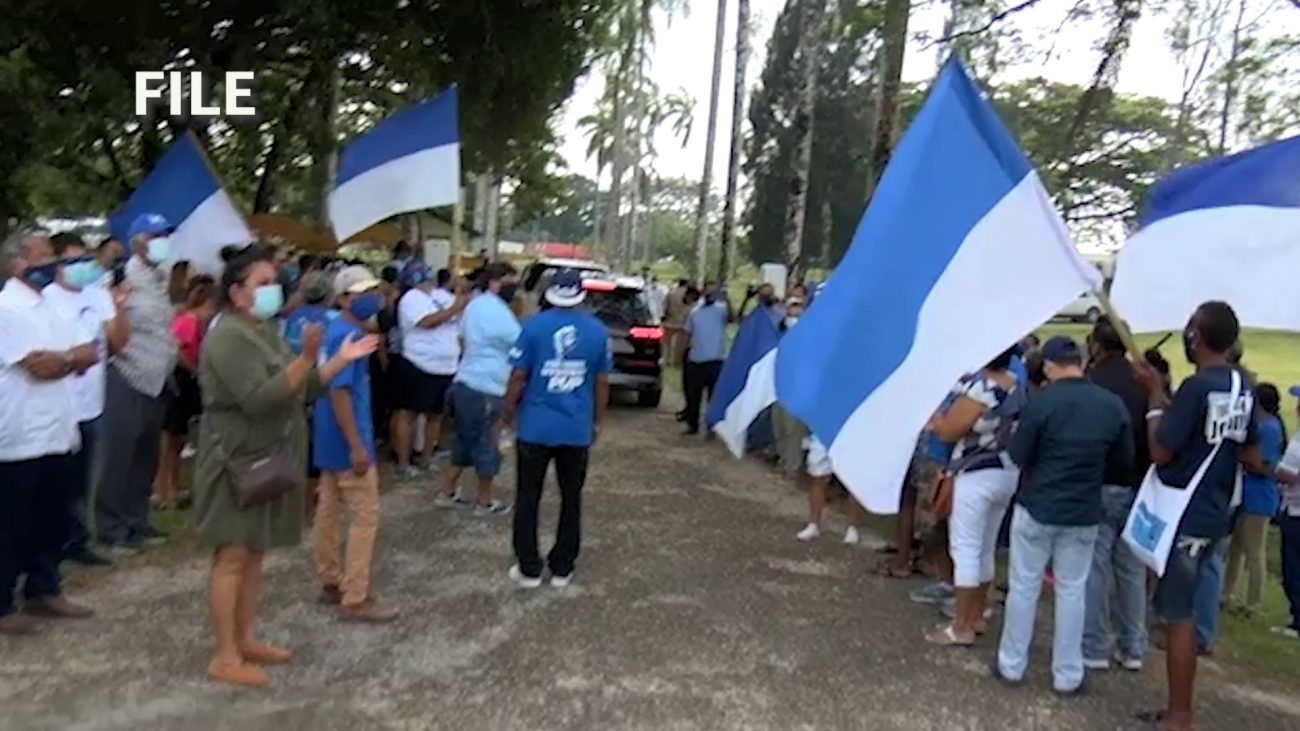
A recent fuel discount is fueling a bigger debate about money and politics in Belize. When UDP Belize Rural Central caretaker Edward Broaster introduced a two-dollar gas subsidy, it quickly raised eyebrows and revived long-standing concerns about who is bankrolling political activity. As questions grow, so does the pressure for answers. So where is the promised legislation to bring transparency and accountability to political spending? Shane Williams looks into it.
 Shane Williams, Reporting
Campaign season is already heating up, but what’s missing is any real clarity on who’s funding it. With municipal elections less than ten months away, long-promised campaign finance reforms appear stuck in limbo, overshadowed by politics and public silence. The spotlight was recently on Edward Broaster’s gas subsidy push, framed as a stand against rising fuel prices, but it’s also raising deeper concerns about money in politics. Because behind the headlines and handouts lies a bigger issue Belize has yet to confront, who is paying for these campaigns? It’s a question that has lingered for years, even after then Opposition Leader John Briceño pledged in 2020 to introduce a comprehensive system to regulate political financing.
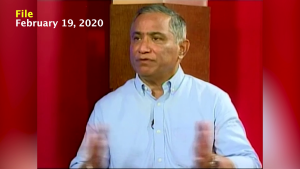
John Briceño
John Briceño, Leader of the Opposition (File: February 19th, 2020)
“There are four basic tenants in campaign finance legislation that we’re talking about. One is that we need to define as a political party and to be defined and to set up standards. Secondly, we are talking about campaign financing. Will it be strictly private? Will it be strictly public? Will it be private-public model? So we are looking at that. And by that meaning that you limit the types of donations that can be given to a political party.”
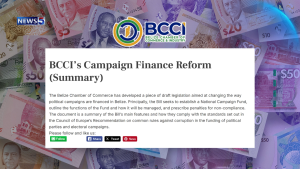 The promise gained momentum after the PUP formed government. In May of 2021, Prime Minister Briceño announced that campaign finance legislation would move forward before the end of that year, in collaboration with the unions and the Belize Chamber of Commerce and Industry. The Chamber even drafted proposed legislation.
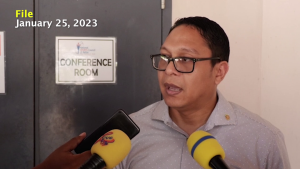
Marcelo Blake
Marcelo Blake, President, B.C.C.I. (File: January 25th, 2023)
“Today’s session was to inform the media of the intricate elements of what campaign finance is, looking at a draft bill that we’ve put together and sharing what could be put into law and of course and of course we will then see how we can work with the government in order to ensure that this is passed.”
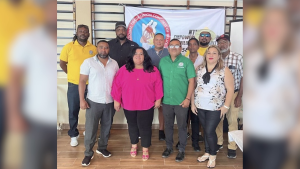 The proposal sought to regulate donations, introduce reporting requirements and establish greater transparency in political fundraising. The National Trade Union Congress of Belize also backed the effort and warns that unchecked campaign financing opens the door to corruption and political payback.
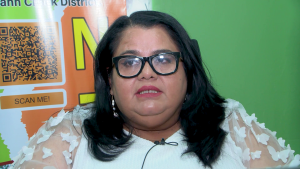
Ella Waight
Ella Waight, President, National Trade Union Congress of Belize (File: January 8th, 2026)
“We always hear about corruption when it comes to campaigning, when it comes to election day and because the limited resources we have in this country must be spent wisely, we cannot allow that we have business or large entities or large people with great finances sponsoring parties when it comes to election time, and then they have to reimburse these favors.”
Promises were made, but nothing changed. Years of consultations and draft plans have yet to produce a single law, even as another election draws near. Critics say both major parties benefit from a system with little oversight, few disclosures, and almost no consequences. Public pressure has faded and so has the urgency. So, the question still hangs: if campaign finance reform was once a national priority, why has it all but disappeared? Shane Williams for News Five.
Attention readers: This online newscast is a direct transcript of our evening television broadcast. When speakers use Kriol, we have carefully rendered their words using a standard spelling system.
Watch the full newscast here: