


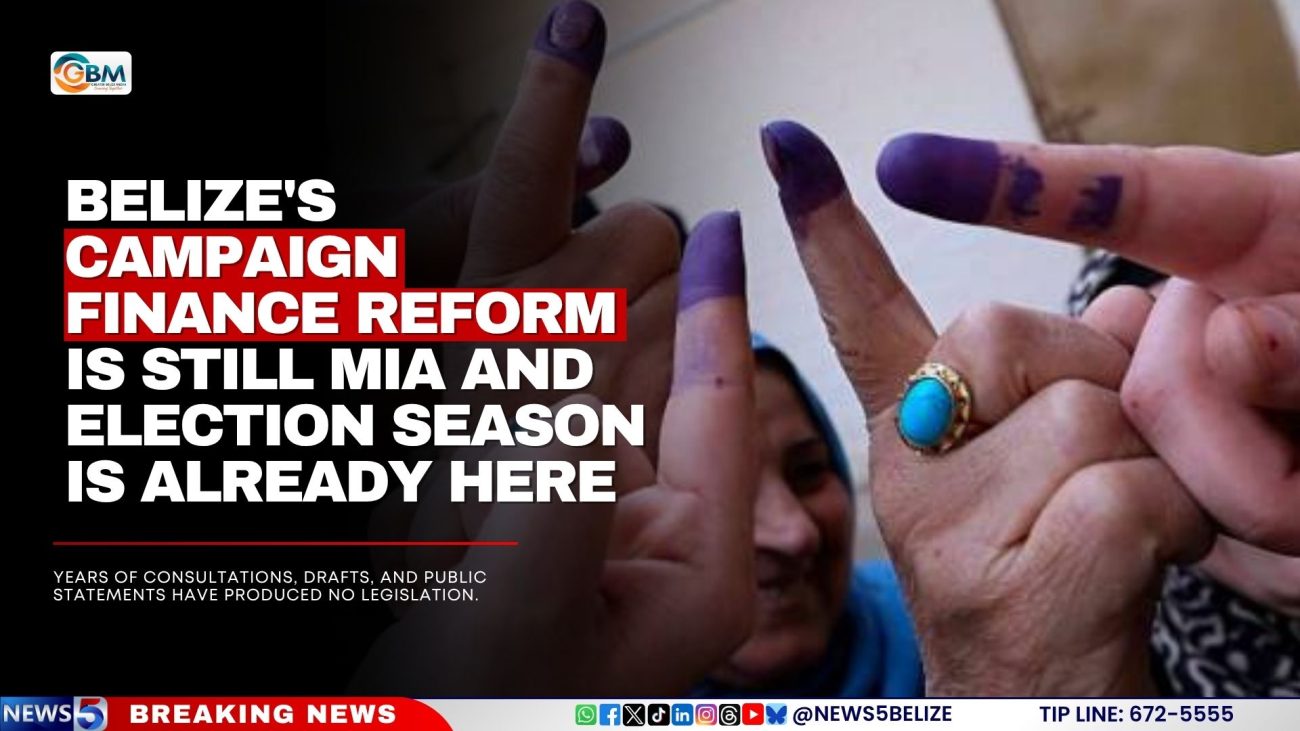
Belize’s Campaign Finance Reform Is Still MIA and Election Season Is Already Here
A two-dollar gas subsidy from UDP caretaker Edward Broaster may seem like a local gesture, but it has reignited a question Belize has been dodging for years: who is actually bankrolling political campaigns, and why is there still no law requiring anyone to say?
With municipal elections less than ten months away, the answer remains the same as it was in 2020… nobody knows, and nobody is legally required to tell you.
The promise of campaign finance reform is not new. When John Briceño was still opposition leader, he laid out what he said the legislation would look like. “There are four basic tenants in campaign finance legislation that we’re talking about. One is that we need to define as a political party and to be defined and to set up standards. Secondly, we are talking about campaign financing. Will it be strictly private? Will it be strictly public? Will it be private-public model? So we are looking at that. And by that meaning that you limit the types of donations that can be given to a political party,” he said.
After the PUP won government, the momentum seemed real. By May 2021, Prime Minister Briceño was promising legislation before year’s end, with buy-in from the unions and the Belize Chamber of Commerce and Industry. The Chamber drafted a proposed bill and went public with it. “Today’s session was to inform the media of the intricate elements of what campaign finance is, looking at a draft bill that we’ve put together and sharing what could be put into law and of course and of course we will then see how we can work with the government in order to ensure that this is passed,” said then Chamber President Marcelo Blake.
The National Trade Union Congress threw its weight behind the effort too, with its president making clear why the stakes are high. President Ella Waight said “We always hear about corruption when it comes to campaigning, when it comes to election day and because the limited resources we have in this country must be spent wisely, we cannot allow that we have business or large entities or large people with great finances sponsoring parties when it comes to election time, and then they have to reimburse these favors.”
That warning has not translated into action. Years of consultations, drafts, and public statements have produced no legislation. Critics argue both major parties have little incentive to change a system that keeps donors anonymous and spending unaccountable.