


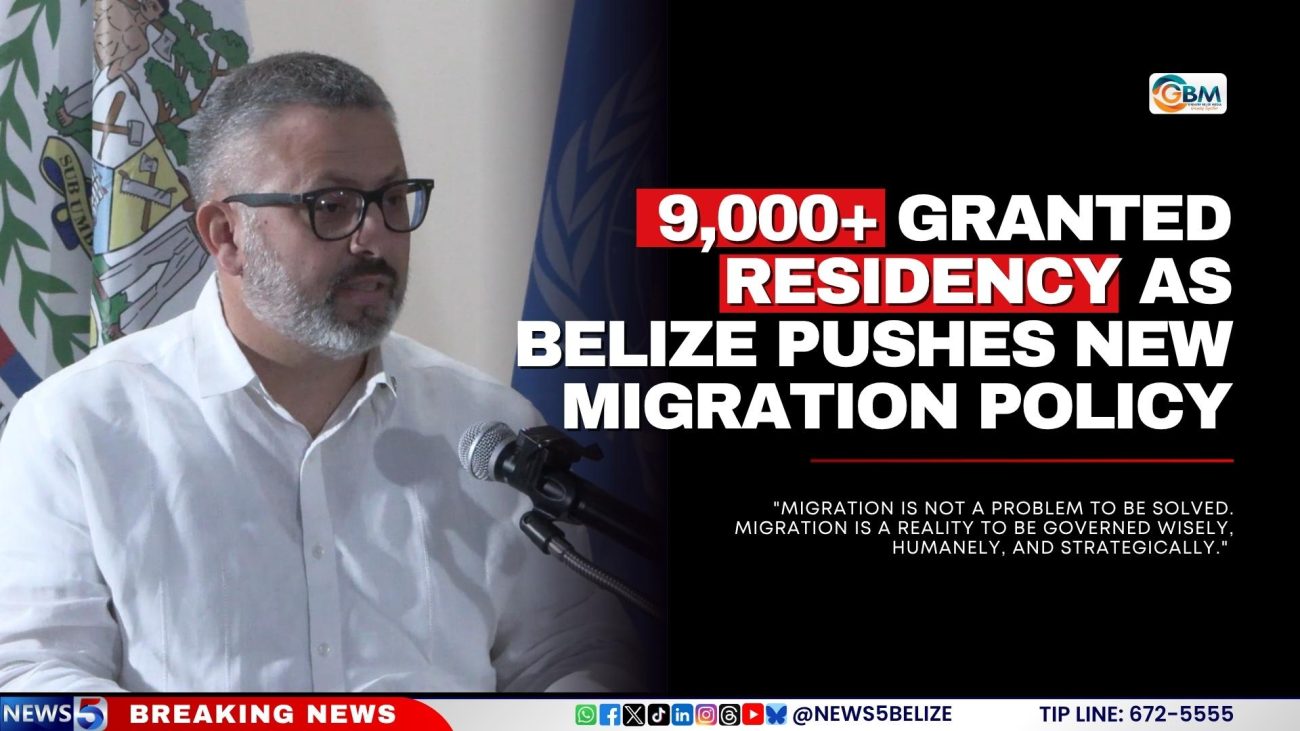
9,000+ Granted Residency as Belize Pushes New Migration Policy
Imagine running a country where roughly one in every six people was born somewhere else and having no written national plan to manage that reality. That has been Belize for most of its history.
This week, government ministers, immigration officials, civil society groups, business leaders, and migrant communities themselves gathered in Belmopan for the first national stakeholder consultation on a Belize migration and development policy, a process that has been in the works for almost ten years.
“Migration is not a problem to be solved,” said Minister of Immigration, Kareem Musa, at the opening ceremony. “Migration is a reality to be governed wisely, humanely, and strategically.”
Belize has always been a country shaped by people on the move. Central American neighbours arrived in waves over decades. While Belizeans themselves have steadily left, the majority heading to the United States. Between 1990 and 2020, the number of immigrants and refugees in the country more than doubled. Today, migrants make up roughly 15% of the national population, with three-quarters coming from Guatemala, Honduras, and El Salvador.
Data from the 2022 Population and Housing Census show that migrants are concentrated in the working-age brackets. Most work in agriculture, construction, retail, and domestic service, sectors that keep the country fed, built, and running. About one in three working-age migrants has little or no formal education, compared to about one in ten Belizean-born residents, and foreign-born children attend school at slightly lower rates, with a more pronounced gap in the Toledo District.
The Ministry of Immigration also pointed to the Amnesty Program launched in 2022, which gave permanent residency to more than 9,000 people. Officials say the initiative generated BZ$5.6 million in revenue that was reinvested into national services and has since been recognised as a “good practice” by the UNHCR.
This week’s consultations are being held in Belmopan, Belize City, Punta Gorda, and San Pedro. The proposed migration policy will focus on five key areas: migration governance, national security and border management, labour and economic migration, social services integration, and stronger data and policy systems.
By the end of the process, stakeholders are expected to produce a consolidated report, evidence-based recommendations, and key input for the final draft policy, which is scheduled to be presented to the Ministry in late July.
“It will not be just a document that sits on a shelf,” Musa said.