


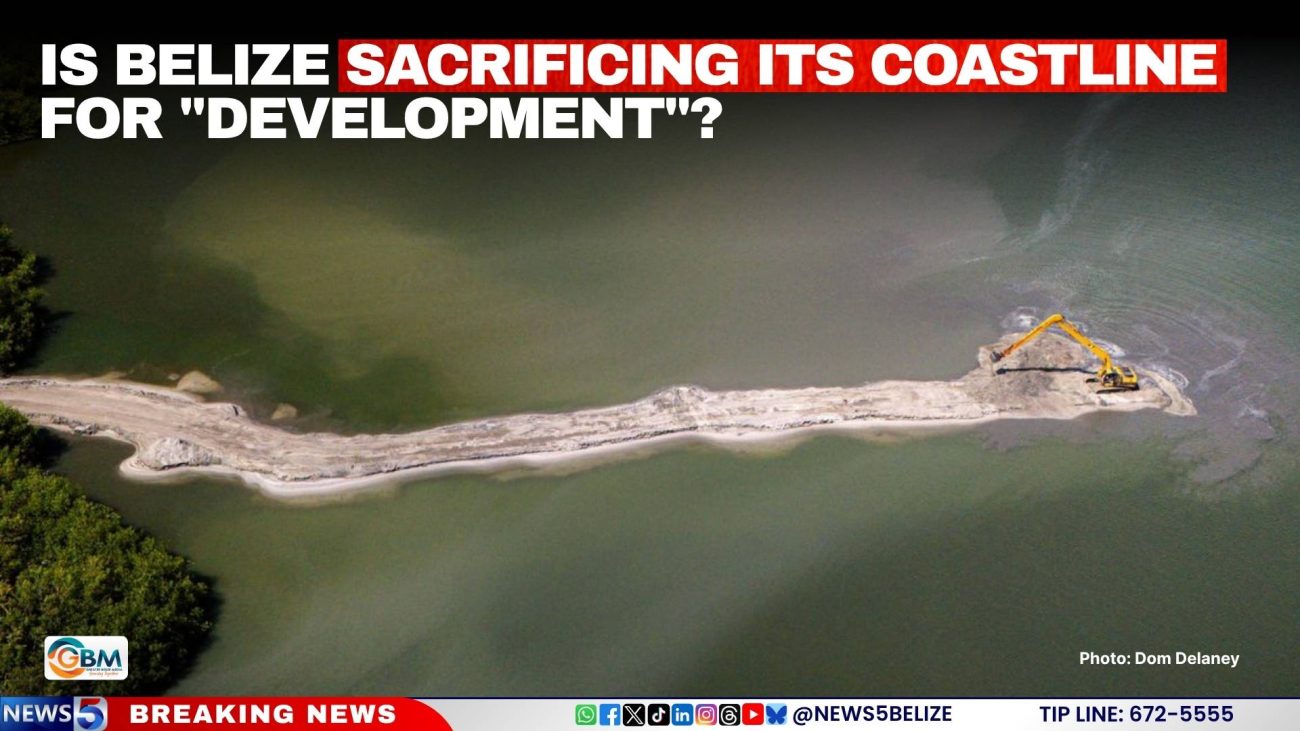
Is Belize Sacrificing Its Coastline for “Development”?
A coalition of some of Belize’s most prominent conservation and environmental organizations is demanding the government halt coastal development approvals, warning that the country’s reefs, mangroves, and fishing grounds are being destroyed while authorities look the other way.
The Ambergris North Alliance, whose signatories include Oceana, the World Wildlife Fund, Belize Flat Fishery, and other NGOs, released a joint statement on Monday calling out what they describe as a pattern of illegal dredging, unpermitted mangrove clearing, wastewater dumping, and “lack of monitoring” to ensure all mitigation measures are in place and effectively used.
“We the undersigned, on behalf of our respective organizations, write to formally and forcibly register our profound and collective frustration and disappointment regarding the management and protection of our sensitive marine and coastal ecosystems,” the statement reads.
At the core of the coalition’s frustration is not just the damage itself but the silence from those in charge. Community leaders, scientists, and conservation groups say their repeated requests for information about proposed developments and the status of required permits have gone unanswered.
“The long-term pattern has been that violations are only addressed after irreversible damage has already occurred, with little to no meaningful penalties applied, particularly for repeat offenders,” the statement says. “This ongoing lack of enforcement creates a culture of impunity that cannot be allowed to continue.”

Sponsored by RF&G Insurance
The groups are specifically calling on the Ministries of Sustainable Development, Blue Economy and Marine Conservation, and Natural Resources, as well as the Department of the Environment, to immediately freeze all development approvals in sensitive and protected areas. The areas named include Bacalar Chico, Hol Chan Marine Reserve, the Placencia Peninsula, Corozal Bay Wildlife Sanctuary, and offshore cayes.
Beyond the freeze, the coalition wants strict enforcement of existing environmental laws, including stop orders, permit suspensions or revocations, and “meaningful” financial penalties for developers who break the rules. They are also pushing for a formal, binding process that gives local leaders, tour operators, fishing communities, and village councils a seat at the table in future coastal development decisions, in line with the Escazú Treaty.
“On behalf of the people of Belize, we expect an urgent and meaningful response detailing how the administration intends to address this exigent national situation,” the statement concludes.