


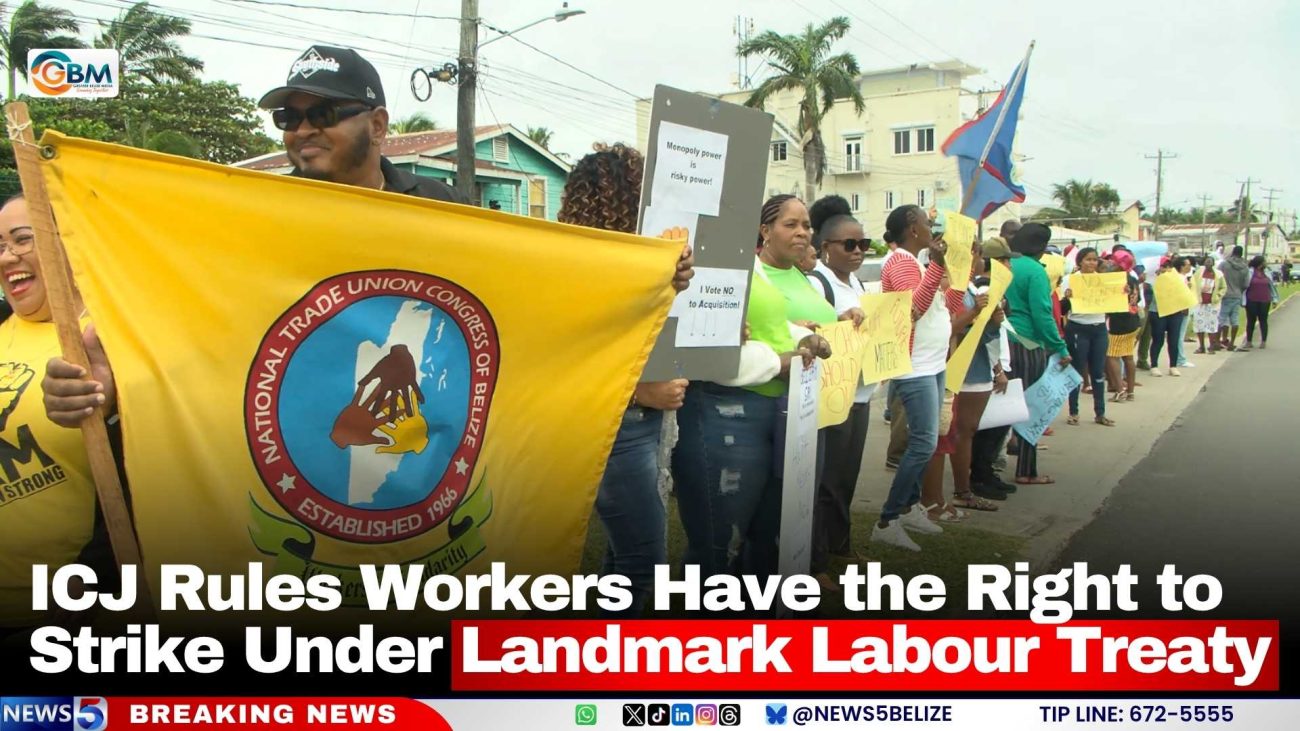
ICJ Rules Workers Have the Right to Strike Under Landmark Labour Treaty
The International Court of Justice (ICJ) has ruled that the right to strike is protected under the world’s principal international labour convention, settling a dispute that has paralysed the global labour standards system for more than a decade and delivering a major victory for workers’ organisations worldwide.
ICJ President Yuji Iwasawa announced that the court was “of the opinion that the right to strike of workers and their organisations is protected” under ILO Convention No. 87, the Freedom of Association and Protection of the Right to Organize Convention of 1948. However, judges clarified that the opinion, which is not legally binding, should not be understood as laying out any other ground rules for strike action.
The ILO’s Governing Body is expected to consider the matter and any follow-up at its 358th session in November.
The ruling brings to a head a long-running and bitter standoff inside the International Labour Organization. Behind the legal question of treaty interpretation lay a heated battle between trade unions and employer groups that played out in public hearings in October 2025. Starting in 2012, employer representatives refused to recognise the right to strike as a corollary of the right to collective bargaining, and moved to block findings by the ILO’s supervisory bodies on the matter, a standoff that persisted for nearly a decade before the dispute was referred to the ICJ in 2023.
The referral to the court was only the second time in the ILO’s history that it sought an advisory opinion on the interpretation of an international labour convention, and the first time the International Court of Justice had been seized with such a question since its creation in 1945.
The stakes were enormous. Convention No. 87 has 158 State parties, making it one of the ILO’s most widely ratified standards and one of its eleven fundamental instruments, whose principles all ILO member states are obligated to respect and promote…whether or not they have formally ratified the convention.
Harold Koh, representing the International Trade Union Confederation at the hearings, told the judges the case was “about more than legal abstractions” and would “affect the real rights of tens of millions of working people around the world.” He warned that a ruling against the workers’ position would have allowed employer groups and governments to challenge the right to strike nation by nation, targeting countries “with compliant courts, weak civil societies and ineffective media.”
For employers, the opinion, while not creating binding law, carries significant persuasive weight within the ILO system and beyond, and could trigger corresponding developments in domestic labour legislation and industrial relations frameworks across multiple jurisdictions.