




A Telecom Tug‑of‑War: The Battle Over BTL and Speednet
In a country where staying connected has never mattered more, a bold business move is raising serious concerns. Belize Telemedia Limited, already the heavyweight in the telecom industry, wants to buy out its rival, Speednet. Supporters say the deal could mean smoother operations and better service for customers. But critics aren’t convinced. What started as a business transaction has quickly become a national conversation, pulling in unions, business leaders, politicians, and everyday Belizeans who are asking: Who really benefits? Is this about progress, or about power? With negotiations now at a standstill, concerns over fair competition, consumer rights, and the future of telecommunications in Belize are front and center. Tonight, News Five takes a deeper dive into the arguments, the tensions, and what’s at stake in the BTL–Speednet saga, in this week’s edition of Five Point Break Down.
 Paul Lopez, Reporting
On January eighth, Belize Telemedia Limited applied to the Public Utilities Commission for approval to buy four telecom, cable, and broadband companies, a step required by law. But public and industry pressure quickly changed the course. Three of those companies walked away from the talks, leaving Speednet as the only one still at the table. Speednet, the country’s second‑largest telecom provider, is valued at eighty million dollars. If the deal goes through, BTL would further cement its dominance of the market. Still, BTL’s Chief Financial Officer, Ian Cleverly, insists the acquisition would benefit consumers and deliver stronger returns for shareholders.

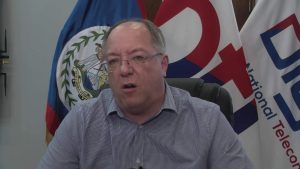
Ian Cleverly
Ian Cleverly, Chief Financial Officer, Belize Telemedia Limited
“Belize’s market is small and mature. Operating two parrel mobile networks increases costs, and limits rural expansion. This is about efficiencies in the country, not consumer harm. Consumer protection, we are looking with no forced plan changes, services continues on BTL and Speednet. No number needs to change and we are looking at thirty six months price gap with PUC oversight.”
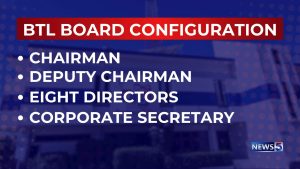
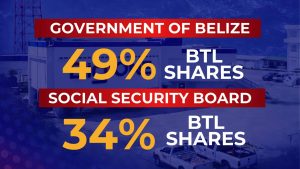 Still, this isn’t just a straightforward cost‑cutting move. Before anything happens, BTL must first get the green light from its board. The Government of Belize is the majority shareholder and Social Security has the second largest stake in the company. An independent member also sits on the board. So far, repeated attempts have fallen short, with BTL unable to win majority support from its board. Growing public resistance has disrupted the company’s efforts to convene a board meeting and move forward with the acquisition. The Belize Chamber of Commerce and Industry says consumer protection concerns are primary.

Giacomo Sanchez
Giacomo Sanchez, President, BCCI (File: Jan 8th, 2026)
“The issue of BTL’s past actions raises consumer protection concerns and that was an issue for us years ago and the potential for that recurring within the sphere of consolidation continues to be in the forefront of our minds.”
The National Trade Union Congress of Belize argues that Social Security may be exposing pension funds to undue risks.

Ella Waight
Ella Waight, President, NTUCB (File: Jan 26th, 2026)
“If we lose in a monopoly at the Social Security Board it will not allow for certain things to happen when you and I retire.”
 At the same time, independent senators are urging that the deal be abandoned, citing fears of market monopolization and insufficient public

Louis Wade
Louis Wade, Church Senator
“The person who in my belief is the architect or pushing this deal, that Belizeans are vocally and actively rejecting, once sat as an independent senator. And it is my personal belief that if he had the information we have and he sat where we sit today, I believe he would be with us rejecting this deal.”
 The United Democratic Party has held two public demonstrations in one week, denouncing the proposed acquisition. Retired BTL employees have also voiced their objections, as they demand severance payments. Now, when it comes to who has the final word, the law is clear. That authority rests solely with the Public Utilities Commission. Under the Belize Telecommunications Act, the PUC regulates the industry and has the power to block the merger if it clashes with any of the Act’s eleven objectives. So far, though, the commission hasn’t decided, and until it does, this deal goes nowhere.

Stacy Grinage
Stacy Grinage, Internal Legal Counsel, PUC
“The law sets out the objects of the act under section three. We have to think about the quality of service to consumers. We have to look at the quality and reliability of the services, the whole general provision of the service to the consumer, the price we have to consider. It is a list from about A to K about matters we have to consider to see whether such an agreement would frustrate those objects.”
 In the end, the real winners or losers could be the thousands of telecom and broadband customers across the country. BTL argues that consumers will realize immediate benefits, while dissenting voices say that consumers will be at a disadvantage. At this stage, the PUC controls the direction of the deal, even as the prime minister emphasizes the need to respect the process and protect the public interest.
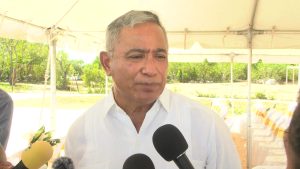
Prime Minister John Briceño
Prime Minister John Briceño
“I have said all along let the process proceed. They came to Cabinet and spoke to us about two hours and a half. They answered every single question that ministers had and they left to our satisfaction. But as a Cabinet we have said let the process continue.”
With the deal still up in the air, all eyes are on the Public Utilities Commission, whose decision could redefine the future of telecommunications in Belize. Reporting for News Five, I am Paul Lopez.
Facebook Comments