


Belize Studies Bukele’s Controversial Crime Playbook
Belize is not El Salvador, and government officials insist they have no intention of copying President Nayib Bukele’s anti-gang crackdown wholesale. But as the country expands police powers, strengthens criminal laws and prepares to send officials to study El Salvador’s strategy, the similarities are becoming harder to ignore. Supporters point to El Salvador’s dramatic reduction in violence. Critics point to mass detentions, weakened due process and allegations of human rights abuses. So, can Belize adopt the model’s successes without inheriting its most controversial features? News Five’s Britney Gordon examines where the two approaches intersect and what could be at stake.
Michel Chebat
Michel Chebat, Minister of National Security
“These adults are taking advantage of vulnerable young people, luring them into a life of crime and despair. They must be held accountable.”
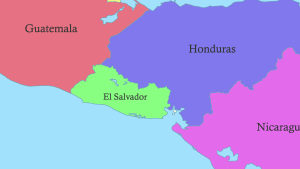 Belize’s latest crime plan promises tougher laws, stronger enforcement and harsher consequences for the people recruiting young Belizeans into gangs. But the government is also looking beyond the country’s borders for ideas, including to one of the region’s most successful and controversial anti-crime experiments. El Salvador transformed its security landscape through an aggressive campaign against gangs. El Salvador’s crime crackdown restored order, but at what cost? Many cite arbitrary arrests and weakened rights. Now, Minister Michel Chebat says Belize will study the strategy, but will not copy Bukele’s model wholesale.
 Michel Chebat
“I do appreciate the point that their society was at a different level than where we are right now, and so that many of the changes that the current administration in El Salvador brought was a result of what that society was experiencing. However, we are also conscious that we cannot implement everything and to the extension that they have implemented. But we believe that there are strategies that they have employed that we could possibly use in Belize in our fight against the gangs.”
 The distinction matters. El Salvador built its strategy around prolonged emergency rule, mass arrests, expanded security powers and a massive increase in prison capacity. That approach helped dismantle the gangs’ grip on many communities, but critics argue that it also treated constitutional protections as obstacles rather than safeguards. Attorney Richard “Dickie” Bradley says Belize may already be borrowing from El Salvador’s playbook. But he argues that repeatedly detaining young men without charge only creates the appearance of action, while the root causes of gang violence remain untouched.
Richard “Dickie” Bradley
Richard “Dickie” Bradley, Attorney-at-Law
“I spoke to three young men who have been locked up four weekends in a row, Ney no do nothing. Every week police go deh, some G13 and PSU. Turn up da ney yard and buss inna ney house, drag ney, ker ney rough ney up and ker ney da di Ladyville police station and ney spend the weekend. Every weekend dat di happen. Dat da done Bukele already. And so it’s a hard thing right because you have to start at the top. Government have not made an effort to tackle the social and economic problem that breeding young people who feel like nothing wrong to go out tek a gun and shoot somebody.”
 That criticism exposes the central tension in Belize’s crime strategy. Police must respond immediately to gun violence, but enforcement alone cannot eliminate the conditions that allow gangs to recruit and survive. El Salvador’s strategy did not stop with mass arrests. The Bukele administration also rapidly expanded the country’s prison system, including the construction of the Terrorism Confinement Center, which can hold tens of thousands of suspected gang members. Can Belize fight crime without confronting corruption? Dr. Osmond Martinez says the country should study El Salvador’s success, but not copy its entire model. He also argues that the media must expose wrongdoing and keep governments in check.
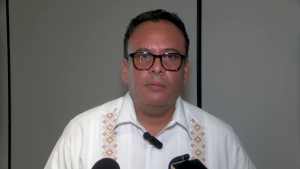
Osmond Martinez
Dr. Osmond Martinez, Cabinet Minister
“El Salvador model has shown to have done very well in terms of reduction of crime, and that’s as far I can, as I can comment with El Salvador’s model. When it comes to corruption, you will have to define corruption. You will have to also prove it and say where you see corruption because and at the same time, I don’t think only El Salvador model has very good models in terms of eradicating corruption. There are different models that, that exist. And the media houses has done very well in keeping governments on check, you know, and that’s part of a model that needs to be done.”
Belize’s crime crackdown is already underway, but emergency powers do not give police a free hand. Deputy Commissioner Bart Jones says officers must justify arrests, document detentions and connect anyone held beyond forty-eight hours to an active investigation.

Bart Jones
Bart Jones, Deputy Commissioner of Police
“We have learned from some of what the, the courts would have said in respect to the, the state of emergency. The state of emergency, while it is a very restrictive and some may say draconian measure, it certainly, for the police, it’s certainly not a carte blanche in terms of the violation of rights.”
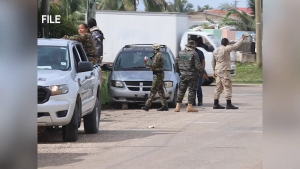 Can government fight crime while corruption exists within its own ranks? Opposition Leader Tracy Taegar-Panton says repeated States of Emergency have failed, and the scrutiny must now extend beyond street gangs to public officials.

Tracy Panton
Tracy Taegar-Panton, Leader of the Opposition
“The measures he has used are draconian but Bukele has said something critically important and I want you to bear with me, he said if a government is unable to arrest crime in it’s community, it is because the government are criminals themselves.”
Belize is now pursuing its own blend of emergency enforcement and longer-term reforms. The government plans to establish a joint police-military suppression unit, increase penalties for gun, drug and gang offences, strengthen laws against gang recruitment and introduce a youth rehabilitation program. It also wants closer coordination among police, prosecutors and other agencies to improve the chances of securing convictions. The real test is not whether Belize copies Bukele, but whether it can curb violence, protect due process and tackle the conditions fueling gangs. El Salvador offers both a lesson and a warning: reclaiming the streets can come at a cost. Britney Gordon for News Five.
Attention readers: This online newscast is a direct transcript of our evening television broadcast. When speakers use Kriol, we have carefully rendered their words using a standard spelling system.
Watch the full newscast here: