



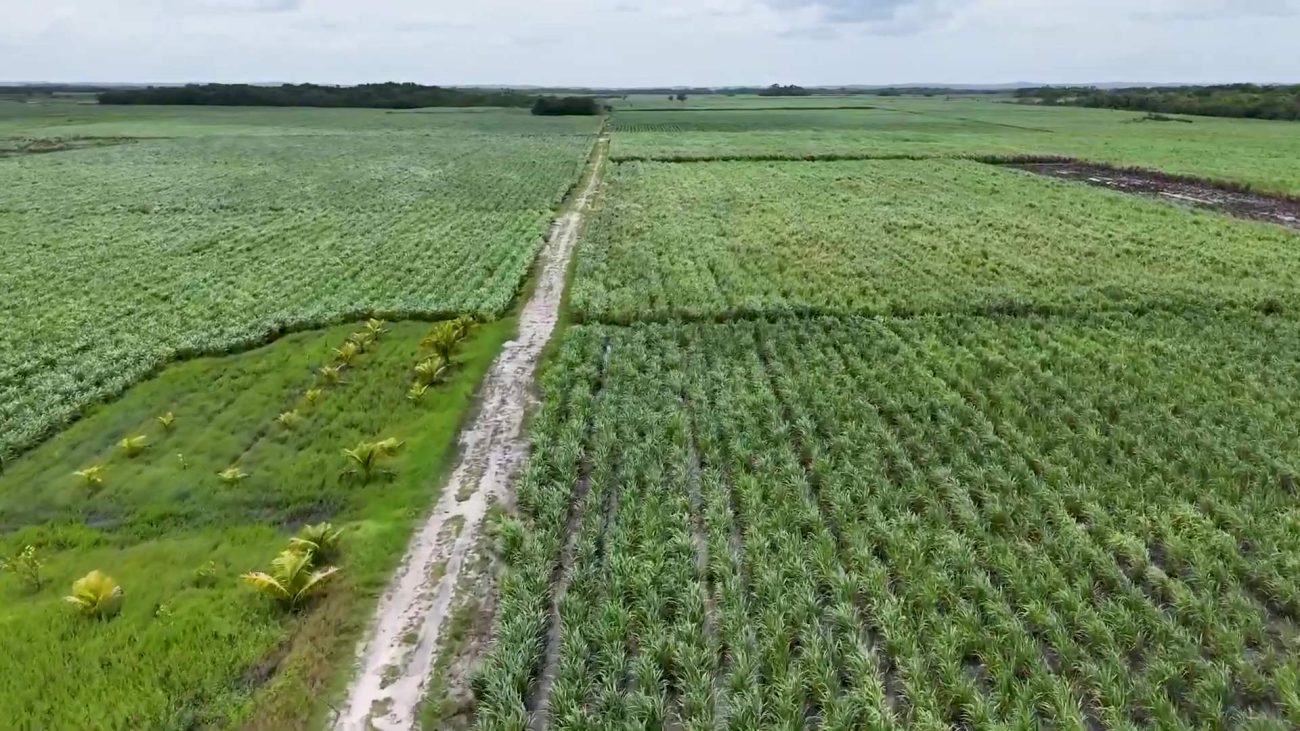
BSI Diversifying Cane Varieties to Safeguard Sugar Industry
Stakeholders in Belize’s sugar industry are finally seeing a bit of sunshine after one of the toughest seasons they’ve faced in decades. Disease, falling yields, and market uncertainty made 2025 a bitter year, but there’s new optimism on the horizon. A clean‑seed initiative, backed by both industry investment and government support, is now rolling out, aiming to protect farmers, boost productivity, and secure the future of the sector. News Five’s Shane Williams stopped in at BSI today for a crash course in the science behind healthier cane. Here’s his report.
Shane Williams, Reporting
For years, sugar farmers across northern Belize have struggled with falling production, climate shocks and plant diseases that weaken yields and threaten livelihoods. Fusarium knocked sugar production down by fifteen percent last year, raising real concerns about the industry’s future. Now BSI is fighting back with a multi‑year Clean Seed and Varieties Program designed to rebuild the sector from the ground up. At the heart of the program is the use of disease-free, genetically pure planting material, designed to replace infected and low-performing cane varieties and restore confidence in replanting.


Adrian Zetina
Adrian Zetina, Manager, R&D And Sustainability, BSI
“We have right now sixty percent of the industry is covered in B-79 and that’s an untenable position to be in. If a disease and one that we saw last eighteen months ago, like Fusarium is to enter and we have sixty percent of our surface area in one basket that – we are in a very precarious position. We want to move away from that and we don’t want to move away from one single to one single variety getting to the levels that B-79 is currently in. We want to diversify that to having a variety cover of twenty to twenty-five percent of it so that we can hedge our risks against any disease coming in. But also we need to have that distributed evenly in terms of maturity. Cane that is coming in early, that it have early maturing varieties, mid and late.”
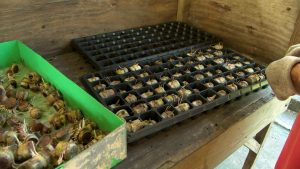
 Under the program, tissue‑culture plantlets from Florida Crystals are grown out in new greenhouse and shade‑house facilities at BSI. Once strengthened, they’re multiplied through seed blocks and then handed off to farmers. The setup can handle up to seven hundred and fifty thousand plantlets a year, enough to replant about five thousand acres. BSI’s country manager, Mac McLachlan, says there’s no time to waste, and the first batches could arrive as early as March.
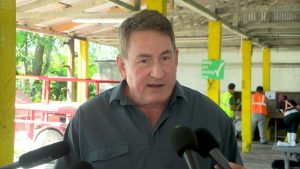
Mac McLachlan
Mac McLachlan, Country Manager, ASR-BSI
“We want to commercialize quite rapidly because we think it’s gonna be a game changer, frankly, for the farmers and for the whole industry. And we saw last year the devastation of the fusarium disease that impact the cane. We lost a lot of cane last year. We went down to under nine hundred thousand tons of cane for this factory. And we have processed in the past over one-point-three million tons. So that is a very bad position for a factory to be in and for the farmers to be in. Grateful to the Prime Minister and the government for putting the resources in place to rapidly spray fungicides over thirty-four thousand acres of cane land when the Fusarium threat arose last year.”
 Government support includes helping tackle the disease, working with international partners to boost tissue‑culture capacity, and securing financing so farmers don’t have to shoulder replanting costs alone. Minister of State Osmond Martinez says farmers will receive forty percent of the funds necessary to future proof their operations through the Climate Funds and government will find other ways to help bridge the gap.
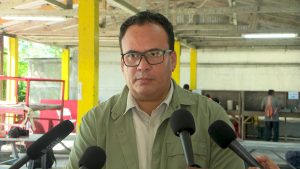
Osmond Martinez
Osmond Martinez, Minister of State, Economic Transformation
“We as a government need to continue to enable a friendly financial environment for them whereby farmers will be able to access finance that is low cost and at the same time expand the amount of years of repayments. If not, we will be suffocating them. And that’s what our banking system has been doing, whereby I believe the interest rate is around thirteen to fifteen percent. The repayment period is short. But at some point, the agro productive sector will have to be considered a social program simply because, simply because it’s becoming difficult for it to be a profitable industry. It doesn’t matter if it’s citrus, bananas, coconuts, sugar.”
The success of the clean seed program may determine whether the sugar industry merely survives recent turmoil or finally begins to grow again. Industry stakeholders admit this is a hard time for the industry but the perfect time to implement changes that have been long overdue. Shane Williams for News Five.
Facebook Comments