



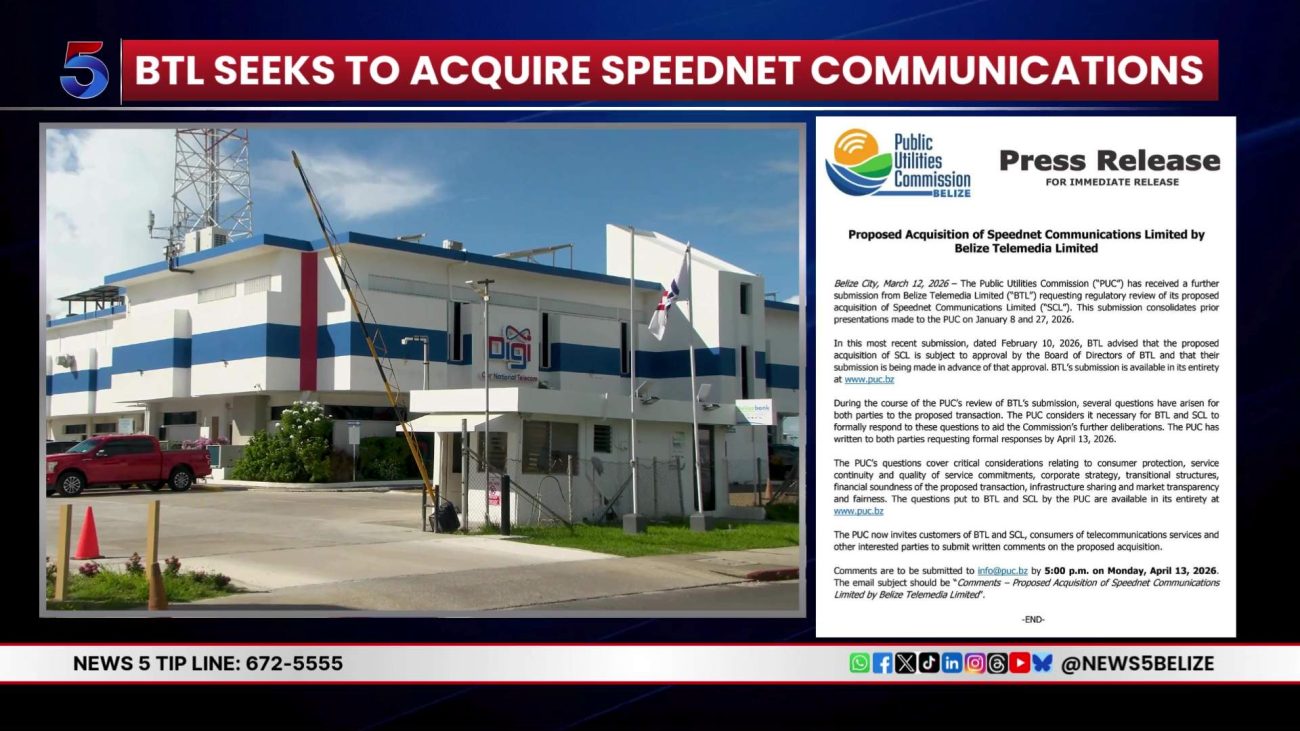
BTL Faces Tough Questions on Unapproved Merger
The Public Utilities Commission is turning up the pressure on Belize’s two biggest telecom players as BTL pushes ahead with its plan to buy out Speednet, even though its own board still hasn’t approved the deal. The PUC has now fired off a new round of hard‑hitting questions to both companies, signaling that regulators aren’t close to signing off just yet. BTL updated its proposal on February tenth, hoping to strengthen its case, but the deeper the Commission dug, the more red flags and unanswered questions surfaced. So now, both BTL and Speednet must respond, formally and in writing, by April thirteenth. And the PUC isn’t asking for vague assurances. It wants concrete commitments on what this takeover would mean for the people who actually use these services: Will prices change? Will service drop? What guarantees exist to keep the market fair? How will networks be merged? Is the financial plan solid? In short, the regulator wants to know whether this deal benefits Belizeans or simply reshapes the telecom landscape in ways consumers can’t see coming. Every question sent to both companies is now posted online, and for the first time, the PUC is actively inviting customers, Smart! and BTL users alike, to weigh in. Put plainly, this deal goes far beyond corporate negotiations, it could reshape how Belize stays connected. Now the Commission wants to hear from the people most affected.

 PUC Signals End of BTL Dominance
Here’s another angle… The Public Utilities Commission has signaled that BTL’s dominant run in the telecom market is coming to an end. Labeled the country’s dominant operator, BTL now faces a slate of reforms aimed at stripping away long‑standing advantages and forcing real competition into the market. Those changes won’t be painless. The PUC expects BTL to lose market share, on purpose. And with smaller profits come hits to the value of SSB and the Government of Belize’s investment. That reality is one reason BTL has been pushing a different path: buying Speednet, the company behind Smart. Supporters say Belize is too small for two expensive, overlapping telecom networks. One company, they argue, could cut duplicate costs, lower prices, and secure the public’s investment. But the bigger question still hangs over the entire debate: Is true competition possible, or even practical, in a country this size? Or would Belize be better off with a single, tightly regulated monopoly that answers to the public? Whichever way it goes, the decision will shape how Belizeans stay connected in the years ahead.
Attention readers: This online newscast is a direct transcript of our evening television broadcast. When speakers use Kriol, we have carefully rendered their words using a standard spelling system.
Watch the full newscast here:
Facebook Comments