



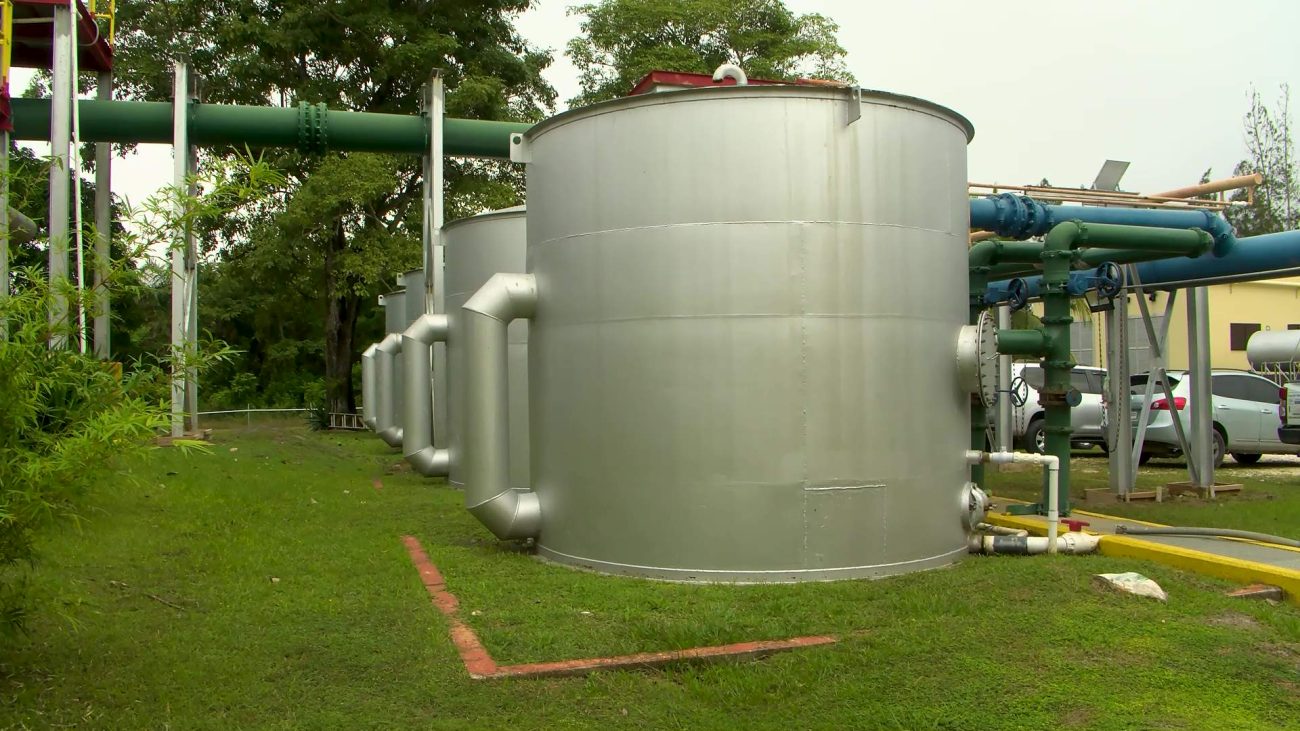
BWS Opens Treatment Facilities to Media
Following the release of alarming data from the Statistical Institute of Belize’s MICS7 survey which raised alarm on the safety of Belize’s drinking water and complaints of wastewater leakage in Belmopan City, Belize Water Services is taking a hands-on approach to reassure the nation that our water is safe and its facilities and systems are top notch. This morning, BWS opened its doors to the media for a full-scale tour of its operations in the Belmopan and the Belize District. News Five’s Shane Williams was there and has this report.
 Shane Williams, Reporting
Belize Water Services opened its doors to the media for an inside look at how your water is treated. Chief Operations Officer Sanjay Kashwani led journalists on a guided tour of two key facilities, the Belmopan Wastewater Treatment Plant and the Double Run Water Treatment Plant in Sandhill. The utility company is tackling growing concerns about wastewater leaks in Belmopan and to give the public a transparent view of what happens before water reaches your tap. BWS says showing these processes firsthand is critical right now, especially as questions about water safety continue to surface.

Sanjay Keshwani
Sanjay Kashwani, Chief Operations Officer, BWS
“Few weeks back, SIB had some online interviews with the media house and that has raised a lot of question about our water treatment plant and water treatment itself and the quality of water. So by inviting media, we wanted media to force and see how we treat water, how we produce water, and what quality standards we follow and how we check our water. And few weeks back we had issue at Bullfrog Station in terms of pipeline itself that was broken by British High Commission and subsequent to that, it was broken by Mexican Embassy. Hence that station we needed to turn off the pump. The pumps are working as you have seen by yourself.”
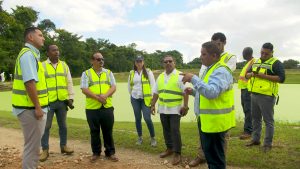
And to see for himself, Belmopan Mayor Pablo Cawich joined the tour at the Wastewater Treatment facility and the Bullfrog Lift Station because residents from that area of the city and the outskirts near the sewer ponds have been complaining about a pungent sewer odor.
Pablo Cawich
Pablo Cawich, Belmopan Mayor
“The most recent and I would say biggest concern was the sewage wa – the sewage smell that was specifically in this area, this lift station that is sitting beside the ring road. As I had been made aware, a portion of the infrastructure, the sewage lines that push, that take the water from this lift station to the main treatment facility a portion of that infrastructure had collapsed. And because of that the pumps were not able to push the water from this lift station to the treatment plant. Which is why we had to take a manual approach by trucking out the wastewater little by little to ensure that we cleaned up the overflow that was happening into the Ring Road drainage system.”
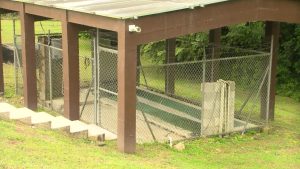
 Fixing one busted sewer pipe in Bullfrog costs nearly three hundred thousand dollars, four jackhammers, and five hundred feet of feet of pipe. The problem is that Belmopan’s pipelines are over fifty years old, made of asbestos cement from the 1970s, and they weren’t built for today’s concrete jungle. Replacing the entire wastewater system would take a massive upgrade, with a price tag of about a hundred million to properly move effluent to the new treatment facility.
 Sanjay Kashwani
“So in Belmopan, like I said, the system was built in 1970s. After that, we have maintained or upgraded all the pumping stations. There are four sewer stations. We upgraded all of them. You’re looking at minimum million to two million dollar investment just on the sewer stations. And at the plant, pre-Covid we invested about ten million dollars.”
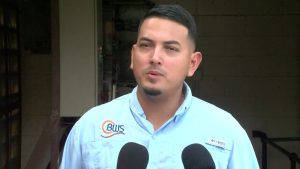
Roberto Toriz, BWS’s water and wastewater manager in Belmopan, walked us through how the plant treats effluent from nearly eight thousand homes. Wastewater spends thirty-seven days moving through four ponds, starting in an anaerobic pond where bacteria break down waste without oxygen, then a facultative pond for eight more days using both aerobic and anaerobic layers. Finally, it reaches a maturation pond where sunlight and oxygen disinfect the water before UV treatment sends it safely into the Belize River.
Roberto Toriz
Roberto Toriz, BWS Manager of Water & Wastewater, Belmopan
“You guys walk through the entire plant with no smell of soil. We, as the water comes into our treatment plant, immediately it starts a treatment process before we release it back safely into the environment.”
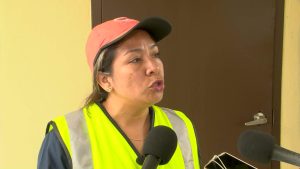
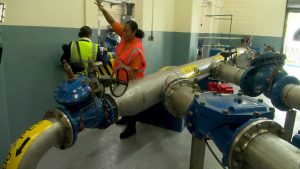 After treatment, the water flows back into the Belize River, part of the cycle that eventually reaches consumers. For Belize City and rural areas, BWS draws water at the Double Run Plant in Sandhill. Responding to concerns from the MICS7 survey, engineers walked journalists through every step, from raw intake to flocculation, filtration, and disinfection. Inside the lab, technicians showed how they test chlorine levels and check for contaminants daily to meet national standards. District Manager Reina Gonzalez says the team takes pride in delivering safe, high-quality water.
Reina Gonzalez
Reina Gonzalez, Belize District Manager, Water and Waste Water
“We have two, two lines. One is a 14 inch, which is a distribution line that takes the water directly to our customers from the Biscayne village all the way into the city by the pal palate area. And then we have also our 24 transmission line. That takes water into the storage tanks at our headquarters, which we label as our south side area and at the Wilson Street Storage area as well. From there on, the water is distributed to our Belize City and the Southside covers all the way to eight miles. We stand behind our results. We stand behind our product and we definitely stand behind the fact that our priority is the health and safety of our customers and our consumers. And BWS dedicates a lot of resources to ensure that we do not compromise the health and safety of any of our customers.”
By opening its facilities to the media, BWS says it hopes Belizeans can better understand the systems that keep water clean and wastewater under control and why sometimes, upgrades and repairs are unavoidable to maintain those standards. BWS says additional upgrades across both water and wastewater networks are scheduled for next year. Shane Williams for News Five.
Facebook Comments