



Cabinet Targets $30 Million for Cost-of-Living Relief
The government is searching for thirty million dollars to help Belizeans cope with rising food, housing and utility costs. But finding that money could mean delaying projects and cutting spending elsewhere, even as the government expects to forego sixty million dollars in revenue this financial year. After another late-night Cabinet meeting, ministers say they are considering an expansion of the Grocery Bag and BOOST programs, possible relief on utility bills and changes to the income-tax threshold. News Five’s Shane Williams reports on the plan and the pressure to deliver meaningful relief.
 Shane Williams, Reporting
Across the world, the rising cost of living is becoming a political threat to governments. In last week’s United States midterm elections, economic frustration helped drive voters to the polls and contributed to a major defeat for the Republican Party. Prime Minister John Briceño says affordability was also a major concern among Commonwealth leaders during their recent meeting in Antigua and Barbuda.
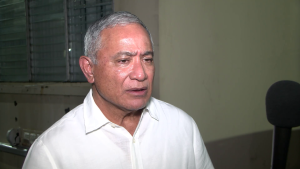
Prime Minister John Briceño
Prime Minister John Briceño
“I was at the heads for the Commonwealth in Antigua and Barbuda, and that’s, that’s one of the things that came up. And some of the prime ministers from the biggest countries in the– or richest countries in, in the Commonwealth were saying that you know, the, the whole issue of the war has created a problem for the entire world. Not only for, for Belize, but the UK, Australia, Canada, India, all these countries are having the same problem that we’re facing. And for small countries like Belize, that we have an open economy, it makes it even more difficult.”
But while the Prime Minister points to international pressures, his administration must now find relief that Belizean families can actually feel. Cabinet met late into Tuesday night to review the national budget and search for thirty million dollars.
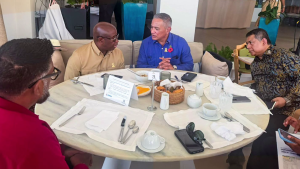 Prime Minister John Briceño
“We have to find ways how we can be able to, to address these issues. We have been looking at the cabinet – at the budget and seeing where we can cut expenses.”
Briceño saved the full announcement for Thursday’s House meeting. But Senior Cabinet Minister Francis Fonseca, who is leading the initiative, outlined several measures under consideration.
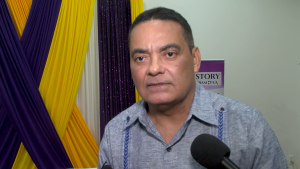
Francis Fonseca
Francis Fonseca, Minister of Cabinet
“Some of the measures are, have to do with social programs that we have like the grocery bag program expanding that program. But looking at the Boost program, how can we expand that in a targeted way to ease the cost of living that Belizeans are facing.”
Cabinet is also examining utility bills, rental costs and the possibility of raising the income-tax threshold.
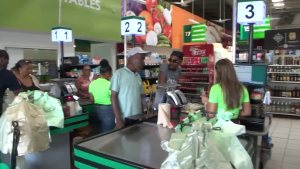 Francis Fonseca
“The income tax threshold. So we’ve asked the Ministry of Finance to do a deeper analysis and to make proposals on how we can perhaps amend that legislation and provide greater relief to Belizeans. We’ve looked at, as well at the utility bills to see what we can do there and there we made some proposals. We’ve looked at the rent legislation because we know housing, the cost of housing is a big issue for Belizeans, the cost of rent.”
 The challenge is paying for those measures without placing further strain on the national budget. The Prime Minister says existing excise-tax cuts could already cost the government sixty million dollars in revenue by the end of the financial year.
Prime Minister John Briceño
“As it is right now from the estimate from the cuts from excise tax, we by the end of this financial year, we are going to be forgoing about sixty million dollars. And so far we’re at about thirty million. And if things stay as they are, the projection is that we’re going to lose sixty million dollars.”
 Cabinet is now reviewing capital projects and recurrent spending to find another thirty million dollars. Some projects could be delayed until the next financial year so the money can be redirected to immediate relief.
Francis Fonseca
“The financial secretary and his team were a part of our discussion last, at the last meeting and at this meeting. And they were the ones who were tasked with looking at the budget, looking at both the capital two budget projects looking at the recurrent expenditure and seeing how we could make reallocations. So certain things would have to be put on hold maybe for the next fiscal year. And so that’s what we did. And we reallocated funds from projects and made this a priority because we understand that people need the need, need the help at this time.”
For families stretching every dollar, the plan could provide some breathing room. But its real impact will depend on who qualifies, how quickly the assistance reaches them and whether it reduces the everyday cost of food, rent and electricity. Shane Williams for News Five.
Attention readers: This online newscast is a direct transcript of our evening television broadcast. When speakers use Kriol, we have carefully rendered their words using a standard spelling system.
Watch the full newscast here: