



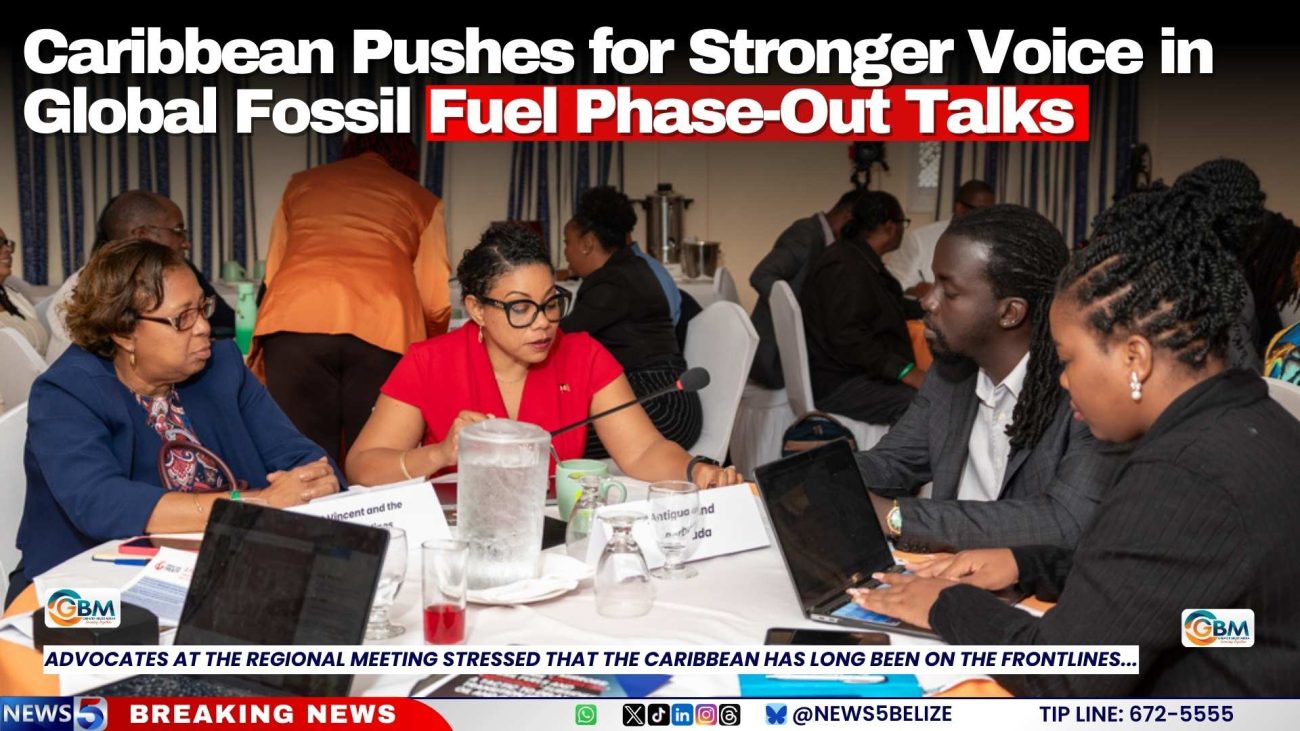
Caribbean Pushes for Stronger Voice in Global Fossil Fuel Phase-Out Talks
Regional leaders and climate advocates met in Saint Lucia this week to sharpen the Caribbean’s position ahead of a major international conference focused on transitioning away from fossil fuels.
The two-day meeting brought together senior government officials and civil society representatives at a time when global climate negotiations remain deadlocked over how to finance and manage a fair shift away from oil, gas and coal.
Participants said the region cannot afford further delays. Recent global data indicate that fossil fuel production remains far above levels consistent with keeping global warming within 1.5 degrees Celsius, the threshold Caribbean states fought hard to secure under the Paris Agreement.
Dr. James Fletcher, Executive Director of the Caribbean Community Climate Change Centre, said Caribbean nations must match their calls for a just transition with clear proposals on financing, energy access, and protections for vulnerable communities. ” Today, the Caribbean’s credibility in global diplomacy regarding fossil fuel phase-out and energy transition rests not only on our vulnerability but on our vision. If we are calling for a just transition away from fossil fuels, we must also clearly articulate how that transition will support small island developing states – through concessional finance, debt reform, expanded energy access, renewable scale-up, and social protection for affected communities.”

 The Saint Lucia gathering served as a strategy session ahead of the First International Conference on Transitioning Away from Fossil Fuels, scheduled for late April in Santa Marta, Colombia. The meeting, to be co-hosted by Colombia and Netherlands, is expected to bring together a coalition of countries willing to explore concrete steps toward managing a global phase-out.
Advocates at the regional meeting stressed that the Caribbean has long been on the frontlines of the climate crisis. Theresa Rodriguez-Moodie of the Jamaica Environment Trust pointed to the growing toll of hurricanes and extreme weather events, warning that climate-related loss and damage is already disrupting lives and economies across the region. ““In the wake of Hurricane Melissa, Jamaica faced the stark reality of loss and damage: communities were submerged, roads rendered impassable, and homes and buildings destroyed. Hospitals and other critical infrastructure sustained severe damage, thousands were displaced, agriculture suffered heavy losses, electricity and water systems were disrupted, and families were left trying to determine what, if anything, could be salvaged.”
Financing remains a central concern. Charlin Bodlee of the Caribbean Centre for Renewable Energy and Energy Efficiency said Caribbean countries face a significant funding gap in implementing their national climate commitments. “Studies also show that climate finance flows to the region remain a fraction of what is needed, and the reliance on loan-based finance can contribute to fiscal strain and limit long-term resilience-building. Addressing this will require large-scale debt-sensitive mechanisms, increased grant finance, and innovative structures that support the Caribbean’s transition away from fossil fuel dependence while bolstering economic and energy resilience.”
Also addressing the meeting was Alex Rafalowicz of the Fossil Fuel Treaty Initiative, who argued that continued expansion of fossil fuels undermines global climate targets and deepens environmental and public health risks. “They are not only driving the climate crisis, but also worsening public health impacts, accelerating biodiversity loss, fueling the plastics crisis, and contributing to local pollution. In that sense, continued fossil fuel expansion poses a profound risk to human life and to life on our planet.”

Facebook Comments