


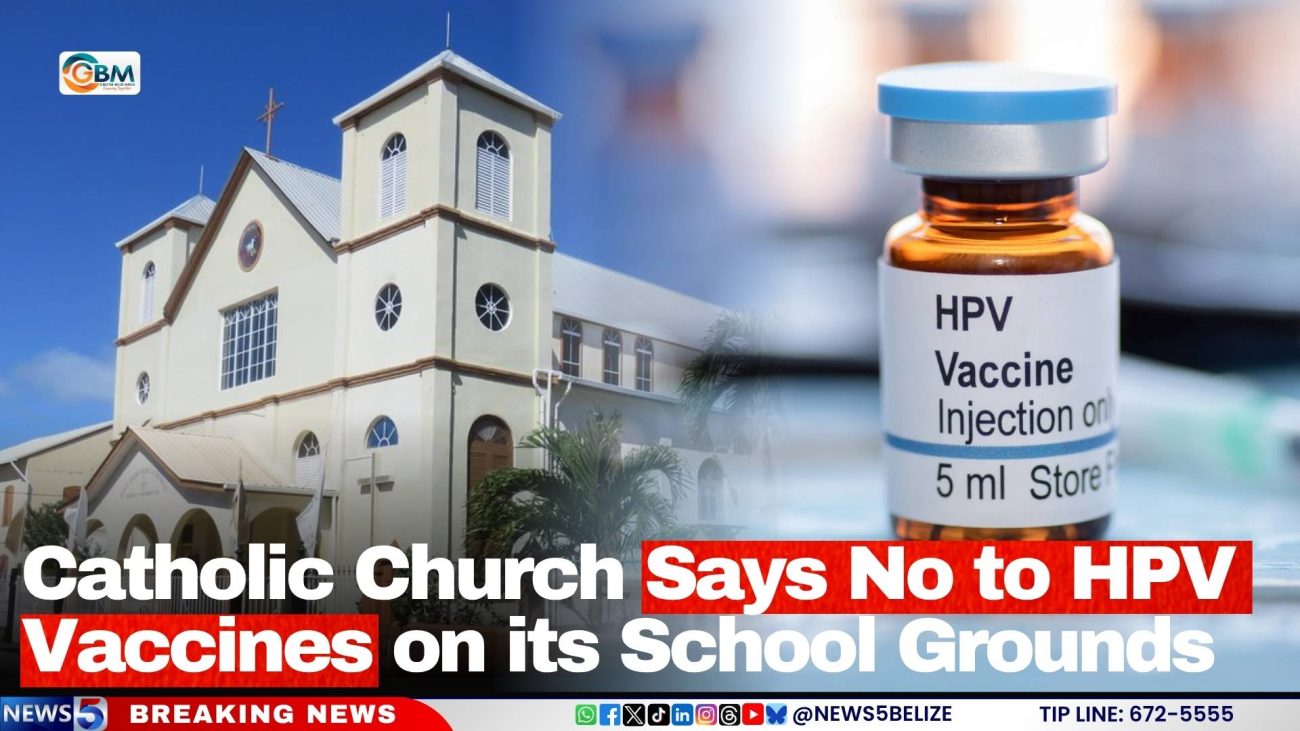
Catholic Church Says No to HPV Vaccines on its School Grounds
The Catholic Church in Belize has drawn a hard line on the human papillomavirus (HPV) vaccinations across its Catholic schools, stating it will “not permit any health officials or medical personnel to conduct HPV vaccination programmes on the grounds of our Catholic schools.”
The Church made its position in a letter last Tuesday. “This has been the longstanding position of the Diocese, dating back to the time of Bishop Dorick Wright, and it continues to guide our practice today,” it added.
The letter did not state the reason behind the Church’s position.
Based on records available to the public, neither the Vatican nor the U.S. Conference of Catholic Bishops (USCCB) has specifically made an official stance on HPV vaccinations. However, in a broader posture, the Vatican is pro-vaccine after it “morally accepted” the COVID-19 vaccine in 2020.
“All vaccinations recognised as clinically safe and effective can be used in good conscience with the certain knowledge that the use of such vaccines does not constitute formal co-operation with the abortion from which the cells used in the production of the vaccines derive,” the Vatican said in a church document prepared by the Archives Office in 2021.
None of the currently available HPV vaccines are produced using cell lines derived from aborted fetal tissue. Instead, the HPV vaccine uses a different manufacturing process called ‘recombinant DNA technology’.
The Office of the Special Envoy for the Development of Families and Children later released a statement saying that “while some individuals and religious institutions may have concerns about the HPV vaccine, protecting children from a preventable disease must remain a national priority.”
The HPV vaccination campaigns have been an ongoing initiative for several years and are primarily conducted on Standard Four students, with catch-up opportunities available for older students in Standards Five and Six who missed earlier doses.
According to the Centers for Disease Control and Prevention (CDC), “About 13 million people, including teens, become infected with HPV each year. ” It is the leading cause of cervical, vaginal, and vulvar cancers in women and penile cancer in men. “Getting vaccinated on time protects preteens long before ever being exposed to the virus,” the CDC adds.
The Pan American Health Organization (PAHO) reinforces that point, stating that “HPV vaccinations between the ages of 9 and 14 have been shown to be most effective at protecting girls’ health before they become sexually active and encounter the virus.”
PAHO adds that high coverage among girls has also shown to significantly reduce infection rates in boys.