


CCJ Shuts Down Maya Leaders’ Clarification Bid
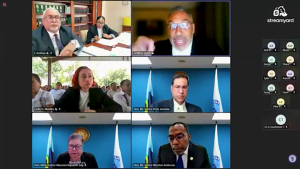
Nearly a decade after the CCJ’s landmark ruling on Maya customary land rights, the fight over implementation is still not over. Today, Maya leaders returned to the region’s highest court seeking more clarity on the 2015 consent order. But the court dismissed the application, saying the process it ordered is already underway and that the parties must continue working through the commissioned review panel. That panel is expected to help resolve several outstanding issues, including the identification of customary lands. Following today’s hearing, we asked Senior Counsel Andrew Marshalleck what the decision means going forward. First, here is Justice Winston Anderson with the CCJ’s ruling.
Hon. Justice Winston Anderson, Caribbean Court of Justice
“We think that process is now underway and that it should be given every allowance to complete its journey. We therefore do not think we ought to intervene at this point in the way asked for by the applicants and instead would encourage the parties to continue the parties towards the culmination of the product that we have all look toward for so very long.”
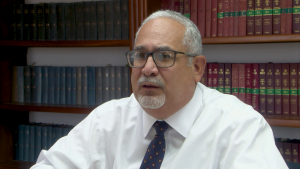
Andrew Marshaleck
Andrew Marshaleck, SC, Attorney-At-Law
“Where we are is that we’ve produced a working draft of a document, and there’s a review panel constituting, constituted, two members appointed by the government, two members from the appellant side, Maya Leader side, and now government has decided to add in some, a representative from the third party, landowners. That panel is supposed to review the draft, make recommendations on how to make it better and hopefully get the draft to a point where then it can be circulated to the wider public for consultation and input, and then eventually taken to the National Assembly. So we’re at an early stage in the process where the comments on the draft are only taken from, directly from stakeholders involved, but the process also contemplates that after that it goes to everybody, so everybody can say what they think about it. I doubt that there’ll ever be a situation where everybody is 100% in agreement with it, given the nature of what is being dealt with. There will, there’ll always be some unhappiness about it. There’s not complete happiness. You won’t reach that ideal, but it’s about reaching something that works for everybody.”
 Maya Leaders Press On Despite CCJ Dismissal
The Maya Leaders Alliance did not get the ruling it asked for today, but spokesperson Cristina Coc says the hearing still moved their cause forward. Coc says Maya communities have spent the last eleven years pressing for the CCJ’s consent order to be fully implemented, and she believes the court-appointed review process has stalled. But according to Coc, today’s proceedings reinforced one key point: government cannot define Maya customary land rights on its own. She says it must first investigate and recognize the customs and practices that Maya communities have established over generations before drafting laws to protect those rights. Here’s more from Cristina Coc.
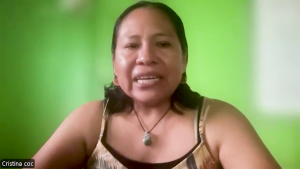
Cristina Coc
Cristina Coc, Spokesperson, Maya Leaders Alliance
“I don’t think it was a setback. We don’t see it as a setback at all. I do think that what we’ve gained from today’s hearing is that the government is now more firmly on notice that it needs to adhere to the relevant standards and not just exercise its imaginations. And I think that the justices, particularly Justice Jamadar made it clear to them that this is not just about you imagining what Maya customary land tenure is. It exists. There’s a system there. Who best to know that system than the people who practice it themselves? And it’s a fact. It’s a historical discovery that it exists, right? So when you come and you then begin to say, “I think you only need five acres. That enough fi make unu live pan.” Da noh that da mi your job. Your job da mi fi see what we done the do, how we use the land, how we live on the land and then for recognize that and identify where it is we do those practices. So I’m happy with today. I think that they are on notice. They know that they can’t just imagine for us what they think is best for us. I repeat my call to the ministers of government who are responsible for legislative drafting. You need to take an active role. We want to talk to you on how it is that you are going to – how it is that you’re going to receive an alternative to your proposal? Your proposal is five acres per person. We reject that proposal outright. That is not our custom. That is not how we use land. What we propose to you is we have now completed a majority of our boundaries. We’ve harmonized our boundaries among each other. Are you prepared to come and validate that and see the evidence of our use and our land use patterns?”
The review panel remains deeply divided over what Maya customary land rights should mean. And the recent addition of a third-party representative has only widened the gap in a decades-long fight.
Attention readers: This online newscast is a direct transcript of our evening television broadcast. When speakers use Kriol, we have carefully rendered their words using a standard spelling system.
Watch the full newscast here: